This article provides a detailed description of how to create samples for single-protein tracking in solid-supported lipid bilayers. It also explains a straightforward fluorescence microscope with single-molecule sensitivity and a fast frame rate. Finally, we outline the procedure for extracting single-protein trajectories.
Method Article
Tracking Single Proteins in Lipid Bilayers Using Fluorescence Microscopy
In This Article
Summary
Abstract
Direct observation is a fundamental method for scientific discovery and understanding. Time-lapse single-molecule fluorescence imaging allows the observation of individual proteins as they move and interact with their surroundings, making states that would normally be hidden in ensemble measurements visible. Single-protein tracking is especially suited for studying membrane proteins, where its two-dimensional nature enables fast, wide-field imaging with single-fluorophore sensitivity. Using artificial lipid bilayers that mimic membranes where transmembrane or peripheral membrane proteins are found (such as plasma membranes or membranes of intracellular organelles from various cell types) permits measurement of specific interactions in near-native environments. It also allows for the gradual addition of complexity, one component at a time, while suppressing background interference from fluorescence and Raman scattering. By adding temperature control, it becomes possible to determine the thermodynamic properties of single-particle interactions as well. In this work, we describe a protocol for sample preparation, data collection, single-molecule fluorescence tracking, and analysis of membrane protein trajectories in lipid bilayers using Aquaporin-4. This work serves as a foundational example and can be adapted to different proteins and bilayer compositions.
Introduction
Under natural biological conditions, membrane proteins are surrounded by an extensive network of interactions, which includes other membrane proteins, proteins in the intra- and extracellular fluids, various types of lipids and cholesterol, substrates or ligands, solution interactions, and interactions between extracellular and intracellular matrices. A classic biophysical approach to better understand specific and collective interactions starts with a single component, gradually introducing additional components one at a time until the complexity reflects the native environment-a "Divide and Conquer" approach to biophysics. A modern molecular-scale method for studying these interactions is through direct observation using time-lapse single-molecule fluorescence imaging to track individual proteins as they move and interact with their environment. In this paper, we describe the fundamental steps of this approach, including the formation of lipid bilayers on quartz coverslips and the insertion of a large membrane protein into these pre-made bilayers in a manner suitable for single-protein imaging. This will be followed by a 'work-horse' protocol for tracking single proteins in supported bilayers.
This article describes how to create solid-supported lipid bilayers using small unilamellar vesicles (SUVs) that rupture on hydrophilic quartz coverslips. The quartz surfaces are prepared by either an acid wash or ultraviolet (UV) ozone cleaning. The lipid used to create the SUVs should, when possible, match the main chemical composition of the biological membrane of interest (e.g., aquaporin-4 (AQP4) is found in the plasma membrane of astrocytes and the major components are POPC (46.4%), POPE (8.5%), PS (5.6%), cholesterol (30%), PI (2.5%), and SM (5.6%))1,2. To prevent interaction with the solid substrate, additives such as polyethylene glycol (PEG) grafted to a lipid lift the bilayer off the surface3,4. The amount of each additive must be carefully adjusted to ensure that protein diffusion is not obstructed, while also providing enough support to lift the membrane from the substrate surface. Additives like PEGylated lipids typically exhibit two phases: a 'brush phase' and a 'mushroom phase'. The brush phase occurs when the PEG is at high concentration, causing the polymer to stand upright to reduce steric hindrance. The mushroom phase occurs at low concentrations, when the polymers are sufficiently separated to exist as random coils. In general, the brush phase hampers diffusion, but the mushroom phase offers little support. The concentration between the brush and mushroom phases is optimal, providing support with minimal impact on diffusion3,4.
Some membrane proteins will spontaneously insert into solid-supported lipid membranes, such as P450s and cytochrome P450 reductase5, while others will need to be inserted using detergents, which is a delicate process. Careful washing is necessary to remove these detergents, as well as any unincorporated proteins that can interfere with single-protein tracking - a process that will be described in detail. The main focus of this article is the preparation of a sample for single-molecule tracking (SMT) using time-lapse fluorescence imaging. This requires an objective with high magnification and numerical aperture (NA) -- typically a 100x and 1.45 NA oil immersion objective6,7. It also requires a fast, highly sensitive camera (EMCCD, CMOS, or ICCD camera) and laser excitation. Laser excitation needs to cover a large enough field of view to measure long protein trajectories, which is often accomplished using total internal reflection to create an evanescent field of about 50 μm x 100 μm or epi-illumination with beam shaping optics (Gaussian to top-hat) about 80 μm x 80 μm8 or a highly inclined and laminated optical sheet (HILO) with a field similar to TIRF. Total internal reflection fluorescence (TIRF) microscopy has the advantage of reducing background signal. A simple, relatively inexpensive TIRF microscope design is presented below. By adding temperature controls, it is possible to measure several thermodynamic properties such as enthalpy, entropy, and Gibbs free energy9. The technique also requires fluorescence labeling of the membrane protein at a degree of labeling that ensures most membrane proteins carry a fluorescent tag.
The transmembrane protein of interest in this article is AQP4. AQP4 is a water channel polarized in the endfeet of astrocytes and other areas of the central nervous system's vasculature10. It can transport up to 3 billion water molecules per second and is involved in water homeostasis, cell migration, brain edema, learning, and memory formation through synaptic plasticity11. Dysregulation of AQP4 function has been linked to various neurological conditions, including brain edema, neuromyelitis optica, and epilepsy12,13,14,15. AQP4 is a 32-37 kD protein, depending on its isoform, and has a tetrameric quaternary structure with eight hydrophobic membrane domains connected by joining loops, an intracellular N-terminal domain, and a large intracellular C-terminal domain16. There are two main isoforms of AQP4, M1 and M23; the difference arises from the initiation at the methionine 1 residue or the methionine 23 residue. Research has shown that the M1 isoform can form dyads or triads with itself, depending on its palmitoylation state9. The M23 isoform assembles into large protein aggregates known as Orthogonal Arrays of Particles (OAPs). When co-expressed, the M1 isoform limits OAP growth by forming a peripheral protein coating around its exterior17,18,19. The dynamics of OAP aggregation may be a key factor in modulating water permeability and homeostasis in the brain. In this article, we describe the necessary steps to track individual AQP4s in a membrane and observe single protein-protein interactions.
Protocol
1. Preparation of small unilamellar vesicles
- Take the lipid stock solutions out of the freezer and let them come to room temperature.
- Take a clean 10 mL flask out of the oven and let it cool to room temperature.
- Add 900 µL of spectroscopic-grade chloroform and 100 µL of spectroscopic-grade methanol to the cool round-bottom flask, then add the appropriate amounts of each lipid in the blend. Swirl the flask to ensure the lipids are well mixed.
NOTE: Other authors use different ratios of chloroform:methanol, but we have found the best ratio for forming uniform lipid cakes was 9:1.
A spreadsheet for calculating the correct amounts of lipids is provided in Supplemental File 1. If preparing lipids to verify lipid bilayer formation on the surface of the substrate, use a fluorescently labeled lipid. - Place a vacuum distillation connector on top of the round-bottom flask, as shown in Figure 1, and connect it to the nitrogen line (drying apparatus).
NOTE: Use purified N2(g) and pass it through a 0.22 µm filter before connecting to the drying apparatus. - Turn on the N2(g) and adjust the pressure so the flow is such that it is barely felt on the back of the hand.
NOTE: Wetting the back of the hand can help sense the evaporation. - Allow the sample to dry under a flow of N2(g) for 2.5-3 h, periodically checking to ensure the nitrogen continues to flow. The sample will likely appear dry within the first half hour; however, continue flowing nitrogen for an additional 2-2.5 h to remove any remaining solvent.
NOTE: The sample can also be dried overnight. - Add 1 mL of buffer for every 5.0 µmol of total lipid in the round-bottom flask.
NOTE: The buffer used in this study consisted of 100 mM HEPES, 5 mM CaCl2, and 140 mM NaCl; this is the same buffer used throughout the preparation of the sample. - Place a glass stopper on the flask and wrap it with paraffin film.
- Place the flask in a clamp on a ring stand and submerge the bottom of the flask in a bath of a sonicator set at 60 °C. Allow the flask to incubate for 1 h, gently swirling every 15 min to create multi-lamellar liposomes, appearing as an opaque solution with no lipids attached to the flask.
- After the 1 h incubation, turn on the sonicator (~35 kHz) and set the amplitude to its highest setting. Then, move the flask around in the bath to find the position where the greatest agitation occurs so that the solution bumps and sprays inside the flask. Sonicate for 30 min, looking for a change from opaque to transparent and slightly opalescent.
- Remove the lipid solution from the flask and place it in a microcentrifuge tube, then centrifuge at 100,000 × g for 1 h at 4 °C. Remove the supernatant from the microcentrifuge tube.
NOTE: A small pellet may form at the bottom of the tube. If the pellet is large, discard it and repeat the process. - Use the SUVs after centrifugation, store them at 4 °C for a week, or keep at -80 °C with some trehalose.
NOTE: The recommended amount of trehalose is 1 mg per mL of lipid solution. For optimal results, new SUVs can be made weekly and stored in the refrigerator.
NOTE: This is just one method for preparing SUVs. Besides SUVs, small, medium, and large unilamellar vesicles can be produced using extrusion or giant unilamellar liposomes through electroformation20,21,22,23.
2. Protein labeling
NOTE: Labeling proteins with fluorescent probes using various conjugates, such as NHS esters and maleimides, is well-documented and well-understood. However, the degree of labeling (DOL) is especially important in single-protein tracking. In this study, it was essential to determine what percentage of transmembrane proteins were labeled and the distribution of fluorophores on each AQP4 tetramer.
- Place a dialysis tube in a beaker containing 0.1 M Phosphate buffer at pH 8.3 that has been passed through a 0.22 µm filter. Then, let it sit in the buffer overnight in an inverted position, allowing the membrane to condition.
- On the following day, replace the buffer inside the dialysis tube with the protein solution.
NOTE: The volume of protein solution should be within 20-250 µL. There should be ~1-5 mg of dissolved protein within the solution. - Once the protein is placed in the dialysis tube, let it sit inverted overnight in the 0.1 M Phosphate buffer.
- After dialysis, transfer the protein to a microcentrifuge tube.
- Prepare a new dialysis tube by repeating step 2.1.
- Prepare the NHS-dye by placing a few grains (3-4) onto a small piece of weigh paper, then transfer it into a 1.5 mL microcentrifuge tube and dissolve in 100 µL of DSMO. Follow this with two 1 mL 10-fold dilutions in DMSO, using the final dilution to determine the concentrations of each sample using UV-vis spectroscopy. To achieve an average DOL of 2-3, add a threefold molar excess of reactive dye to the protein solution while gently shaking.
NOTE: A standard UV-vis spectrometer will suffice for this purpose, although a small-volume spectrometer is advantageous due to the sample size. - Add the reactive dye to the microcentrifuge tube containing the protein in equal volumes. Once the reactive dye and protein are added together, nutate for a minimum of 8 h.
- Following the nutation, transfer the labeled protein to the dialysis tube prepared in step 2.5 and place it in a beaker containing fresh phosphate buffer. Place a stir bar in the buffer and let it gently swirl for 6 h, followed by a buffer swap and another 6 h of dialysis.
- After the two buffer swaps, place the dialysis tube containing the labeled protein in a clean beaker containing the final working buffer.
NOTE: The final working buffer used in this study consisted of 100 mM HEPES, 5 mM CaCl2, and 140 mM NaCl at pH 7.4. - After dialysis, measure the DOL using a UV-vis spectrometer.
NOTE: It is important to follow standard methods for measuring the DOL. Below is an equation for the calculation.
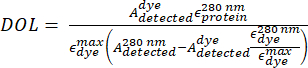 (1)
(1)
Where the absorbance measured at the peak of the dye is and the protein peak at 280 nm is
  . The extinction coefficient of the protein is
  (calculated from the molecular weight of the protein), while
  and
and  are provided by the dye manufacturer.
3. Preparation of 25 mm diameter quartz coverslips
NOTE: Below are two different methods:
- Acid wash
NOTE: There are several published acid wash procedures, including piranha and base etch. We have found that the procedure below provides an extremely clean and hydrophilic surface without etching, which is preferable for single-molecule studies using fluorescence imaging.- The Acid Wash method requires a fume hood while heating the solution and PPE (goggles, lab coat, gloves). A squirt bottle of sodium bicarbonate should be available in the hood in case of spills.
- Place the coverslips in a beaker and fill with nanopure water, 30% hydrogen peroxide, and concentrated nitric acid in equal parts by volume (1:1:1 solution).
- Heat the coverslips in this solution for 30 min until the solution starts to bubble.
- Check the solution and mix by gently swirling every 10 min to prevent the coverslips from sticking together. When swirling the solution, observe the slips sliding apart and then separating. Once they are separated, gradually slow down to keep them apart, allowing the bubbling solution to envelop the slips.
NOTE: The solution should not be heated too vigorously, as the reaction produces heat. Adjust the hot plate to a gentle bubbling, usually on the lowest setting. At these settings, the solution remains at ~70 °C. Fresh hydrogen peroxide is also recommended. - Once 30 min have elapsed or the solution stops bubbling, let the 1:1:1 solution cool to room temperature, then rinse the coverslips thoroughly with purified water using gentle swirling.
- UV Ozone
- Clean the quartz coverslips with n-hexane, then methanol, using lens tissues.
- Place the coverslips in a UV ozone cleaner with the surface to be treated facing the lamp.
- Flow oxygen into the chamber at 5 psi for 5 min; then, turn off the oxygen flow.
- Next, turn on the UV lights for 15 min, and let the coverslips sit for a minimum of 10 min to let the ozone escape.
- After using either cleaning method, be sure to use the cleaned coverslips immediately. If using previously cleaned slips, repeat the process to regenerate the surface.
NOTE: UV ozonation requires consistent circulation to remove the ozone from the air. The system should be placed under an air-handling snorkel or in a fume hood.
4. Bilayer formation and incorporation of AQP4 into a bilayer membrane
NOTE: The buffer used in this study consisted of 100 mM HEPES, 5 mM CaCl2, and 140 mM NaCl at pH 7.4.
- Place the freshly cleaned coverslip in a 25 mm sample holder using a ¼ inch SM1 lens tube. Then, cut an 8 mm diameter double-layered parafilm gasket and position it at the center of the sample holder (see Figure 3).
- Apply a 50 µL droplet of the SUVs to the center of the 8 mm gasket, seal it, and then incubate at 37 °C for 1 h.
NOTE: This allows the liposomes to fuse with the hydrophilic quartz surface and rupture, forming a continuous bilayer.
It is most likely that the amount of liposomes added to the gasket area can vary, and a larger gasket may require more liposomes to form a continuous bilayer. However, the amounts specified in step 4.2 almost always promote the formation of a continuous bilayer. - After incubation, rinse the sample using a pipette to remove the solution. Then, add 50 µL of fresh buffer to the bilayer. Then, repeat the process a total of 10x.
NOTE: It is crucial that the pipette tip does not touch the lipid bilayer and that some solution remains to keep the bilayer hydrated. When bringing the tip to the top of the droplet, you will see it make contact. You can remove the solution without damaging the bilayer by maintaining minimal contact with the droplet surface. Eventually, the droplet will invert and wick toward the gasket; this is the ideal moment to stop removing solution. The reflected light should change at this point and can serve as a signal to stop. If you are worried about removing too much solution, lower the pipette setting during washing to leave a comfortable amount of buffer above the lipid bilayer.
The integrity of lipid bilayer formation under these conditions can be assessed in advance using fluorescence recovery after photobleaching (FRAP). This requires having a component in the lipid mix that is fluorescently labeled6,7,24,25. - After completing the final wash, remove the buffer again and add a 50 µL aliquot of the desired protein in detergent at or below its critical micellar concentration. Allow at least 1 h for protein incorporation at 37 °C.
NOTE: The detergent will gently soften the bilayer and aid the protein in incorporating into the membrane. In this protocol, the detergent used was 50 µM n-Dodecyl-beta-D-thiomaltoside (DOTM), a non-ionic detergent, and the protein concentration was 2 nM. - After an hour, rinse the sample with a buffer to remove any unincorporated protein and detergent.
- Add 5 mg of condition polystyrene beads (Bio-beads) to the sample, let sit for a minimum of 1 h before removal. The sample is then ready for imaging (see below).
5. Antifade additive
- Dissolve 5 mg of Trolox and 80 mg of D-glucose in 10 mL of buffer (see above). Shake and vortex until no solids remain. Nutate overnight in the dark, then filter the solution through a 0.22 µm filter. Prepare fresh weekly.
- Dissolve 6.5 mg of Glucose Oxidase (1650 U) and 8 µL of Catalase (29,200 U/mL in Buffer) in 92 µL of buffer. Mix the solution gently without vortexing, then centrifuge and transfer the supernatant into a new tube. Store at 4 °C and protect from light.
NOTE: This solution can be stored in the refrigerator for several months; however, if any cloudiness appears, discard it and prepare a fresh solution. - Mix 99 µL of solution from 5.1 with 1 µL from step 5.2 into a new tube. After the final rinse of the sample, add the antifade solution on top of the sample (called the imaging solution).
NOTE: Antifade solutions can alter the functions of transmembrane proteins; it is important to verify compatibility with the system.
6. Microscope setup and settings
NOTE: A custom TIRF microscope was used for this single-molecule study. This section describes the main components and key alignment techniques for a basic fluorescence microscope suitable for rapid time-lapse imaging (Figure 4), which is a reliable instrument.
- Use a 633 nm He:Ne laser to excite the samples. The laser passes through a band-pass filter and a ¼ waveplate to refine the laser line and convert the excitation from linearly polarized light to circularly polarized light.
NOTE: Circular polarization reduces the effect of the probe's orientation. - The beam passes through a 300 mm lens and a 633 nm laser line filter, reflects off a 633 nm long-pass dichroic mirror, and is focused onto the back of a 100x, 1.45 N/A oil microscope objective. Align the beam to ensure it goes smoothly through the center of the objective and remains straight when exiting the objective.
NOTE: At this point, the microscope is configured for epifluorescence (epi). A small amount of powdered milk can be added to a cuvette with a clear bottom. The cuvette is then placed on the microscope objective with a drop of immersion oil in between. This allows you to observe that the beam is passing straight through the objective. - The emission from the fluorescently labeled proteins passes through the objective, dichroic mirror, long-pass filter, and a 300 mm lens, then is imaged onto an EMCCD camera. Use longer focal length tube lenses to magnify images on the camera and enhance super-localization accuracy, which is beneficial for slow-moving transmembrane proteins and aggregates. Be sure to calibrate the camera pixels into nanometers.
NOTE: However, 1x magnification is achieved with the tube lens specified by the objective's manufacturer, which increases the signal-to-noise ratio by focusing fluorescence onto fewer pixels. Common focal lengths include 200 mm, 180 mm, 165 mm, and 164.5 mm lenses. We recommend using a 1951 USAF magnification target. Using a 300 mm lens in this setup, a pixel calibration of 74 nm was measured at a total magnification of 170x. - Control the temperature of the sample using an objective collar and a sample holder equipped with a Peltier heater/chiller26.
NOTE: Maintaining a stable temperature is crucial for ensuring the thermal stability of the microscope and enabling accurate temperature-dependent measurements and instrument focus. - Piezo actuators move the sample in the XYZ directions. Once a sample is in focus, adjust the beam to the edge of the microscope objective (see Figure 4) using the stage attached to the final turning mirror until a critical angle is achieved. This generates an evanescent excitation field. The microscope is now set in TIRF.
NOTE: You can determine that the microscope is in TIRF when the back reflection from the laser is a line (not a spot), and the background from the sample decreases in intensity and elongates.
7. Data collection
NOTE: The camera must be set up for quick data collection.
- Set the vertical pixel shift speed to approximately 600 ns and overclock the vertical clock voltage (typically +4). Then, set the horizontal pixel readout to its maximum setting (30 MHz at 16-bit in this example). Adjust the pre-amplifier gain to 2 and configure the amplifier output for electron multiplication. Finally, set the electron multiplier gain to its highest level.
- Set the exposure to 25 ms. At 25 ms exposure, ensure that the frame rate is slightly longer (25.802 ms on the camera used here).
- Adjust the laser power so the signal is clearly above the background.
NOTE: Adjusting the laser power can be challenging. Too high, and the probe bleaches too quickly; too low, and the signal-to-noise ratio makes tracking difficult. We recommend setting the power so that the signal exceeds the background by 3-5x for the particles with the weakest signal. Section 2 explains why molecular brightness shows a distribution. - Collect enough data to provide at least 1,000 tracks per sample.
8. Tracking analysis
NOTE: In our labs, single-particle tracking analysis is typically performed using custom scripts in MATLAB based on work by Crocker and Grier and modified by the authors3,26,27. Below is a description using ImageJ, a freely available software for the research community. Both methods produce identical results.
- Crop data sets to a consistent size and then background-correct using ImageJ.
NOTE: If the data collected is the same between sets, there is no need to crop. This is usually done only if the region of interest has shifted on the camera sensor between data collections. ImageJ's capabilities can be significantly extended with plugins. One option is to install and use FIJI, which is ImageJ bundled with a set of standard plugins. Among these plugins is TrackMate, which will be used for the protocol here28,29.
The ImageJ Wiki site offers walkthroughs and examples for many plugins. It also includes video tutorials. - Within FIJI, drag and drop the movie or stacked *.tif file to be analyzed (see Supplemental File 2).
- Enter the pixel calibration details. In the Analyze tab, select Set Scale and apply the pixel-to-distance calibration for the instrument.
- Save a copy of it to keep track of any changes from the original.
- Subtract the background from the chosen window and apply it to the saved copy of the original data. In the Process tab, choose Subtract Background.
NOTE:This will be optimized based on the data. A good starting point is using a "rolling ball" that is larger than the particles being imaged. - In the Plugins tab, select Tracking | TrackMate. This opens the TrackMate dialog window, which guides the user through the tracking process.
NOTE: Once Tracking is complete, it is possible to export the tracks for further analysis outside of ImageJ.
9. Data processing
NOTE: Discussed here is how to process the representative data and how to calculate step-size distributions and get an average diffusion constant.
- Drag and drop the image stack into FIJI; then, apply the calibration (74 nm/pixel).
- Subtract the background using the rolling ball subtraction with a width of 5 pixels. Crop the field to four separate 11 μm x 11 μm sections and analyze separately.
NOTE: This is to minimize any thresholding variance due to the excitation field when tracking membrane proteins. - Start the TrackMate plugin. Verify that the calibration is applied to the pixels (see Supplemental File 3) and that the time covers the desired range.
- In TrackMate, select the Laplacian of Gaussian (LoG) as the detection method for the particles, with an estimated diameter of 350 nm using the preprocess median filter. Click the Preview button to verify that the detected particles are reasonable.
NOTE: Some particles may clearly be in the background; do not worry about these-they will be eliminated in the next step. - When satisfied with the counting settings, process the rest of the stack, followed by thresholding. Use automatic thresholding or drag the selection box to adjust the threshold.
- After choosing how to visualize the detected particles, select the tracking method: Advanced Kalman Tracker for this dataset, with the following settings: 350 nm for the search radii and a maximum frame gap of 2 frames.
NOTE: It is also possible to add penalties, track splitting, and track merging. For this dataset, only tracking was performed. - Decide how to filter and visualize the tracks.
NOTE: In this dataset, only detected spots are displayed (see Supplemental File 4). - After processing the individual tracks, export the tracking data as an XML file for use in a spreadsheet editing software (see Supplemental File 5).
- In TrackMate, select the Laplacian of Gaussian (LoG) as the detection method for the particles, with an estimated diameter of 350 nm using the preprocess median filter. Click the Preview button to verify that the detected particles are reasonable.
Results
As described in protocol section 2, lysines were labeled using NHS-esters conjugated to a fluorescent dye molecule (NHS-dye). After conjugation to the protein, measure the DOL with a UV-Vis spectrometer. For this experiment, the DOL of AQP4 tetramers was 4.12. Next, determine the probability that each AQP4 tetramer will have at least one dye molecule using the Poisson distribution provided below.
 (2)
(2)
Where P is the probability that each AQP4 is labeled, using equation 2, the probability that each AQP4 tetramer has a fluorescent label attached to it is 98%. The distribution of labels per tetramer is shown in Figure 2 and reflects the brightness distribution observed in the sample.
The signal-to-noise ratio achieved in this example data was 8-9x above background for a single fluorophore and upwards of 15-20 for the brightest particles. This variance comes from the position in the excitation beam and the DOL described in protocol step 2.
Within the generated XML file, the columns of interest are J, K, L, and M, which correspond to the particle number ID, the frame in which the particle was detected, the X position of the particle, and the Y position of the particle, respectively (see Supplemental File 6). In the second sheet of the file, the step-size distribution and average diffusion coefficient are calculated, where the step-sizes are the distances a particle moves between frames, and the average diffusion is given by equation 3:
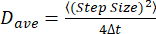 (3)
(3)
Where Dave is the average diffusion coefficient, and Δt is the frame rate. This equation assumes Brownian motion, which is generally valid for small displacements and can be confirmed by analyzing the mean-squared displacement versus time tag from a sample of individual tracks3,30,31.
A histogram of step-sizes shows a distribution of particles diffusing, which can be attributed to different-sized OAPs (Figure 5).
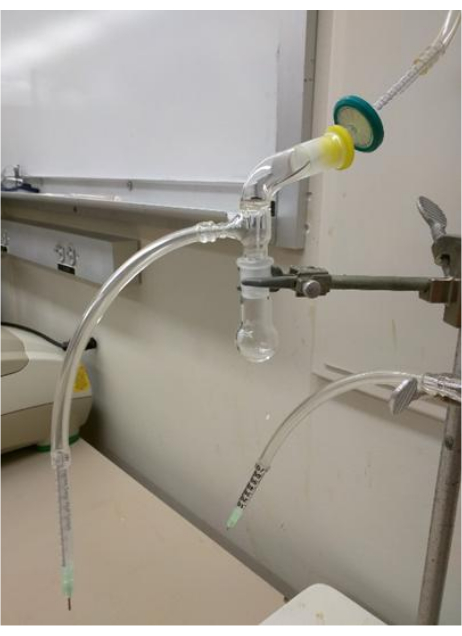
Figure 1: Lipid drying apparatus. The apparatus consists of a 10 mL round-bottom flask with a vacuum distillation connector. Nitrogen enters at low pressure through a 0.2 µm syringe filter with a needle attached to a yellow synthesis cap, which is connected to a vacuum distillation connector. Pressure is released through Tygon tubing attached to a syringe with a cut-off needle. Please click here to view a larger version of this figure.
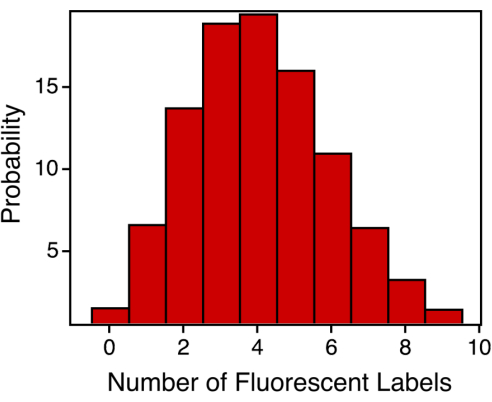
Figure 2: Expected distribution of fluorescent labels on each AQP4 unit using equation 2. The most probable number of fluorophores is 4, and 98% of all AQP4s will have a fluorescent label. Please click here to view a larger version of this figure.
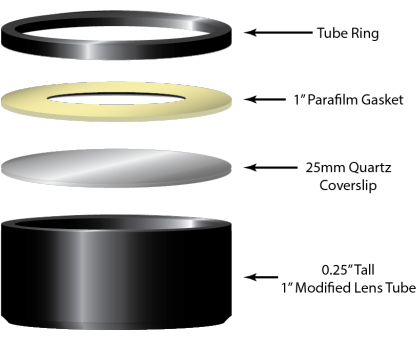
Figure 3: Sample holder assembly. The assembly is made of a 1" SM1 lens tube with the male threads removed and beveled to prevent interference with the microscope objective. Includes a quartz coverslip and a parafilm gasket. The entire assembly is secured with an SM1 retaining ring. Please click here to view a larger version of this figure.
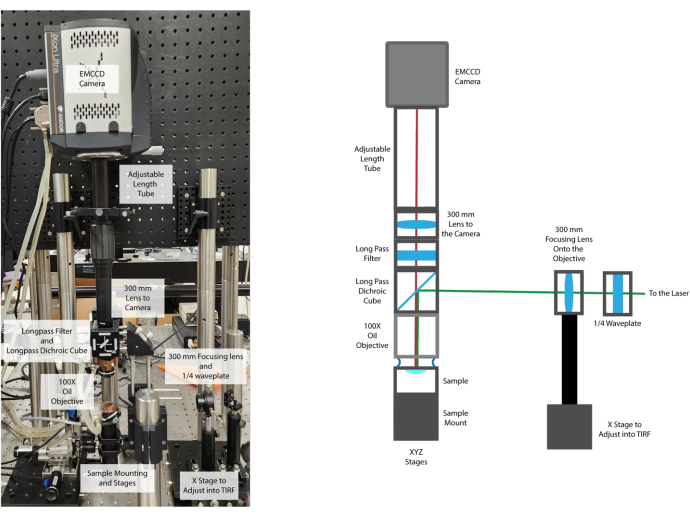
Figure 4: Microscope. On the right side is a simplified diagram of the microscope; the green line shows the excitation light coming from the laser. Starting from the right, the laser light passes through a ¼ waveplate, then is focused by a 300 mm lens. The light is reflected by a long pass dichroic mirror onto the objective, where it is focused onto the back aperture. By using a translation mirror to shift the excitation beam, the beam is positioned at the edge of the objective's aperture, creating an evanescent field in the sample. The in-focus emitted light is collected by the objective and is represented by the red line. The emitted light then passes through the dichroic, then a long pass filter, and is focused by a 300 mm lens onto the camera, providing a 1.7x optical magnification (170x total magnification from the objective and tube lens). On the left side, is an image of the microscope. Note that additional turning mirrors are used to correctly position the laser. Simultaneously, the detection arm is arranged to maximize the collection of photons from the fluorescently labeled transmembrane proteins. Please click here to view a larger version of this figure.
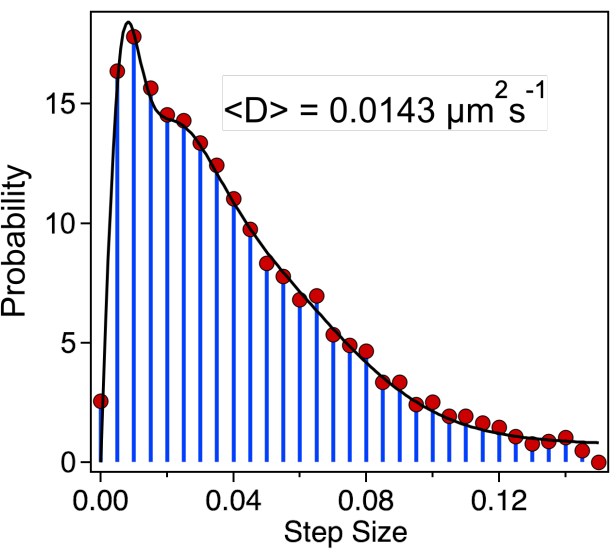
Figure 5: Histogram of step sizes. The blue line with red circles is a histogram of all the step sizes. The black line is a fit for multiple diffusion coefficients. The step-size probability distribution is given by:  where fi is the fractional population of each type of diffusing particle, assuming each undergoes Brownian motion. The histogram and fit show a heterogeneous distribution of slower- and faster-moving particles, attributed to a distribution of multiple OAP sizes. Please click here to view a larger version of this figure.
Supplemental File 1: Spreadsheet calculator used to determine mol% compositions, total lipid amounts, and optional fluorescent/FRAP components for SUV preparation. Please click here to download this File.
Supplemental File 2: Raw single-molecule fluorescence microscopy time-lapse image stack used in trajectory tracking (source file for TrackMate tutorial). Please click here to download this File.
Supplemental File 3: Animated preview of raw single-molecule fluorescence data showing intensity and background prior to processing. Please click here to download this File.
Supplemental File 4: Animation of filtered particle paths (post-thresholding) showing representative AQP4 trajectories over time. Please click here to download this File.
Supplemental File 5: Animated overlay showing full-field particle tracking of AQP4 molecules using TrackMate output. Please click here to download this File.
Supplemental File 6: Spreadsheet showing extracted trajectory coordinates and calculated step-size distributions used for diffusion analysis. Please click here to download this File.
Discussion
In this article, we present a single-particle tracking method for directly observing individual membrane proteins as they move through a solid-supported lipid bilayer membrane and interact with one another. AQP4 was chosen as a representative example because of its ability to form dynamic self-assemblies regulated by its different isoforms32,33,34. Above, we outline a reliable method for sample preparation and key parameters to track single-membrane proteins at millisecond time scales. The steps include: (1) preparing SUVs, (2) determining the appropriate level of fluorescent labeling, (3) preparing solid supports, (4) creating transmembrane protein samples within a solid-supported lipid bilayer, (5) preparing antifade agents, (6) constructing a simple single-molecule microscope, (7) collecting single-molecule tracking data, and (8) analyzing the tracking data using ImageJ.
The described step-by-step method is conceptually straightforward; however, each critical step has its own pitfalls and limitations. Among these, sample preparation is the most challenging (steps 1-5). Therefore, several details should be kept in mind. The first is how to create a solid-supported lipid bilayer. There are three main methods: (1) Langmuir-Blodgett (LB), (2) SUV fusion and rupture, and (3) spin-coating35,36,37,38,39. Each method has its advantages and disadvantages. For example, the Langmuir-Blodgett method provides greater control over the properties and chemical composition of bilayers, including asymmetric compositions between the two leaflets, and allows the formation of multilayers in a controlled manner. However, using an LB-trough is technically demanding, time-consuming, and costly to acquire35. Spin-coating is a relatively simple technique for creating lipid bilayers; however, it tends to produce multilayers and requires a large excess of material, often an impractically large amount39. Vesicle fusion and rupture are straightforward processes that require only a small amount of material. However, creating a hydrophilic surface is crucial, and some lipid compositions form bilayers via vesicle fusion more easily than others (e.g., in our lab, we have found that vesicles with a net negative charge form bilayers through vesicle fusion only with the addition of divalent cations and extended incubation times)40. Besides establishing a hydrophilic surface (step 3), other important considerations when forming a solid-supported bilayer through vesicle fusion include washing the newly formed bilayer both before and after incorporating the membrane protein. The pre-insertion wash removes excess SUV and larger multilamellar vesicles (MLVs), while the final wash after membrane insertion clears unincorporated protein. Insufficient washing can introduce background signals during tracking studies.
We have screened numerous detergents to determine if they are suitable for transmembrane protein insertion into solid-supported lipid bilayers, including C12E9, Tween-20, TritonX-100, and many others. Our preferred detergent is DOTM because it is easy to remove and is the most gentle on the membrane (less likely to disrupt the membrane integrity). The amount of protein added is critical. Too much, and it will be impossible to observe single tracks. When adapting this procedure to other transmembrane proteins, the amount will have to be adjusted through trial and error. However, the quantities given in this procedure are an excellent starting point. The amount of detergent must be kept at or below the critical micellar concentration; otherwise, the bilayer will be solubilized and removed from the quartz substrate.
Insertion of membrane proteins into the supported lipid bilayer needs to be optimized for each set of experimental conditions. However, there are a few common methods to achieve this, including the use of proteoliposomes and the direct incorporation of membrane proteins into a preformed bilayer41. A proteoliposome is a liposome, such as an SUV, with a protein embedded in it. These proteoliposomes can fuse with a preformed solid-supported lipid bilayer or be incorporated simultaneously with the SUVs during bilayer formation42. The fusion causes rupture, releasing the protein into the membrane. It is simple to implement, but it results in a random orientation of the membrane proteins. This can lead to strong interactions with the solid support, resulting in different diffusion properties depending on the protein's orientation3. This protocol describes a method that utilizes direct incorporation, yielding an orientational preference for AQP4 and other membrane proteins with large hydrophilic domains on one side of the protein2,5,43,44.
Direct observation is a powerful tool used in scientific discovery. Dynamic single-molecule imaging is especially important in membrane-protein biophysics, where observing the motion and interactions of individual proteins is used to test hypotheses or generate new ones that better describe how a protein behaves. The protocol and methods described here are ideal for two-dimensional solid-supported lipid bilayers but can be extended to more complex environments with multiple components2, live cells34,45,46,47, and three dimensions48. Single-molecule tracking opens the door to many other experiments, including two-color single-molecule tracking49, single-molecule FRET50,51, and dynamic super-resolution imaging such as Stochastic Optical Reconstruction Microscopy (STORM) and Point Accumulation Imaging Nanoscale Topography (PAINT). By expanding the instrument to include temperature control, the thermodynamic properties of membrane proteins can also be explored26,43,52.
Disclosures
The authors have no conflicts of interest to declare.
Acknowledgements
This work was supported by the Air Force Office of Scientific Research FA9550-20-1-0324, FA9550-23-1-0583 (J.A.B. and G.P.N.), and FA9550-18-1-0395 (J.A.B.).
G.P.N. acknowledges the following funding agencies:
(1) NEXTGENERATIONEU (NGEU) funded by the Ministry of University and Research (MUR), National Recovery and Resilience Plan (NRRP), project MNESYS (PE0000006) - A Multiscale integrated approach to the study of the nervous system in health and disease (DD n. 1553, 11.10.2022)
(2) NEXTGENERATIONEU (NGEU) funded by the Ministry of University and Research (MUR), National Recovery and Resilience Plan (NRRP), project CN_00000041 - National Center for Gene Therapy and Drugs based on RNA Technology (DD n.1035, 17.06.2022).
Materials
| Name | Company | Catalog Number | Comments |
|---|---|---|---|
| 1/4 Waveplate | Thorlabs | WPQ05M-633 | make sure to match the laser |
| 100X Oil Objective | Olympus | 12-563-659 | 1.45 N/A apochromatic |
| 16:0-18:1 PC | Avanti Polar Lipids | 850457 | POPC Phospholipids |
| 18:0 PEG2000 PE | Avanti Polar Lipids | 880210 | Ammonium Salt |
| 300mm Lens | Thorlabs | AC254-300-A-ML | |
| 633 nm He:Ne Laser | Melles Griot | 05-LHP-927 | Can be changed to other sources, and to other wavelengths |
| 633nm band-pass filter | Chroma Tech | 633/10X | Match to the laser being used |
| 655nm Long-Pass Filter | Chroma Tech | ET655lp | Change to match the wavelengths of the dye/laser |
| Andor Solis I | Andor | Andor Solis I | Software for image capture |
| ATTO 655 | ATTO-TEC | AD 655 | NHS-Ester modification, any dye with a the modification that is suitable for single molecule work can be used. ATTO is recommended but Cy5/7 can be used |
| Bio-beads SM-2 Resin | BioRad | 1523922 | |
| Calcium Chloride | Millipore Sigma | C4901 | |
| Catalase | Sigma-Aldrich | C3155-50MG | from bovine liver, aqueous soltion, ≥30000 units/mg |
| Chloroform | Fisher Scientific | C547-1 | HPLC or spectroscopic grade |
| Cholesterol | Sigma-Aldrich | C8667-500MG | |
| Coverslips | ESCO Optics | R525000 | 25mm Quartz |
| Dichroic Beamsplitter | Semrock | FF545/650-Di01-25x36 | Change to match the wavelengths of the dye/laser |
| EMCCD Camera | Andor | iXon Ultra 888 | |
| Falcon Tubes 15mL | Greiner Bio-one | 188261 | cellestar cell culture tubes |
| Glucose Oxidase | Sigma-Aldrich | G2133-50KU | from Aspergillus niger, typer VII, ≥100000 units/g solid (without added oxygen) |
| Heat Gun | Harbor Freight | 56434 | Used in the heating of the parafilm, generally any heat gun could be used |
| HEPES | Fisher Bioreagents | BP310-500 | |
| Low Autofluorescence Immersion Oil | Thorlabs | MOIL-30 | |
| Methonal | Fisher Scientific | A452-1 | HPLC or spectroscopic grade |
| Micro Centrifuge Tube | VMR | 525-1126 | 1.5 mL |
| Micro Pipetters | Ependorf | Various; 1000 µL, 100 µL and 10 µL are suggested | |
| Ø1.5" Lens Tubes | Thorlabs | SM1.5L10 | The external thread is shaved down for sample preperation |
| Optical Table | Newport | RPR Reliance | The size of tabel is dependent on available space |
| Optical Tissues | Thorlabs | MC-50E | Cleaning various components |
| Parafilm | Millipore Sigma | P7669 | Verify nothing fluorescent off gases during the process |
| Piezo Actuator | Newport | PZA12 | |
| Pneumatic Vibration Isolators | Newport | I-2000 Series | used to stabilize the optical table for any unevenness |
| Refrigerated Bath | Fisher Scientific | Isotemp 3016 | |
| Shutter Controller | Thorlabs | SC10 | Linked to the imaging software |
| Sodium Chloride | Millipore Sigma | S988 | |
| Steritop Filter | Millipore Sigma | S2GPT05RE | |
| Switchbox Driver and Controller | Newport | PZC200 | Stage controller |
| Syringe Filter | J.T. Baker | SF01-98 | PES 25mm 0.2 µM |
| TEC Element | Thorlabs | TEC3-2.5 | Used to connect the Peltirer heat pump to the sample holder and objective collar |
| Temperature contoller | Meerstetter Engineering | TEC-1091 | |
| Temperature Detector | Thorlabs | TH100PT | |
| Thermistor | Thorlabs | TH10K | |
| Tube-O-Dialyzer | G Biosciences | 786-611 | 4K MWCO |
| UV Ozone Cleaner | Novascan | PSDP_UV | Pro Series - Digital |
| Zoom Optics | Thorlabs | SM1NR1 |
References
- Fitzner, D., et al. Cell-type- and brain-region-resolved mouse brain lipidome. Cell Rep. 32 (11), 108132(2020).
- Barnaba, C., Taylor, E., Brozik, J. A. Dissociation constants of cytochrome P450 2C9/cytochrome P450 reductase complexes in a lipid bilayer membrane depend on NADPH: a single-protein tracking study. J Am Chem Soc. 139 (49), 17923-17934 (2017).
- Poudel, K. R., Keller, D. J., Brozik, J. A. Single particle tracking reveals corralling of a transmembrane protein in a double-cushioned lipid bilayer assembly. Langmuir. 27 (1), 320-327 (2011).
- Diaz, A. J., Albertorio, F., Daniel, S., Cremer, P. S. Double cushions preserve transmembrane protein mobility in supported bilayer systems. Langmuir. 24 (13), 6820-6826 (2008).
- Barnaba, C., Martinez, M. J., Taylor, E., Barden, A. O., Brozik, J. A. Single-protein tracking reveals that NADPH mediates the insertion of cytochrome P450 reductase into a biomimetic of the endoplasmic reticulum. J Am Chem Soc. 139 (15), 5420-5430 (2017).
- Nissim-Rafinia, M., Meshorer, E. Photobleaching assays (FRAP & FLIP) to measure chromatin protein dynamics in living embryonic stem cells. J Vis Exp. (52), e2696(2011).
- Zheng, C. -Y., Petralia, R. S., Wang, Y. -X., Kachar, B. Fluorescence recovery after photobleaching (FRAP) of fluorescence-tagged proteins in dendritic spines of cultured hippocampal neurons. J Vis Exp. (50), e2568(2011).
- Khaw, I., et al. Flat-field illumination for quantitative fluorescence imaging. Opt Express. 26 (12), 15276-15288 (2018).
- Carder, J. D., et al. Thermodynamics and S-palmitoylation dependence of interactions between human aquaporin-4 M1 tetramers in model membranes. J Phys Chem B. 128 (3), 603-621 (2024).
- Saadoun, S., Papadopoulos, M. C. Aquaporin-4 in brain and spinal cord oedema. Neuroscience. 168 (4), 1036-1046 (2010).
- Mader, S., Brimberg, L. Aquaporin-4 water channel in the brain and its implication for health and disease. Cells. 8 (2), (2019).
- Salman, M. M., et al. Emerging roles for dynamic aquaporin-4 subcellular relocalization in CNS water homeostasis. Brain. 145 (1), 64-75 (2021).
- Graber, D. J., Levy, M., Kerr, D., Wade, W. F. Neuromyelitis optica pathogenesis and aquaporin-4. J Neuroinflammation. 5 (1), 22(2008).
- Zamvil, S. S., Slavin, A. J. Does MOG-Ig-positive AQP4-seronegative opticospinal inflammatory disease justify a diagnosis of NMO spectrum disorder. Neurol Neuroimmunol Neuroinflamm. 2 (1), e62(2015).
- Takahashi, T., et al. Anti-aquaporin-4 antibody is involved in the pathogenesis of NMO: a study on antibody titre. Brain. 130 (Pt 5), 1235-1243 (2007).
- Ho, J. D., et al. Crystal structure of human aquaporin 4 at 1.8 Å and its mechanism of conductance. Proc Natl Acad Sci U S A. 106 (18), 7437-7442 (2009).
- Crane, J. M., Verkman, A. S. Reversible, temperature-dependent supramolecular assembly of aquaporin-4 orthogonal arrays in live cell membranes. Biophys J. 97 (11), 3010-3018 (2009).
- Crane, J. M., Verkman, A. S. Determinants of aquaporin-4 assembly in orthogonal arrays revealed by live-cell single-molecule fluorescence imaging. J Cell Sci. 122 (6), 813-821 (2009).
- Jin, B. -J., Rossi, A., Verkman, A. S. Model of aquaporin-4 supramolecular assembly in orthogonal arrays based on heterotetrameric association of M1-M23 isoforms. Biophys J. 100 (12), 2936-2945 (2011).
- Hamai, C., Cremer, P. S., Musser, S. M. Single giant vesicle rupture events reveal multiple mechanisms of glass-supported bilayer formation. Biophys J. 92 (6), 1988-1999 (2007).
- Kurniawan, J., Ventrici De Souza, J. F., Dang, A. T., Liu, G. -Y., Kuhl, T. L. Preparation and characterization of solid-supported lipid bilayers formed by Langmuir-Blodgett deposition: a tutorial. Langmuir. 34 (51), 15622-15639 (2018).
- Méléard, P., Bagatolli, L. A., Pott, T. Giant unilamellar vesicle electroformation. In Methods Enzymol. 465, 161-176 (2009).
- Mui, B., Chow, L., Hope, M. J. Extrusion technique to generate liposomes of defined size. Methods Enzymol. 367, 3-14 (2003).
- Barnaba, C., Martinez, M. J., Taylor, E., Barden, A. O., Brozik, J. A. Single-protein tracking reveals that NADPH mediates the insertion of cytochrome P450 reductase into a biomimetic of the endoplasmic reticulum. J Am Chem Soc. 139 (15), 5420-5430 (2017).
- Barnaba, C., Taylor, E., Brozik, J. A. Dissociation constants of cytochrome P450 2C9/cytochrome P450 reductase complexes in a lipid bilayer membrane depend on NADPH: a single-protein tracking study. J Am Chem Soc. 139 (49), 17923-17934 (2017).
- Martinez, M. J., et al. Thermodynamic driving forces of redox-dependent CPR insertion into biomimetic endoplasmic reticulum membranes. J Phys Chem B. 126 (5), 1141-1151 (2022).
- Crocker, J. C., Grier, D. G. Methods of digital video microscopy for colloidal studies. J Colloid Interface Sci. 179 (1), 298-310 (1996).
- Ershov, D., et al. TrackMate 7: integrating state-of-the-art segmentation algorithms into tracking pipelines. Nat Methods. 19 (7), 829-832 (2022).
- Tinevez, J. -Y., et al. TrackMate: an open and extensible platform for single-particle tracking. Methods. 115, 80-90 (2017).
- Poudel, K. R., Keller, D. J., Brozik, J. A. The effect of a phase transition on single molecule tracks of annexin V in cushioned DMPC assemblies. Soft Matter. 8 (44), 11285-11293 (2012).
- McCain, K. S., Hanley, D. C., Harris, J. M. Single-molecule fluorescence trajectories for investigating molecular transport in thin silica sol-gel films. Anal Chem. 75 (17), 4351-4359 (2003).
- Loughran, G., et al. Evidence of efficient stop codon readthrough in four mammalian genes. Nucleic Acids Res. 42 (14), 8928-8938 (2014).
- Crane, J. M., Verkman, A. S. Reversible, temperature-dependent supramolecular assembly of aquaporin-4 orthogonal arrays in live cell membranes. Biophys J. 97 (11), 3010-3018 (2009).
- Crane, J. M., Van Hoek, A. N., Skach, W. R., Verkman, A. S. Aquaporin-4 dynamics in orthogonal arrays in live cells visualized by quantum dot single particle tracking. Mol Biol Cell. 19 (8), 3369-3378 (2008).
- Kurniawan, J., Ventrici De Souza, J. F., Dang, A. T., Liu, G. -Y., Kuhl, T. L. Preparation and characterization of solid-supported lipid bilayers formed by Langmuir-Blodgett deposition: a tutorial. Langmuir. 34 (51), 15622-15639 (2018).
- Lind, T. K., Cárdenas, M., Wacklin, H. P. Formation of supported lipid bilayers by vesicle fusion: effect of deposition temperature. Langmuir. 30 (25), 7259-7263 (2014).
- Hardy, G. J., Nayak, R., Zauscher, S. Model cell membranes: techniques to form complex biomimetic supported lipid bilayers via vesicle fusion. Curr Opin Colloid Interface Sci. 18 (5), 448-458 (2013).
- Simonsen, A. C., Bagatolli, L. A. Structure of spin-coated lipid films and domain formation in supported membranes formed by hydration. Langmuir. 20 (22), 9720-9728 (2004).
- Mennicke, U., Salditt, T. Preparation of solid-supported lipid bilayers by spin-coating. Langmuir. 18 (21), 8172-8177 (2002).
- Silva-López, E. I., Edens, L. E., Barden, A. O., Keller, D. J., Brozik, J. A. Conditions for liposome adsorption and bilayer formation on BSA-passivated solid supports. Chem Phys Lipids. 183, 91-99 (2014).
- Granéli, A., Rydström, J., Kasemo, B., Höök, F. Formation of supported lipid bilayer membranes on SiO2 from proteoliposomes containing transmembrane proteins. Langmuir. 19 (3), 842-850 (2003).
- Puu, G., Artursson, E., Gustafson, I., Lundström, M., Jass, J. Distribution and stability of membrane proteins in lipid membranes on solid supports. Biosens Bioelectron. 15 (1), 31-41 (2000).
- Davis, R. W., et al. Nanoporous microbead supported bilayers: stability, physical characterization, and incorporation of functional transmembrane proteins. Langmuir. 23 (7), 3864-3872 (2007).
- Dezi, M., Di Cicco, A., Bassereau, P., Lévy, D. Detergent-mediated incorporation of transmembrane proteins in giant unilamellar vesicles with controlled physiological contents. Proc Natl Acad Sci U S A. 110 (18), 7276-7281 (2013).
- Zepernick, A. -L., et al. Single-molecule imaging of aquaporin-4 array dynamics in astrocytes. Nanoscale. 16 (19), 9576-9582 (2024).
- Verkman, A. S., Rossi, A., Crane, J. M. Methods Enzymol. 504, 341-354 (2012).
- Tajima, M., Crane, J. M., Verkman, A. S. Aquaporin-4 (AQP4) associations and array dynamics probed by photobleaching and single-molecule analysis of green fluorescent protein-AQP4 chimeras. J Biol Chem. 285 (11), 8163-8170 (2010).
- Nguyen, T. D., Chen, Y. -I., Chen, L. H., Yeh, H. -C. Recent advances in single-molecule tracking and imaging techniques. Annu Rev Anal Chem. 16, 253-284 (2023).
- Schirripa Spagnolo, C., Moscardini, A., Amodeo, R., Beltram, F., Luin, S. Optimized two-color single-molecule tracking of fast-diffusing membrane receptors. Adv Opt Mater. 12 (9), 2302012(2024).
- Bartels, K., Lasitza-Male, T., Hofmann, H., Löw, C. Single-molecule FRET of membrane transport proteins. ChemBioChem. 22 (17), 2657-2671 (2021).
- Sasmal, D. K., Pulido, L. E., Kasal, S., Huang, J. Single-molecule fluorescence resonance energy transfer in molecular biology. Nanoscale. 8 (48), 19928-19944 (2016).
- Lam, K. T., et al. Direct measurement of single-molecule ligand-receptor interactions. J Phys Chem B. 124 (36), 7791-7802 (2020).
Reprints and Permissions
