
Guest Editors

Nathan Avaritt
University of Arkansas for Medical Sciences, Department of Biochemistry and Molecular Biology
Dr. Nathan Avaritt is an Instructor in the Department of Biochemistry and Molecular Biology at the University of Arkansas for Medical Sciences, where he also completed his Ph.D. in 2014 with a focus on the epigenetic regulation of melanoma progression and on developing methods to effectively utilize fixed tissue samples for proteomics analysis. From 2014 to 2016, Dr. Avaritt worked in the environmental compliance field but was recruited back to UAMS in early 2016 to establish the Developmental Proteomics Laboratory in partnership with Dr. Alan Tackett at the Arkansas Children’s Research Institute (ACRI). In this capacity, Dr. Avaritt facilitated collaborative and translational research projects for dozens of clinicians and scientists, developed the first-in-the-state single cell sequencing pipeline, and also maintained his own research efforts in the field of melanoma epigenetics. In 2020, Dr. Avaritt transitioned from ACRI to the Winthrop P. Rockefeller Cancer Institute to guide and manage a National Cancer Institute research program investigating novel melanoma therapeutics.
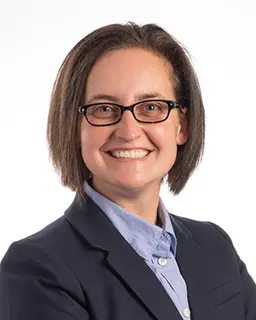
Stephanie Byrum
University of Arkansas for Medical Sciences, Department of Biochemistry and Molecular Biology; IDeA National Resource for Quantitative Proteomics, Director of Bioinformatics
Dr. Stephanie Byrum is an Assistant Professor in the Department of Biochemistry and Molecular Biology at the University of Arkansas for Medical Sciences. Dr. Byrum is also the Director of Bioinformatics for the IDeA National Resource for Quantitative Proteomics. She received her PhD in Bioinformatics via the joint UAMS/UALR Bioinformatics program in Little Rock, AR in 2009 with a focus on proteomics analysis. Dr. Byrum conducted her postdoctoral research in the laboratory of Dr. Alan Tackett, where she developed the ChAP-MS technology, which provided the first-ever method to purify a single genomic locus for proteomic identification of bound proteins and histone post-translational modifications. Her current research interests include developing bioinformatics workflows for quantitative proteomics, proteogenomics, meta-proteomics, and multi-omics data integration.
Collection Overview
Proteomics approaches can include detection and quantification of the proteins present and the specific post-translational modifications (PTMs) at a certain cellular state, as well as the proteins coming together in specific organelles or macromolecular protein complexes in certain stoichiometries. Proteomics is a diverse field that can be partitioned into general and quantitative workflows. Quantitative proteomics is focused on determining the amount of protein or protein PTM in a sample and can be classified into targeted-validation and discovery phases. Discovery-phase proteomics generally is known to utilize 10s of samples and generate 1000s of candidate proteins for follow-up studies. Targeted proteomics generally is known to utilize 100s of samples to measure 10s of target proteins. Discovery and targeted proteomics use different types of mass spectrometer configurations, sample preparation methods, and data analysis strategies. The goal of this Methods Collection is to assemble cutting-edge methods that improve proteomics capabilities to sequence deeper into the proteome with less starting material, perform quantitative proteomics with difficult tissue types, improves overall quantitation of proteins and PTMs, and aid in the visualization of proteomics data through bioinformatics workflows.
Articles


Abstracts
Application of FASP/TMT for quantitative mass spectrometry using archived FFPE patient tissue.
Brian Koss1,
Erin Taylor1,
Sara Shalin1,
Stefan Graw2,
Alan Tackett*2,
Juan Barreto1,
Charity Washam2,
Rick Edmondson1,
Stephanie Byrum2,
Samuel Mackintosh1
1University of Arkansas for Medical Sciences,
2University of Arkansas for Medical Sciences, Arkansas Children's Research Institute
A Calibrant for Protein Sequence Expression Analysis Suited to Both Tandem Mass Tags and Data Independent Acquisition
R. Marshall Pope*1
1University of Iowa