
Water Conservation
Water conservation means using water wisely so we don’t waste it or run out. Freshwater is limited, and agriculture uses the most, often inefficiently
Video Duration: 1 minute and 24 secondsMIDDLE SCHOOL
Earth and Space Science
Water conservation means using water wisely so we don’t waste it or run out. Freshwater is limited, and agriculture uses the most, often inefficiently
Video Duration: 1 minute and 24 seconds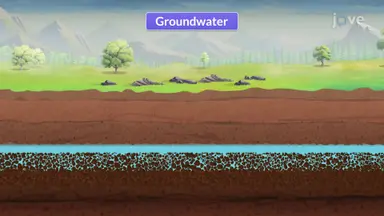
Groundwater is the water located beneath Earth's surface in soil pore spaces and in the fractures of rock formations. It plays a crucial role in the h
Video Duration: 1 minute and 15 seconds
Aquifers are underground layers of water-bearing permeable rock, rock fractures, or unconsolidated materials (gravel, sand, or silt) from which ground
Video Duration: 1 minute and 11 seconds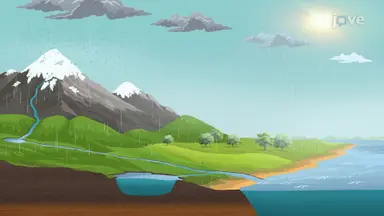
Most of Earth’s water is salty and stored in oceans, making it unusable for drinking, farming, or daily needs. Freshwater, the kind we can use, is onl
Video Duration: 1 minute and 26 seconds
Water is always on the move, changing from one form to another and cycling through Earth’s systems. This process, called the water cycle, is powered b
Video Duration: 1 minute and 25 seconds
Water is always moving through a continuous journey called the water cycle. It travels between different reservoirs, including oceans, glaciers, river
Video Duration: 1 minute and 26 seconds
Water is one of Earth’s most important natural resources, and while we use it daily, most of it goes to farming. Globally, about sixty-nine percent of
Video Duration: 1 minute and 24 seconds
Water is essential for life, and we use it daily both indoors and outdoors. Indoors, it is needed for drinking, cooking, bathing, brushing teeth, wash
Video Duration: 1 minute and 28 seconds
Even though water covers most of Earth’s surface, only a small part of it is usable freshwater. Most of our water is saltwater or frozen in glaciers a
Video Duration: 1 minute and 18 seconds
In the United States, most people can turn on a faucet and drink clean, safe water. But in many parts of the world, that’s not the case. Around 27% of
Video Duration: 1 minute and 14 seconds
A stream is a flowing freshwater that moves downhill through a natural channel with a bed and banks. Streams can be small or grow into large rivers. E
Video Duration: 1 minute and 12 seconds
Rivers and streams are moving bodies of freshwater that constantly shape the land as they travel. Smaller streams, called tributaries, flow into large
Video Duration: 1 minute and 19 seconds
A pond is a small, still body of freshwater, while a lake is much larger and usually deeper. Both collect water from rain, streams, runoff, or rivers.
Video Duration: 1 minute and 13 seconds
A flood happens when water overflows from a river, stream, or other body and spreads across land that’s usually dry. This can occur when there’s too m
Video Duration: 1 minute and 14 seconds
Floods occur when water overflows onto land that is normally dry. They are often caused by heavy rain, snowmelt, or storms. While floods can damage ho
Video Duration: 1 minute and 25 seconds
Glaciers are large, slow-moving masses of ice that form in places where more snow falls than melts each year. Most glaciers are found in polar regions
Video Duration: 1 minute and 20 seconds
An ice field becomes a glacier when the ice begins to move under its own weight. This happens after enough snow builds up and compresses into solid ic
Video Duration: 1 minute and 14 seconds
Springs are natural places where groundwater flows from underground to the surface. They form when water travels through permeable rocks or soil and e
Video Duration: 1 minute and 18 seconds
Geysers are natural hot springs that spray water and steam into the air at regular or irregular intervals. They form in areas where underground water
Video Duration: 1 minute and 21 seconds
Groundwater depletion happens when people pump water from underground sources faster than it can be naturally replenished. Groundwater is stored in sp
Video Duration: 1 minute and 19 seconds
Groundwater pollution happens when harmful substances seep into underground water supplies. This pollution can come from farms, factories, landfills,
Video Duration: 1 minute and 22 seconds
Water pollution occurs when harmful materials like chemicals, waste, or plastics enter rivers, lakes, oceans, or underground water, making it unsafe f
Video Duration: 1 minute and 30 seconds
Protecting the water supply means making sure that clean, safe water is available for people, plants, animals, and ecosystems. Water moves through Ear
Video Duration: 1 minute and 28 seconds
Treating the water supply means cleaning water to make it safe for people to drink, cook with, and use in everyday life. Water from natural sources li
Video Duration: 1 minute and 25 seconds
Cleaning up groundwater is a major challenge in Earth science because groundwater moves slowly underground and is often hard to reach. When harmful su
Video Duration: 1 minute and 20 seconds