
Branches of Earth Science
Earth Science is the study of our planet, including its land, water, air, and living things. It has five main branches, each focusing on different par
Video Duration: 1 minute and 30 secondsMIDDLE SCHOOL
Earth and Space Science
Earth Science is the study of our planet, including its land, water, air, and living things. It has five main branches, each focusing on different par
Video Duration: 1 minute and 30 seconds
Fieldwork links classroom learning with real-world experiences, helping you develop essential skills such as observation, data collection, and teamwor
Video Duration: 1 minute and 24 seconds
Location is an important concept in Earth Science and Geography. It allows us to pinpoint the locations of places on Earth. Scientists have developed
Video Duration: 1 minute and 29 seconds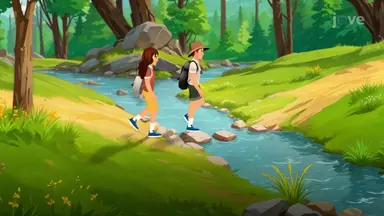
Knowing your destination and the path to get there is important for any journey, whether exploring a new city, hiking in nature or sailing across the
Video Duration: 1 minute and 21 seconds
Elevation helps us measure how high or low a location is relative to sea level. This measurement provides essential information about Earth's landscap
Video Duration: 1 minute and 15 seconds
Maps help us visualize the Earth's surface by representing locations, landforms, and important details. They are essential for navigation, exploration
Video Duration: 1 minute and 26 seconds
The Precambrian period is the longest chapter in Earth’s history, covering almost 88% of the planet’s past. It started about 4.6 billion years ago, wh
Video Duration: 1 minute and 29 seconds
The Paleozoic Era lasted from about 541 to 252 million years ago. During this time, Earth's surface changed dramatically. The movement of tectonic pla
Video Duration: 1 minute and 31 seconds
Earth’s oceans were full of life during the Paleozoic and Mesozoic eras. In the Paleozoic Era, 541 to 252 million years ago, the seas were home to tri
Video Duration: 1 minute and 25 seconds
Imagine Earth’s land as one giant puzzle piece. A long time ago, during the Mesozoic Era, all the land on Earth was connected to one big supercontinen
Video Duration: 1 minute and 21 seconds
The Earth's surface is always changing. The Cenozoic Era, which began about 66 million years ago and continues today, has been a time of major changes
Video Duration: 1 minute and 23 seconds
Fossils are like nature’s time capsules. They are the remains or traces of plants and animals that lived long ago, sometimes millions of years ago. Th
Video Duration: 1 minute and 22 seconds
In the early 1900s, Alfred Wegener, a German scientist, proposed the Continental Drift Hypothesis, the idea that Earth’s continents were once joined t
Video Duration: 1 minute and 30 seconds
One of the most substantial pieces of evidence supporting continental drift and plate tectonics comes from Earth’s magnetic field. Over millions of ye
Video Duration: 1 minute and 30 seconds
The ocean floor is not flat it has mountains, valleys, and ridges that provide clues about how Earth’s surface changes. Bathymetry is the study of the
Video Duration: 1 minute and 29 seconds
One of the strongest pieces of evidence for seafloor spreading comes from magnetic patterns recorded in oceanic rocks. Earth’s magnetic field has flip
Video Duration: 1 minute and 30 seconds
In the 1960s, scientist Harry Hess proposed the Seafloor Spreading Hypothesis, which provided key evidence for plate tectonics. According to this idea
Video Duration: 1 minute and 24 seconds
Earth’s outer shell, the lithosphere, is broken into large pieces called tectonic plates. These plates float on the partially melted layer of the mant
Video Duration: 1 minute and 30 seconds
Earth’s crust is constantly under stress due to the movement of tectonic plates. These forces can bend, break, or shift rock layers, shaping Earth’s s
Video Duration: 1 minute and 25 seconds
When geological stress applies pressure to rock layers, they can bend instead of breaking, creating folds in Earth's crust. Folds are curved rock laye
Video Duration: 1 minute and 25 seconds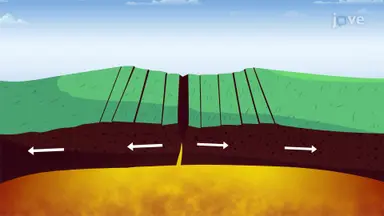
A fault is a break in Earth's crust where rocks move past each other due to tectonic forces. These movements can cause earthquakes, land shifts, and t
Video Duration: 1 minute and 22 seconds
Mountains are formed when tectonic forces push, fold, or uplift rock layers over millions of years. This process, called mountain building, happens du
Video Duration: 1 minute and 29 seconds
An earthquake is the sudden shaking of the ground caused by the movement of tectonic plates along a fault. This movement releases stored energy, which
Video Duration: 1 minute and 19 seconds
An earthquake zone is a region where earthquakes occur frequently due to tectonic plate movements. These zones are located along plate boundaries wher
Video Duration: 1 minute and 28 seconds
Weathering and erosion are natural processes that slowly change Earth’s surface over time. Weathering is the breaking down of rocks into smaller piece
Video Duration: 1 minute and 25 seconds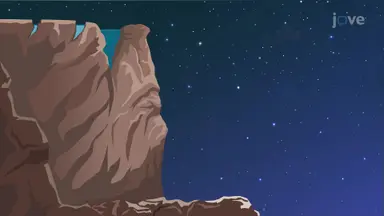
Mechanical weathering is the physical breakdown of rocks into smaller pieces without changing their chemical composition. This process happens when ro
Video Duration: 1 minute and 20 seconds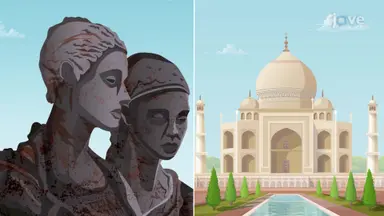
Chemical weathering is the process of breaking down rocks through chemical changes. Unlike mechanical weathering, which breaks rocks physically, chemi
Video Duration: 1 minute and 23 seconds
Weathering is the natural process that breaks down rocks into smaller pieces. Both mechanical and chemical weathering shape Earth’s surface, but the r
Video Duration: 1 minute and 26 seconds
Soil is an essential part of Earth’s surface that supports plants, animals, and ecosystems. It is made up of minerals, organic matter, water, and air,
Video Duration: 1 minute and 29 seconds
Soil is one of Earth’s most important natural resources. It forms over long periods from the breakdown of rocks and the remains of plants and animals.
Video Duration: 1 minute and 27 seconds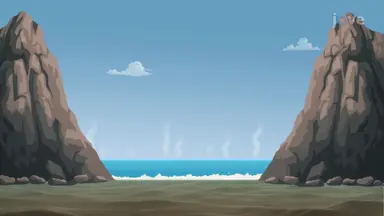
Rocks are solid materials that make up Earth's crust. They are formed through natural processes over millions of years. Scientists classify rocks into
Video Duration: 1 minute and 27 seconds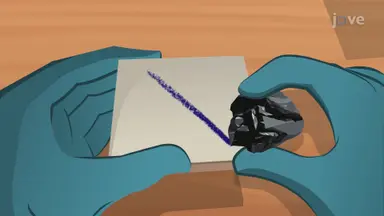
Minerals are natural, solid materials found on Earth. Each mineral has a unique set of properties that help scientists identify it. Some properties, l
Video Duration: 1 minute and 27 seconds
Minerals are the building blocks of rocks and are found all around us. They are naturally occurring, solid substances with a specific chemical composi
Video Duration: 1 minute and 20 seconds
Have you ever looked at a shiny crystal or a smooth rock and wondered where it came from? Minerals don’t just appear—they grow and change deep inside
Video Duration: 1 minute and 30 seconds
The rock cycle is a natural process that describes how rocks change from one type to another over time. These changes happen through melting, cooling,
Video Duration: 1 minute and 29 seconds
Igneous rocks form when magma or lava cools and hardens. These rocks begin as molten rock inside the Earth, known as magma. When magma reaches the sur
Video Duration: 1 minute and 28 seconds
The weather is the short-term state of the atmosphere in a specific place. It includes conditions like temperature, wind, clouds, and precipitation th
Video Duration: 1 minute and 11 seconds
Latitude is the distance north or south of the equator, measured in degrees. It has a strong influence on a region’s climate. The equator receives dir
Video Duration: 1 minute and 25 seconds
A location’s position on a continent can affect its climate. Coastal areas near oceans tend to have milder climates, with smaller temperature changes
Video Duration: 1 minute and 20 seconds
Altitude, or elevation, is the height of a place above sea level. As altitude increases, temperature generally decreases. This means that even in trop
Video Duration: 1 minute and 23 seconds
Temperate climates are found between the tropical and polar zones, typically from 30° to 60° latitude. These regions experience moderate temperatures
Video Duration: 1 minute and 26 seconds
The carbon cycle is the way carbon moves through Earth’s systems, air, water, soil, rocks, and living things. Carbon is stored in places like the ocea
Video Duration: 1 minute and 29 seconds
The atmosphere is the layer of gases that surrounds Earth. It may seem invisible, but it plays a powerful role in supporting life and shaping our plan
Video Duration: 1 minute and 27 seconds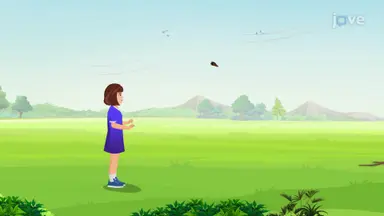
The atmosphere is the layer of gases surrounding Earth. It may look empty, but it’s actually made up of different gases that are essential for life an
Video Duration: 1 minute and 27 seconds
The atmosphere might seem like empty space, but it's full of gases that have mass, and that mass creates pressure. Atmospheric pressure is the force t
Video Duration: 1 minute and 26 seconds
The temperature of the atmosphere changes as you move higher above Earth’s surface, but it doesn’t just keep getting colder. Instead, temperature foll
Video Duration: 1 minute and 30 seconds
The troposphere is the lowest layer of Earth's atmosphere, where all weather happens! It stretches from the ground to about 8–15 kilometers (5–9 miles
Video Duration: 1 minute and 20 seconds
The stratosphere is the second layer of Earth’s atmosphere, located just above the troposphere. It extends from about 15 kilometers (9 miles) to aroun
Video Duration: 1 minute and 20 seconds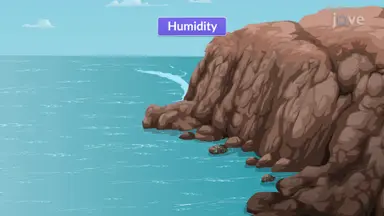
Humidity is the amount of water vapor in the air. Even though we can't see it, water vapor is always present in the atmosphere. When the air holds a l
Video Duration: 1 minute and 17 seconds
Clouds are made of tiny water droplets or ice crystals that form when water vapor condenses in the atmosphere. They are an important part of the water
Video Duration: 1 minute and 29 seconds
Fog is a cloud that forms near the ground. It’s made of tiny water droplets or ice crystals suspended in the air. Fog happens when moist air cools eno
Video Duration: 1 minute and 18 seconds
Precipitation is water that falls from the sky in different forms—like rain, snow, sleet, or hail. It’s an important part of the water cycle, which mo
Video Duration: 1 minute and 20 seconds
An air mass is a large body of air that has the same temperature and moisture level throughout. Air masses form over land or water and take on the cha
Video Duration: 1 minute and 16 seconds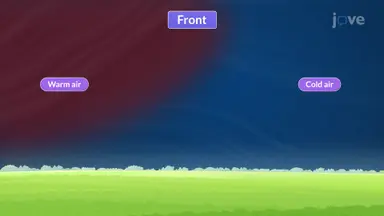
A front is the boundary between two different air masses. When warm and cold air masses meet, they don’t mix well because of differences in temperatur
Video Duration: 1 minute and 15 seconds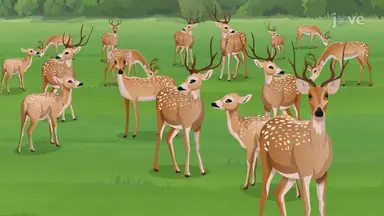
Biological communities comprise interacting populations of various species that coexist in a shared environment. These interactions—such as predation,
Video Duration: 1 minute and 12 seconds
Biological communities are composed of diverse organisms interacting within shared environments. These interactions—such as competition, predation, an
Video Duration: 1 minute and 28 seconds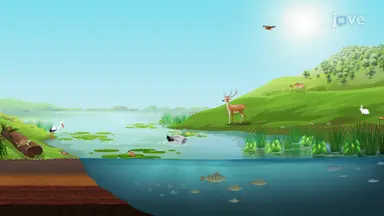
Ecosystems are dynamic systems where organisms interact with each other and their environment. Each organism has a specific role that contributes to t
Video Duration: 1 minute and 29 seconds
Energy is the driving force behind all biological processes in an ecosystem. It enters ecosystems through sunlight and moves through producers, consum
Video Duration: 1 minute and 21 seconds
Matter moves continuously through ecosystems, cycling between living organisms and their physical environment. This cycling involves processes like ph
Video Duration: 1 minute and 16 seconds
Nitrogen is essential for all living organisms, playing a critical role in forming proteins and DNA. Although nitrogen gas (N₂) makes up about 78% of
Video Duration: 1 minute and 9 seconds