This manuscript describes how to use the wavelet entropy index to analyze high-density electroencephalography (EEG) and electrocardiography (ECG) data. We show that the irregularity of cerebral and cardiac activities became more coordinated during mindfulness-based stress reduction practice.
Method Article
Using Wavelet Entropy to Demonstrate how Mindfulness Practice Increases Coordination between Irregular Cerebral and Cardiac Activities
In This Article
Summary
Abstract
In both the East and West, traditional teachings say that the mind and heart are somehow closely correlated, especially during spiritual practice. One difficulty in proving this objectively is that the natures of brain and heart activities are quite different. In this paper, we propose a methodology that uses wavelet entropy to measure the chaotic levels of both electroencephalogram (EEG) and electrocardiogram (ECG) data and show how this may be used to explore the potential coordination between the mind and heart under different experimental conditions. Furthermore, Statistical Parametric Mapping (SPM) was used to identify the brain regions in which the EEG wavelet entropy was the most affected by the experimental conditions. As an illustration, the EEG and ECG were recorded under two different conditions (normal rest and mindful breathing) at the beginning of an 8-week standard Mindfulness-based Stress Reduction (MBSR) training course (pretest) and after the course (posttest). Using the proposed method, the results consistently showed that the wavelet entropy of the brain EEG decreased during the MBSR mindful breathing state as compared to that during the closed-eye resting state. Similarly, a lower wavelet entropy of heartrate was found during MBSR mindful breathing. However, no difference in wavelet entropy during MBSR mindful breathing was found between the pretest and posttest. No correlation was observed between the entropy of brain waves and the entropy of heartrate during normal rest in all participants, whereas a significant correlation was observed during MBSR mindful breathing. Additionally, the most well-correlated brain regions were located in the central areas of the brain. This study provides a methodology for the establishment of evidence that mindfulness practice (i.e., mindful breathing) may increase the coordination between mind and heart activities.
Introduction
With advances in neuroscience and medicine1, we are in a much better position to understand the non-pharmacological benefits of mindfulness and meditation on mental and physical diseases. Numerous studies have shown that Mindfulness-based Stress Reduction (MBSR) training as a kind of mental exercise can actively reduce unnecessary stress in the mind and the body2. During the practice of meditation, the body and mind may become more entrained. These issues have attracted the interest of both the academic community and the general public and have motivated us to design a methodology to explore potential coordination between mind and body (or more specifically, between the brain and the heart) under different conditions to assess the effect of MBSR training and practice.
The irregularity of electroencephalograms (EEG) is usually regarded as noise in the conventional EEG spectrum analysis, but it may contain useful information and can be measured by signal entropy. EEG entropy has been used as an index of clinical conditions such as epilepsy, Alzheimer's disease, and anesthesia, and some evidence suggests that the entropy of EEG may be a more sensitive measure for monitoring brain states than the traditional EEG spectrum analysis3,4. Entropy has long been used in thermodynamics as an index to describe the chaotic state of a system. The brain waves measured by EEG are known for their dynamic activity due to brain networks operating between order and chaos5. Among the various kinds of entropies, wavelet entropy offers a method to calculate the entropy of energies under different observation scales, which is well-suited for analyzing EEG signals with highly varied features in different scales. For a completely random signal, the relative energies at different resolution levels will be the same, and the entropy will reach its maximum. Hence, the wavelet entropy serves as a measure of chaotic activities in EEG and can be used as an index for differentiating different mind states6.
Previous electrocardiogram (ECG) studies provided consistent evidence of meditation-related changes in heartrate variability when compared to pre-meditation states7. Heartbeat is regulated by the autonomic (including the sympathetic and parasympathetic) nervous system. The autonomic tone is modulated by interactions between the ganglion; sino-auricular node; vagus nerves; and higher-order brain structures, such as the medulla oblongata, the insula, and the limbic system. These structures form a hierarchical system, and its nonlinear activity can be measured through entropy8. For example, the neural bursts in higher-order brain structures can influence the heartrate rhythm9. In clinical conditions, brain disorders such as epileptic seizures disrupt the heart rhythm10. Neurocardiology research also suggests a close interplay between the heart and the brain11.
One difficulty in examining the association between brain and heart signals is that they are quite different in signal content and time scale. Hence, a major challenge is to identify a common measure that is not only applicable to both brain and heart signals, but also meaningful for interpretation in the context of mind-body coordination. In this paper, we propose the use of wavelet entropy to detect possible coordination between irregularities in brain and heart activities by correlating the entropies of EEG and heartbeat signals, which can then be evaluated by way of an MBSR experiment.
Because MBSR involves mindfulness practice in both body and mind, we hypothesize that MBSR mindful breathing practice may affect not only brain activity, but also the heartbeat. Previous studies mainly investigated the effect of mindfulness training and/or practice on the brain or the heart separately and based on different aspects; the simultaneous changes in these two closely related systems remain largely unexplored. Only a few studies reported better coordination of the body and mind after mindfulness training12. Using the proposed methodology, the representative results and a previous study13 showed that MBSR mindfulness training may increase the coordination of the body and mind in terms of their chaotic activities, which may offer new insight into the effects of mindfulness training on the central and peripheral nervous systems.
Protocol
This research study was approved by The University of Hong Kong Institutional Review Board. All participants provided their written informed consent prior to participating in this study.
1. Experimental Design
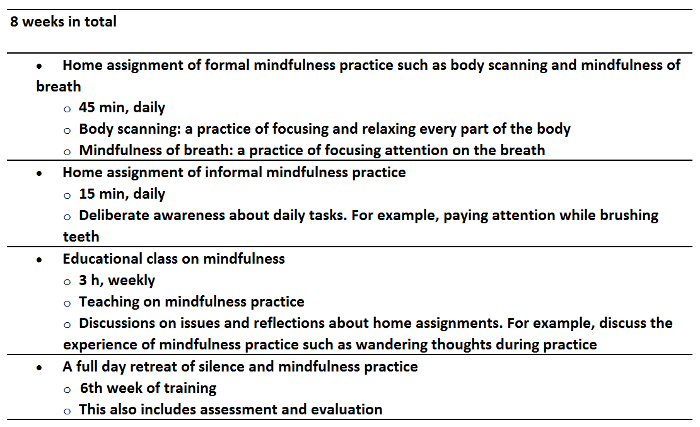
Table 1. MBSR Course Overview. The 8-week MBSR training course taken by the participants.
- Recruit participants.
NOTE: Eleven healthy adults (five females) from a local MBSR course participated in this EEG study and were 28 - 52-year-old. Participant with depression based on the Beck Depression Inventory were excluded from the study. The course followed standard MBSR training (Table 1), and participants had to commit to the training structure. - EEG recording system.
- Conduct EEG recording in a quiet room using a 128-channel EEG system consisting of an EEG cap, amplifier, headbox, and desktop computer.
2. EEG and ECG Data Acquisition
NOTE: EEG data collection followed a standard procedure similar to the method described previously14. Ask each participant to wash his/her hair and scalp clean before coming to the experimental site. Inform the participant about the experimental procedures, mainly that he/she will rest normally for 10 min and do mindful breathing for another 10 min while being recorded with EEG and ECG devices.
- Clean the face area and mastoid of the participant with alcohol swabs.
- Using a measuring tape, measure the participant's head circumference and then choose an appropriately sized cap. Take one measurement from the nasion to the inion and another measurement across the top of the ears and over the scalp. Mark the vertex (the point at mid-distance between the nasion and inion and mid-distance between the two ears) with a soft marker pen.
- Set the electrode positions according to the 10-5 electrode systems15. Position the cap in such a way that the Cz electrode is above the vertex, the Nz electrode is at the nasion, the Lz electrode is at the inion, the RM electrode is at the right mastoid, and the LM electrode is at the left mastoid.
- Place the ECG electrodes at both the left and right infraclavicular fossae.
- Fill the electrode holders with gel using a blunt-point syringe.
- Keep the impedance under 20 kΩ for each electrode. Reduce the impedance by adjusting the electrode placement to increase contact with the scalp; add more gel if necessary.
- Tighten the chinstrap and ask the participant to remain still.
- Set the sampling rate of the EEG device to 1,000 Hz. Use the left mastoid as the original reference point.
- Record EEG data (step 1.2.1) at the beginning of the MBSR course (within 2 weeks).
- Have the participant perform a brief body scan to relax the whole body. Have the participant pay attention to his/her breath while breathing in and breathing out. Have each participant perform 10 min of MBSR mindful breathing (MBSR mindfulness condition) and 10 min of normal rest (control condition) during EEG data collection. This generates a pre-MBSR training dataset with two conditions.
NOTE: Counterbalance the sequence of mindful breathing and normal rest among the participants.
- Have the participant perform a brief body scan to relax the whole body. Have the participant pay attention to his/her breath while breathing in and breathing out. Have each participant perform 10 min of MBSR mindful breathing (MBSR mindfulness condition) and 10 min of normal rest (control condition) during EEG data collection. This generates a pre-MBSR training dataset with two conditions.
- Record EEG data again about 1 month after the participants complete the MBSR course.
- Ask each participant to perform 10 min of mindful breathing and 10 min of normal rest during EEG data collection. This generates a post-MBSR training dataset with two conditions.
3. EEG and ECG Data Analysis
NOTE: The first four steps are for data preprocessing, and the remaining steps are for wavelet entropy computation and correlation analysis. Here, an open-source software named EEGLAB16 was used for EEG analysis, but the operations should be similar across different software. In the following, the operations that are based on EEGLAB will be provided as an example. Refer to the EEGLAB manual for details (https://sccn.ucsd.edu/wiki/EEGLAB_Wiki#EEGLAB_Tutorial).
- Use the EEG software to resample the data at 250 Hz by selecting Tools > Change sampling rate. Use the Finite Impulse Response (FIR) filter for band-pass filtering with a 0.5 - 100 Hz passband by selecting Tools > Filter the data > Basic FIR filter.
- To reduce noise due to the mains alternating current that is country-specific, use the short, nonlinear, Infinite Impulse Response (IIR) filter for notch filtering with a 47 - 53 Hz stopband by selecting Tools > Filter the data > Short non-linear IIR filter. This covers all relevant frequencies in the spectrum analysis while removing unnecessary noise.
- Use the EEG software to visually scroll through and inspect the EEG signal by selecting Plot > Channel data (scroll).
- Identify and delete EEG segments that contain obvious muscle noise and any other strange events. Left-click and drag the mouse over bad segments to highlight them and then "delete" or "reject" the segments using the EEG software.
NOTE: Muscle activities such as swallowing or facial expression often generate discontinuous and irregular signals. Strange events are usually caused by head or body movements, which often lead to significant shifts (at low frequencies) of the EEG signal. - Determine if there is any bad channel. Reconstruct each bad channel using the spherical interpolation method by selecting Tools > Interpolate channel.
- Identify and delete EEG segments that contain obvious muscle noise and any other strange events. Left-click and drag the mouse over bad segments to highlight them and then "delete" or "reject" the segments using the EEG software.
- Use the EEG software to perform Independent Component Analysis17 (ICA) on the data by selecting Tools > Run ICA. Have an experienced EEG operator visually identify and discard components of eye movement and blinking, muscle movements, and components of other possible noise by selecting Tools > Reject data using ICA > Reject components by map; Tools > Remove components. The EEG software will reconstruct the data automatically using the retained components.
- Use the EEG software to rereference the data to the average of all channels before further analysis by selecting Tools > Re-reference.
- Spectrum analysis.
- Use the EEG software command line function "spectopo" to compute the spectra of EEG using Welch's power spectral density estimation18 and obtain the log powers (dB) of delta (1 - 4 Hz), theta (4 - 8 Hz), alpha (8 - 12 Hz), beta (12 - 30 Hz), and gamma (30 - 80 Hz) waves.
- Calculate the relative power of each type of wave18 (i.e. the proportion of power in the respective frequency band relative to the total spectrum power).
- Perform EEG source analysis using the Statistical Parametric Mapping (SPM) approach.
- Use minimum norm estimation19 to transform the EEG signals of the scalp electrodes into 3D brain source signals.
NOTE: Here, the original channel number was 122, and it was transformed to 8,196 channels distributed in the three-dimensional brain model. The significance level was set at p = 0.01. Please refer to the source analysis in the SPM manual (www.fil.ion.ucl.ac.uk/spm/doc/spm8_manual.pdf).
- Use minimum norm estimation19 to transform the EEG signals of the scalp electrodes into 3D brain source signals.
- Calculate the wavelet entropy for each EEG channel (as well as for the estimated three-dimensional brain source signal) using the following procedure:
- Given a signal
 , calculate the wavelet coefficients as
 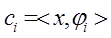 , where
  is an orthonormal basis of the Haar wavelet family and
 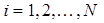 represents the decomposition levels (N = 10 in this study).
 - Define the relative energy as
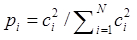 , with
  .
. - Calculate the wavelet entropy as
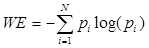 . Average the wavelet entropy for all channels to obtain the EEG wavelet entropy for each participant.
- Given a signal
- Use the software package to perform a peak analysis on the ECG data to obtain the heartbeat signal, which consists of the number of ECG wave peaks and the interval between the peaks.
NOTE: Assuming a normal heartrate of 60-100 beats/min in both the normal rest and mindful breathing states, the number of heartbeat instances N for a 10 min duration should be relatively small, satisfying 600 < N < 1,000.- To obtain reliable wavelet entropy from the heartbeat signal, use a sliding window of 500 points and a step increment of 10 points to compute a series of wavelet entropies using the same procedure as for EEG, elaborated in section 3.7. Use the mean value as the final wavelet entropy.
- Analyze the brain and heart correlation across subjects between the wavelet entropy of ECG and that of EEG at every channel of the scalp using any statistical software that has a Pearson correlation function.
- Use the EEG software command line function "topoplot" to construct a statistical scalp map for the correlation. Plot a linear correlation graph with the heart rate entropy and the average EEG entropy of only those channels that are significantly correlated with heartrate entropy (see the Representative Results section).
Results
Spectrum Analysis
In the spectrum analysis of EEG data, compared to normal rest, there were enhanced alpha (8 - 12 Hz) and beta (12 - 30 Hz) and reduced delta (1 - 4 Hz) waves during MBSR mindful breathing. The increment of alpha waves was globally significant, especially in the frontal and occipital lobes, whereas the increment of beta waves was mainly in the frontal lobe. Decreased delta waves were noted in the central-parietal areas (Figure 1). However, we did not find significant change between pre- and post-MBSR training.
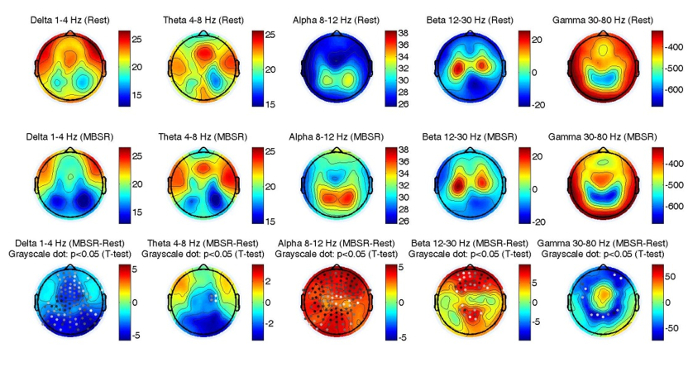
Figure 1. Spectrum Analysis of MBSR Mindful Breathing and Normal Rest Conditions. Spectrum analysis shows that MBSR practice can change brain activities, as indicated by the different spectrums of EEG. Original source: Reference 13. Please click here to view a larger version of this figure.
Figure 2 illustrates the defined region of interest: the occipital lobe (channels N19 - 21, N41 - 46, N67 - 72, N96 - 100, and N119), the middle frontal lobe (channels N53 - 61 and N79 - 83), and the middle parietal lobe (channels N48 - 50, N64 - 66, and N74 - 76). Table 2 shows the power of each spectrum and the entropy under MBSR mindful breathing and normal rest conditions, along with the p-value of the t-test of the difference between the two conditions for each region of interest. We combined the pre- and post-MBSR training EEG data since there was no difference between the two stages.

Figure 2. Defined Region of Interest. The defined areas of EEG channels that represent the middle frontal lobe, middle parietal lobe, and occipital lobe. Please click here to view a larger version of this figure.
| Delta | Theta | Alpha | Beta | Gamma | Entropy | ||
| Middle Frontal Lobe | MBSR | 18.96 ± 3.10 | 22.29 ± 5.86 | 30.90 ± 7.76 | 0.12 ± 43.77 | -467.25 ± 79.48 | 0.753 ± 0.060 |
| Rest | 22.40 ± 6.56 | 22.76 ± 5.98 | 26.91 ± 7.14 | -7.11 ± 42.27 | -449.76 ± 102.92 | 0.785 ± 0.066 | |
| p-value | 0.0243 | 0.6555 | 0.0085 | 0.0114 | 0.4419 | 0.0084 | |
| Occipital Lobe | MBSR | 15.39 ± 3.30 | 17.91 ± 6.53 | 33.38 ± 6.50 | -8.03 ± 40.72 | -466.23 ± 61.46 | 0.719 ± 0.048 |
| Rest | 19.82 ± 6.32 | 20.38 ± 8.11 | 29.73 ± 5.30 | -11.62 ± 40.22 | -439.03 ± 102.81 | 0.763 ± 0.055 | |
| p-value | 0.0134 | 0.1213 | 0.0125 | 0.0796 | 0.8936 | 0.0098 | |
| Parietal Lobe | MBSR | 17.95 ± 3.60 | 19.46 ± 6.54 | 32.84 ± 6.68 | 2.68 ± 38.23 | -487.72 ± 104.13 | 0.738 ± 0.072 |
| Rest | 21.24 ± 6.37 | 21.16 ± 8.00 | 29.79 ± 6.60 | -1.27 ± 34.42 | -490.01 ± 123.83 | 0.764 ± 0.075 | |
| p-value | 0.0157 | 0.0963 | 0.0177 | 0.1507 | 0.2878 | 0.0368 |
Table 2. Spectrum and Entropy across Brain Areas. MBSR mindful breathing and normal rest conditions are compared among the three predefined Regions of Interest (ROI).
Wavelet Entropy Analysis
Analysis of the wavelet entropy of EEG showed decreased EEG entropy during MBSR mindful breathing compared to normal rest, both for pre- and post-MBSR training. Because there was no significant difference between the two stages, they were merged to produce an averaged map (shown in the third row of Figure 3). The main areas with decreased entropy were at the frontal lobe and the parietal-occipital lobe.
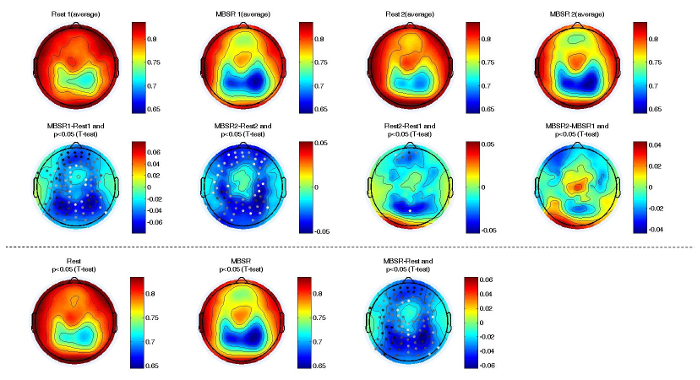
Figure 3. Wavelet Entropy Analysis. Rest 1 and MBSR 1 denote pre-MBSR training, whereas Rest 2 and MBSR 2 denote post-MBSR training. Wavelet entropy analysis shows that MBSR practice can reduce the irregularity of brain electronic activities. Original source: Reference13. Please click here to view a larger version of this figure.
Source Analysis of Wavelet Entropy
Source analysis of the EEG signals can improve the spatial resolution by deconvolving the scalp EEG into electrical activities over the cortical surface20. The analysis shows that the major brain regions affected by the MBSR mindfulness training were in the left-middle occipital lobe, precuneus, superior temporal lobe, and left fusiform (Figure 4). In Table 3, for the four anatomical labels obtained from the source analysis, we provide t-test results for the difference in the entropies of two different states, MBSR mindfulness state versus normal rest.
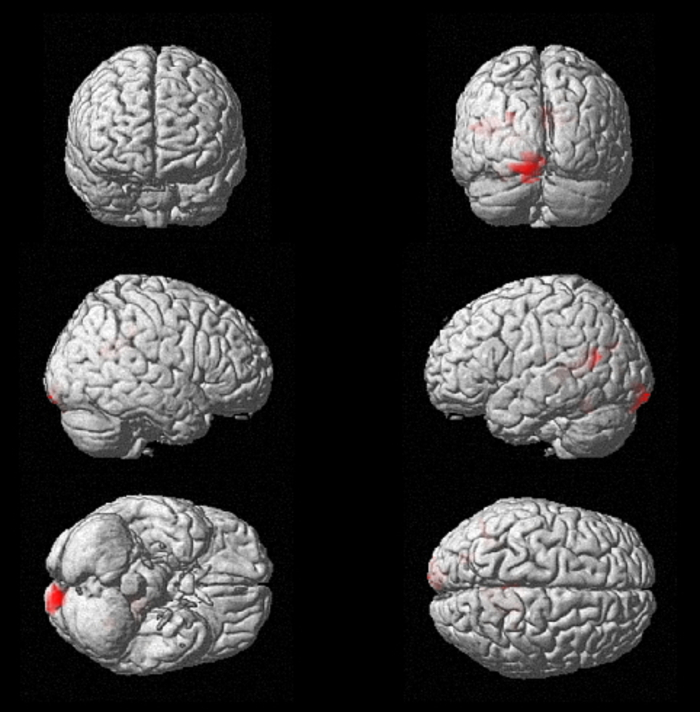
Figure 4. Source Analysis. The source analysis shows that the entropies of various brain regions (highlighted in red) decrease during the MBSR mindful breathing state. Please click here to view a larger version of this figure.
| Anatomical label | voxels | x, y, z | t-value |
| middle temporal gyrus L | 1,728 | -44 -60 16 | 3.77 |
| precuneus R | 1,324 | 2 -56 28 | 3.63 |
| occipital L | 749 | -2 -102 -12 | 3.61 |
| fusiform L | 142 | -102 | 3.51 |
Table 3. Source Analysis Report. Anatomical brain regions with significant differences in entropy between MBSR mindful breathing and normal rest conditions. L, the left side of brain. R, the right side of the brain (p < 0.001, t-test, uncorrected).
Heart Rate Wavelet Entropy
The analysis revealed no significant difference in average heartrate, but the heartrate entropy was lower during MBSR mindful breathing, both pre- and post-MBSR training (Table 4).
| Rest1 | MBSR1 | Rest2 | MBSR2 | |
| Heart Rate (beats per minute) | 68.2 ± 9.5 | 67.7 ± 9.3 | 71.8 ± 8.1 | 70.7 ± 8.4 |
| Heart Rate Wavelet Entropy | 0.89 ± 0.05 | 0.79 ± 0.11* | 0.89 ± 0.07 | 0.80 ± 0.12# |
Table 4. Heartrate and Heartrate Wavelet Entropy of MBSR Mindful Breathing and Normal Rest Conditions. The two conditions are compared at both pre- and post-MBSR training. *Significant difference (p <0.05) between Rest 1 and MBSR 1. #Significant difference (p <0.05) between Rest 2 and MBSR 2.
Correlation between Heart and Brain Activities
Given the potential connection between the brain and the heart, we analyzed the correlation between the whole-brain EEG entropy (i.e. the average of EEG entropies over all EEG channels for a single subject) and the heartrate entropy during MBSR mindful breathing and normal resting states. The entropies of the brain and heart were significantly correlated during MBSR mindful breathing but not during normal rest. As shown in the upper part of Figure 5, the significance of the correlation between the entropy of the EEG in each channel and the heartrate entropy is most prominent in the central part of the brain. The lower plot shows the correlation between the EEG entropy in the central regions (average of those dotted channels that are significantly correlated with heartrate entropy) and heartrate entropy.

Figure 5. Correlation between the Wavelet Entropies of Electronic Activities of the Heart and Brain. The wavelet entropy of brain activity is the average of the significant channels in the central region, as shown in the upper-right figure. The wavelet entropy of the heart is based on the heartrate interval. The correlation (lower panel) is calculated across all subjects for both pre- and post-MBSR training results. Original source: Reference 13. Please click here to view a larger version of this figure.
Discussion
This EEG study provides concrete evidence that, compared to normal rest, MBSR mindful breathing enhances the alpha waves in the frontal and occipital lobes. This is in line with the majority of reports on increased alpha waves during meditation, especially in beginners21. Alpha waves usually indicate a state of arousal and vigilance and freedom from any specific task. Such a mental state is one of the objectives of meditation; that is, keeping the mind clean and sharp, free from either flights of fancy or from falling asleep. The enhanced alpha wave synchrony during MBSR practice may also enhance the coordination between mind and body22.
The electronic activities of the vast number of neurons in the brain form a nonlinear hierarchical system, and its irregularity can be well measured by entropy8. We found that during MBSR practice, the irregularity of brain electronic activities decreased across a large part of the scalp EEG, especially in the frontal pole and bilateral occipital brain regions. Further source analysis of wavelet entropy showed that the irregularity of occipital and precuneus activities was reduced during MBSR practice. Other areas involved include the right-middle cingulate and the superior temporal lobe. This is in line with another study which indicates that gray matter increases in the precuneus after MBSR training23. Advanced meditation practitioners usually have higher parieto-occipital EEG gamma waves during non-rapid eye movement sleep1. One important feature of MBSR training is to be nonjudgmental of the mind/brain information flow. This may potentially reduce the irregularity of brain activities. Because a main information source in the brain is the visual cortex, it is plausible that the visual-related brain regions are more affected by MBSR practice than are other regions. This enables the mind to become less responsive to irrelevant information and to pay more attention to mindful breathing.
Wavelet entropy analysis showed less irregularity of heartrate during mindful breathing compared to the normal rest state, which implies a more refined balance of the autonomic nervous system due to relatively unwavering interactions between parasympathetic and sympathetic tones. Mindful breathing may also affect the heartrate because the lung sensory afferents send inhibitory projections to the cardiac vagal motor neurons in the mid-brain, which inhibit the heartrate via the vagus nerve24. The cardiorespiratory interaction is mediated by the brainstem and limbic system in the brain25. Given the connection between the central nervous system and cardiac activity, it is plausible that, by training the mind, MBSR or other meditation practices can also influence other body functions, such as resetting the baroreflex sensitivity, improving gas exchange efficiency in the lungs, and balancing the autonomic nervous system26.
The mind-body connection is emphasized in many Eastern traditions. In this respect, our study provides the first objective evidence in terms of entropy. The irregularities of brain and heart activities became more coordinated during MBSR practice, and the coordination was greatest in the bilateral somatosensory regions. This region is directly in charge of the body's sensory input and movement, and this increased coordination implies greater body awareness during MBSR practice. Mindfulness training was found to increase the activities of the viscerosomatic areas in a functional MRI study, which has better spatial resolution than EEG27. Our results suggest that the brain and the heart may become more entrained during MBSR practice, offloading unnecessary entropy in the system28. Because the heartbeat is regulated by the autonomic nervous system, wherein the autonomic tone is modulated by the interactions between the ganglion; sino-auricular node; vagus nerves; and higher-order brain structures, such as the medulla oblongata, insula, and the limbic system, the autonomic and central nervous systems may well become more coordinated during MBSR practice.
One important step in a study such as ours is to choose the right entropy index to measure the irregularity of EEG and ECG. Unlike Renu Madhavi et al., who used approximate entropy29, we have chosen to use wavelet entropy to focus on the complexity among the energies in different scales. Because the brain electronic activities originate from a vast number of neurons that have different characteristics in different scales and spectrums, wavelet entropy should be more suitable for measuring the irregularity of EEG30. Similarly, instantaneous heartrate also has different features under different time scales, so it is reasonable to apply wavelet entropy to ECG31. Furthermore, Shannon's entropy and approximate entropy are sensitive to sampling frequency, and approximate entropy requires large computation times that increase exponentially with data length, this in addition to the calculation in the source space.
Several limitations of the current study are worth noting. First, the spatial resolution of scalp EEG is relatively poor, despite its high temporal resolution. To address this, source analysis was applied in our study. EEG source reconstruction is an ill-posed problem, and an alternative approach is to have spatial priors from previous functional Magnetic Resonance Imaging (fMRI) studies, which can help to improve the reconstruction accuracy32,33. Another limitation is that the coordination between the brain and heart activities was assessed between subjects; within-subject coordination is left to future studies. Additionally, the entropy of ECG is not derived directly from the ECG signal, but rather from the heartrate interval, because the amplitude of ECG can be greatly influenced by the electrode position and skin impedance and is thus not comparable between subjects.
Previous studies usually performed a spectrum analysis of the EEG signal, dismissing irregularity in EEG as noise. In contrast, we propose to use wavelet entropy as a more sensitive index to measure the chaotic electronic activities of the brain as a reflection of the mind state. The proposed methodology provides objective evidence of the traditional assumption that the mind and heart are more coordinated during meditation.
Because wavelet entropy can monitor meditation state quite sensitively, it may be used in the mental training field, just as entropy is used in clinical practice to measure the level of anesthesia during surgery. Using an index similar to wavelet entropy, wireless EEG devices can be used to conveniently monitor an individual's daily meditation practice or other mental training for educational purposes. Nonetheless, because a wireless EEG can usually only stably measure the channels in the forehead, we need to explore whether these channels are sensitive enough to monitor state of mind.
The critical steps of this procedure include keeping the skin impedance for each electrode low for better signal quality and less noise; appropriately and properly conducting MBSR training; ensuring a good, non-fatigued mental state before the experiment, as meditation requires great energy; choosing the proper entropy index (wavelet entropy); and being familiar with SPM source analysis of EEG data.
Disclosures
The authors declare that they have no competing financial interests.
Acknowledgements
This study was supported by the SPF-201209176152 fund at The University of Hong Kong. We thank Dr. Helen Ma for teaching the course and recruiting MBSR participants.
Materials
| Name | Company | Catalog Number | Comments |
|---|---|---|---|
| Synamps 2/RT 128-channel EEG/EP/ERP | Compumedics NeuroScan | Model 8050 | Amplifiers and EEG acquisition |
| Quik-CapEEG 128 electrodes | Compumedics NeuroScan | EEG caps | |
| Quik-Gel | Compumedics NeuroScan | conductive electrode gel | |
| EEGLAB | Swartz Center for Computational Neuroscience | EEG analysis software | |
| Matlab R2011a | MathWorks | EEGLAB is based on Matlab | |
| SPM | Wellcome Trust Centre for Neuroimaging | EEG source analysis software |
References
- Ferrarelli, F., et al. Experienced mindfulness meditators exhibit higher parietal-occipital EEG gamma activity during NREM sleep. Plos One. 8 (8), e73417(2013).
- Grossman, P., Niemann, L., Schmidt, S., Walach, H. Mindfulness-based stress reduction and health benefits: a meta-analysis. J. Psychosom. Res. 57 (1), 35-43 (2004).
- Abasolo, D., et al. Analysis of regularity in the EEG background activity of Alzheimer's disease patients with approximate entropy. Clin. Neurophysiol. 116 (8), 1826-1834 (2005).
- An approach to absence epileptic seizures detection using approximate entropy. Annual International Conference of the IEEE Engineering in Medicine and Biology Society. Giannakakis, G., et al. , Conference proceedings 413-416 (2013).
- Kitzbichler, M. G., Smith, M. L., Christensen, S. R., Bullmore, E. T. Broadband criticality of human brain network synchronization. Plos Comput. Biol. 5 (3), e1000314(2009).
- Quiroga, R. Q., Rosso, O. A., Basar, E., Schurmann, M. Wavelet entropy in event-related potentials: a new method shows ordering of EEG oscillations. Biol. Cybern. 84 (4), 291-299 (2001).
- Peng, C. K., et al. Exaggerated heart rate oscillations during two meditation techniques. International J. Cardiology. 70 (2), 101-107 (1999).
- Vadigepalli, R., Doyle, F. J., Schwaber , J. S. Analysis and neuronal modeling of the nonlinear characteristics of a local cardiac reflex in the rat. Neural Comput. 13 (10), 2239-2271 (2001).
- Pokrovskii, V. M. Integration of the heart rhythmogenesis levels: heart rhythm generator in the brain. J. Integr. Neurosci. 4 (2), 161-168 (2005).
- Wolber, T., Namdar, M., Duru, F. Heart obeys the brain: seizure ceases cardiac rhythm. PACE. 33 (8), e72-e75 (2010).
- van der Wall, E. E., van Gilst, W. H. Neurocardiology: close interaction between heart and brain. Neth. Heart J. 21 (2), 51-52 (2013).
- Tang, Y. Y., et al. Central and autonomic nervous system interaction is altered by short-term meditation. Proc. Natl. Acad. Sci. USA. 106 (22), 8865-8870 (2009).
- Gao, J. L., et al. Entrainment of chaotic activities in brain and heart during MBSR mindfulness training. Neurosci. Lett. 616, 218-223 (2016).
- Slotnick, S. D. High density event-related potential data acquisition in cognitive neuroscience. J. Vis. Exp. (38), (2010).
- Jurcak, V., Tsuzuki, D., Dan, I. 10/20, 10/10, and 10/5 systems revisited: their validity as relative head-surface-based positioning systems. Neuroimage. 34 (4), 1600-1611 (2007).
- Delorme, A., Makeig, S. EEGLAB: an open source toolbox for analysis of single-trial EEG dynamics including independent component analysis. J. Neurosci. Methods. 134 (1), 9-21 (2004).
- Hyvarinen, A., Oja, E. Independent component analysis: algorithms and applications. Neural Netw. 13 (4-5), 411-430 (2000).
- Welch, P. D. The use of fast Fourier transform for the estimation of power spectra: a method based on time averaging over short, modified periodograms. IEEE Transactions on Audio and Electroacoustics. 15 (2), 70-73 (1967).
- Hamalainen, M. S., Ilmoniemi, R. J. Interpreting magnetic-fields of the brain: minimum norm estimates. Med. Biol. Eng. Comput. 32 (1), 35-42 (1994).
- Lee, T. M., et al. Distinct neural activity associated with focused-attention meditation and loving-kindness meditation. Plos One. 7 (8), e40054(2012).
- Kim, D. K., Rhee, J. H., Kang, S. W. Reorganization of the brain and heart rhythm during autogenic meditation. Front. Integr. Neurosci. 7, 109(2014).
- Hebert, R., Lehmann, D., Tan, G., Travis, F., Arenander, A. Enhanced EEG alpha time-domain phase synchrony during transcendental meditation: implications for cortical integration theory. Signal Process. 85 (11), 2213-2232 (2005).
- Kurth, F., Luders, E., Wu, B., Black, D. S. Brain gray matter changes associated with mindfulness meditation in older adults: an exploratory pilot study using voxel-based morphometry. Neuro. 1 (1), 23-26 (2014).
- West, J. B., West, J. B. Pulmonary pathophysiology--the essentials. , 5th edn, Williams & Wilkins. (1998).
- Clark, M. T., et al. Breath-by-breath analysis of cardiorespiratory interaction for quantifying developmental maturity in premature infants. J. Appl. Physiol. 112 (5), 859-867 (2012).
- Phongsuphapa, S., Pongsupap, Y., Chandanamattha, P., Lursinsap, C. Changes in heart rate variability during concentration meditation. Int. J. of Cardiol. 130 (3), 481-484 (2008).
- Farb, N. A. S., et al. Attending to the present: mindfulness meditation reveals distinct neural modes of self-reference. Soc. Cogn. Affect. Neur. 2 (4), 313-322 (2007).
- Fingelkurts, A. A., Fingelkurts, A. A., Neves, C. E. H. Natural world physical, brain operational, and mind phenomenal space-time. Phys. Life Rev. 7 (2), 195-249 (2010).
- Renu Madhavi, C., Ananth, A. G. Estimation of approximate entropy of heart rate variability of healthy subjects and investigation of the effect of meditation on it. International Conference on Signal Acquisition and Processing: ICSAP 2010, Proceedings. , 304-306 (2010).
- Ocak, H. Automatic detection of epileptic seizures in EEG using discrete wavelet transform and approximate entropy. Expert Syst. Appl. 36 (2), 2027-2036 (2009).
- Alcaraz, R., Rieta, J. J. Application of wavelet entropy to predict atrial fibrillation progression from the surface ECG. Comput. Math Method M. , (2012).
- Sun, D. L., Lee, T. M. C., Wang, Z. X., Chan, C. C. H. Unfolding the spatial and temporal neural processing of making dishonest choices. Plos One. 11 (4), (2016).
- Sun, D. L., Lee, T. M. C., Chan, C. C. H. Unfolding the spatial and temporal neural processing of lying about face familiarity. Cereb. Cortex. 25 (4), 927-936 (2015).
Reprints and Permissions
