
0 مشاهدة·09:59 دقيقة
1. توظيف المشاركين
- تجنيد 20 مشاركا.
- يجب أن يكون المشاركون يستخدمون اليد اليمنى وليس لديهم تاريخ من الاضطرابات العصبية أو النفسية.
- يجب أن يكون لدى المشاركين رؤية طبيعية أو مصححة إلى طبيعية للتأكد من أنهم سيكونون قادرين على رؤية الإشارات المرئية بشكل صحيح.
- يجب ألا يكون لدى المشاركين معدن في أجسامهم. هذا مطلب أمان مهم بسبب المجال المغناطيسي العالي الذي ينطوي عليه التصوير بالرنين المغناطيسي الوظيفي.
- يجب ألا يعاني المشاركون من رهاب الأماكن المغلقة ، لأن الرنين المغناطيسي الوظيفي يتطلب الاستلقاء في مساحة صغيرة من تجويف الماسح الضوئي.
2. إجراءات ما قبل الفحص
- املأ الأوراق المسحية المسحية.
- عندما يأتي المشاركون لإجراء فحص الرنين المغناطيسي الوظيفي ، اطلب منهم أولا ملء نموذج شاشة معدني للتأكد من عدم وجود مؤشرات مضادة للتصوير بالرنين المغناطيسي ، ونموذج النتائج العرضية الذي يمنح الموافقة على فحص فحصهم من قبل أخصائي الأشعة ، ونموذج موافقة يوضح بالتفصيل مخاطر وفوائد الدراسة.
- جهز المشاركين للذهاب إلى الماسح الضوئي عن طريق إزالة جميع المعادن من أجسامهم ، بما في ذلك الأحزمة والمحافظ والهواتف ومشابك الشعر والعملات المعدنية وجميع المجوهرات.
3. تقديم التعليمات للمشارك.
- أخبر المشارك أنه في الماسح الضوئي ، سيرون صورا للوجوه والمنازل.
- بالنسبة لعمليات التشغيل الأولية للترجمة ، اطلب من المشاركين أنهم سيشاهدون الوجوه والمنازل بشكل سلبي.
- اشرح للمشاركين أنه في تشغيل المهمة ، سيرون وجها ومنزلا متراكبا على بعضهم البعض. ستكون مهمتهم هي الانتباه إلى المنزل أو الوجه ، على النحو التالي.
- عندما تبدأ المهمة لأول مرة ، سيتم إخبارهم عبر تعليمات نصية ما إذا كانوا يجب الانتباه إلى المنازل أو الوجوه.
- سيكون للمشاركين أربعة جولات حيث يطلب منهم الانتباه إلى المنازل ، وأربعة جولات حيث يطلب منهم الانتباه إلى الوجوه.
- سيكون الجدول الزمني للوجه والمنزل عشوائيا لكل موضوع.
- شدد على المشارك على أهمية إبقاء رأسه ثابتا طوال فترة الفحص.
4. ضع المشارك في الماسح الضوئي.
- امنح المشارك سدادات أذن لحماية آذانهم من ضوضاء الماسح الضوئي وهواتف الأذن لارتدائها حتى يتمكنوا من سماع المجرب أثناء الفحص ، واجعلهم يستلقيون على السرير ورؤوسهم في الملف.
- امنح المشارك كرة الضغط في حالات الطوارئ واطلب منه الضغط عليها في حالة الطوارئ أثناء الفحص.
- استخدم وسادات الرغوة لتأمين رأس المشاركين في الملف لتجنب الحركة الزائدة أثناء المسح ، وتذكير المشارك بأنه من المهم جدا البقاء ثابتا قدر الإمكان أثناء المسح ، حيث أن أصغر الحركات تطمس الصور.
5. جمع البيانات
- جمع مسح تشريحي عالي الدقة.
- ابدأ المسح الوظيفي.
- مزامنة بداية عرض التحفيز مع بداية الماسح الضوئي.
- عرض الصور عبر جهاز كمبيوتر محمول متصل بجهاز عرض. المشارك لديه مرآة فوق عينيه ، تعكس شاشة في الجزء الخلفي من تجويف الماسح الضوئي.
- قدم لكل مشارك جولتين من المترجمين ، حيث يرون بشكل سلبي كتل من الوجوه والمنازل. يتم استخدام عمليات تشغيل المترجم هذه لتحديد FFA و PPA في كل مشارك على حدة.
- قدم كل مجموعة من الوجوه والمنازل في كتلة 30 ثانية ، مع 20 ثانية من التثبيت بين الكتل. اعرض كل حافز لمدة 750 مللي ثانية ، متبوعا بفاصل محفز يبلغ 250 مللي ثانية ، حيث لا يوجد سوى تقاطع تثبيت على الشاشة. كرر الكتل بالتناوب للحصول على خمس كتل من الوجوه وخمس كتل من المنازل.
- قدم لكل مشارك ثمانية أشواط وظيفية لمهمة الانتباه.
- ابدأ كل جولة بوجه ومنزل متراكب (الشكل 1) في وسط الشاشة ، وتعليمات للبدء بالاهتمام بالوجه أو المنزل. سيكون هدف الانتباه الأولي عشوائيا من تشغيل إلى آخر.
- سيحتوي كل شوط على 300 زوج من الوجوه والمنازل المتراكبة. تتكرر أزواج الوجوه والمنازل بين الجري ، ولكن ليس داخل الجري.
- أظهر كل زوج محفز متراكب لمدة ثانية واحدة. في كل ثانية ، استبدل المنزل المتراكب والوجه بمنزل ووجه متراكب جديد.
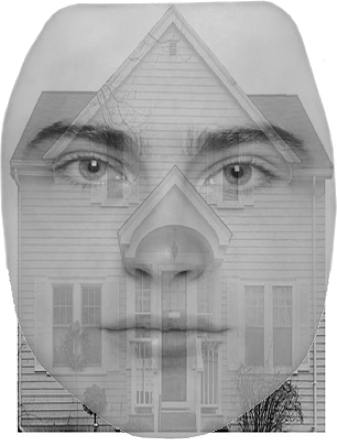
الشكل 1. محفز الوجه وتحفيز المنزل متراكب معا. كان كل حافز مقدم عبارة عن وجه ومنزل متراكب. صدرت تعليمات للمشارك بالتركيز على الوجه أو المنزل.
6. إجراءات ما بعد المسح
- أخرج المشارك من الماسح الضوئي.
- استخلاص المعلومات من المشارك.
7. تحليل البيانات
- المعالجة المسبقة للبيانات.
- قم بإجراء تصحيح الحركة لتقليل القطع الأثرية للحركة.
- قم بإجراء التصفية الزمنية لإزالة انجرافات الإشارة.
- قم بتنعيم البيانات لزيادة نسبة الإشارة إلى الضوضاء.
- نمذجة البيانات لكل مشارك.
- قم بإنشاء نموذج لما يجب أن تكون عليه الاستجابة الديناميكية الدموية المتوقعة لكل حالة مهمة (الوجوه والمنازل) في فحص المترجم.
- قم بملاءمة البيانات مع هذا النموذج ، مما ينتج عنه خريطة إحصائية ، حيث تمثل القيمة في كل فوكسل مدى مشاركة هذا الفوكسل في حالة المهمة.
- حدد المجموعات لكل موضوع التي تتوافق مع FFA و PPA بناء على مواقعها التشريحية. سيشمل FFA جميع الفوكسل المتجاورة في التلفيف المغزلي المتوسط (الذي يستجيب بشكل ملحوظ للوجوه أكثر من المنازل) وشملت PPA جميع الفوكسل في التلفيف شبه الحصين الذي استجاب بشكل أكبر للمنازل أكثر من الوجوه. لتحديد مناطق الاهتمام هذه ، تم استخدام حد أدنى من الأهمية من p < 10-6 لكل فوكسل.
- استخدم أقنعة FFA و PPA لكل فرد كعائد استثمار لاستخراج تنشيط الإشارة أثناء عمليات التركيز الأربعة على الوجوه وعمليات التركيز الأربعة على المنازل.
- حدد النسبة المئوية لتغيير الإشارة لظروف التركيز على الوجه والتركيز المنزلي في FFA و PPA لكل موضوع.
- قم بإنشاء نموذج لما يجب أن تكون عليه الاستجابة الديناميكية الدموية المتوقعة لكل حالة مهمة (الوجوه والمنازل) في فحص المترجم.
- قم بإجراء تحليل ثنائي الاتجاه للتباين (ANOVA) على قيم تغيير الإشارة المئوية لاختبار الاختلافات بين الشروط. العوامل في هذا الاختبار هي عائد الاستثمار (PPA مقابل FFA) والانتباه (الوجوه مقابل المنازل).
المصدر: مختبرات جوناس تي كابلان وسارة آي جيمبل - جامعة جنوب كاليفورنيا
النظام البصري البشري متطور بشكل لا يصدق وقادر على معالجة كميات كبيرة من المعلوم…
Chapters in this video
0:00
نظرة عامة
1:23
التصميم التجريبي
3:35
إجراء التجربة
5:37
تحليل البيانات والنتائج
7:50
التطبيقات
9:28
ملخص

Copyright © 2026 MyJoVE Corporation. All rights reserved