Improving our understanding of and our ability to manage many of the insect-transmitted plant viruses requires the use of the vector. Insect transmission of plant viruses is a tritrophic interaction, and as such requires the manipulation of insects, virus, and plant. Vectors must be reared in large numbers and manipulated in such a way as to insure high rates of transmission to test plants. The basics of rearing and manipulating the whitefly, Bemisa tabaci (Hemiptera: Aleyrodidae), a vector of plant viruses belonging to several emerging plant virus genera, representing a large number of economically significant viruses is presented.
Method Article
Transmitting Plant Viruses Using Whiteflies
In This Article
Summary
Abstract
Whiteflies, Hemiptera: Aleyrodidae, Bemisia tabaci, a complex of morphologically indistinquishable species5, are vectors of many plant viruses. Several genera of these whitefly-transmitted plant viruses (Begomovirus, Carlavirus, Crinivirus, Ipomovirus, Torradovirus) include several hundred species of emerging and economically significant pathogens of important food and fiber crops (reviewed by9,10,16). These viruses do not replicate in their vector but nevertheless are moved readily from plant to plant by the adult whitefly by various means (reviewed by2,6,7,9,10,11,17). For most of these viruses whitefly feeding is required for acquisition and inoculation, while for others only probing is required. Many of these viruses are unable or cannot be easily transmitted by other means. Therefore maintenance of virus cultures, biological and molecular characterization (identification of host range and symptoms)3,13, ecology2,12, require that the viruses be transmitted to experimental hosts using the whitefly vector. In addition the development of new approaches to management, such as evaluation of new chemicals14 or compounds15, new cultural approaches1,4,19, or the selection and development of resistant cultivars7,8,18, requires the use of whiteflies for virus transmission. The use of whitefly transmission of plant viruses for the selection and development of resistant cultivars in breeding programs is particularly challenging7. Effective selection and screening for resistance employs large numbers of plants and there is a need for 100% of the plants to be inoculated in order to find the few genotypes which possess resistance genes. These studies use very large numbers of viruliferous whiteflies, often several times per year.
Whitefly maintenance described here can generate hundreds or thousands of adult whiteflies on plants each week, year round, without the contamination of other plant viruses. Plants free of both whiteflies and virus must be produced to introduce into the whitefly colony each week. Whitefly cultures must be kept free of whitefly pathogens, parasites, and parasitoids that can reduce whitefly populations and/or reduce the transmission efficiency of the virus. Colonies produced in the manner described can be quickly scaled to increase or decrease population numbers as needed, and can be adjusted to accommodate the feeding preferences of the whitefly based on the plant host of the virus.
There are two basic types of whitefly colonies that can be maintained: a nonviruliferous and a viruliferous whitefly colony. The nonviruliferous colony is composed of whiteflies reared on virus-free plants and allows the weekly availability of whiteflies which can be used to transmit viruses from different cultures. The viruliferous whitefly colony, composed of whiteflies reared on virus-infected plants, allows weekly availability of whiteflies which have acquired the virus thus omitting one step in the virus transmission process.
Protocol
1. Whitefly Colony Maintenance
- Environmental Conditions: Whitefly colonies should be maintained in a controlled growth room. Control of relative humidity, temperature, photoperiod, and light intensity are essential for optimal colony growth (Figure 1). A temperature of 28 °C, 30-50% relative humidity, and a 14 hr photoperiod will yield a colony that develops from egg to adult emergence in 18 days (this time varies with the plant host). Relative humidity should be kept below 70% to discourage the growth of insect and plant fungal pathogens. Fertilizer rates and watering must be reduced to discourage fungal pathogens and salt accumulation. The light intensity for the colony should be fairly high. VHO fluorescent bulbs used in sufficient numbers to generate approximately 800-1,000 ft candles at the canopy height are adequate for most plants (i.e. cotton, common bean, lima bean, tomato). Cleanliness is essential in a whitefly colony to maintain optimal rearing conditions.
- Colony Cages: Whiteflies should be maintained on plants in cages, rather than free in the growth room. Cages can be constructed of various materials but must allow for: ventilation, ease of access, ability to prevent whitefly escape or infiltration, and of sufficient size to maintain enough plants to generate the whitefly population needed. Good results have been obtained with organza plus aluminum screening (for strength) as well as whitefly-proof screening (see table of specific equipment and supplies).
- Colony Plant Preparation: The species of plant selected is an important consideration when starting a whitefly colony. The plant should be able to support a high insect population without collapsing. The plant chosen for a nonviruliferous colony should be a nonhost for the virus or viruses that are intended to be transmitted to avoid contamination in the colony and if maintaining a viruliferous colony, it must be host of the virus. The plants should grow fairly quickly to support emergence of new adults within 18 days of being introduced to the colony but not so quickly as to outgrow the cages within four weeks. Dwarf, bush, or patio-type plant cultivars are recommended as they often produce a similar leaf area to taller cultivars but without the stem elongation.
- It is very important to rear plants for the colony in greenhouses in cages that exclude whiteflies and other insects. Use of plants that are infested with whiteflies, thrips, or mites before they enter the colony can cause the colony to collapse. Infested plants also have the potential to be infected with insect-borne viruses which will interfere with virus transmission studies.
2. Whitefly Colony Establishment
- Start a colony for the first time using clean whiteflies - ones free of plant viruses, other insects, and insect pathogens. These can be obtained from collaborators or from the field. If field collected, whiteflies should be reared for at least 8 weeks on nonhost plants of the plant virus, and check for absence of plant symptoms to be sure they are free of plant viruses.
- Week 1: Introduce clean whiteflies to the first cage of plants. Whiteflies can be introduced by aspiration of known numbers or by gently shaking whiteflies from another source plant depending on the demands on the colony. During week 1, whiteflies are laying eggs on the underside of plant leaf surfaces. An approximate population size can be predicted for each emergence based on the number of adults used to lay eggs and the average number of eggs laid by the female whitefly on the host plant in question.
- Week 2: Begin another cage by introducing whiteflies to new host plants to lay eggs. The plants in the cage started in week 1 will have eggs, and some immature whiteflies covering the undersides of the leaves (Figure 2). Some adult whiteflies introduced during week 1 will still be alive.
- Week 3: Begin a third cage by introducing whiteflies to new plants to lay eggs. The plants in the cage started in week 1 will have immature as well as many new adult whiteflies emerging and there should be a very noticeable increase in the adult whitefly population. The plants in the cage started in week 2 will have many eggs and immature whiteflies covering the undersides of the leaves.
- Week 4: Begin a fourth cage by introducing whiteflies to new plants to lay eggs. The plants in the cage started in week 1 will have many adult whiteflies that are approximately one week post emergence. The plants in the cage started in week 2 will have many new adult whiteflies emerging and there should be a very noticeable increase in whitefly population. The plants in the cage started during week 3 will have many eggs and immature whiteflies covering the undersides of the leaves.
- Weekly after the first 4 weeks: Each week, start a new cage by introducing the adult whiteflies from the fourth oldest cage (the cage started in week 1) onto new plants in a new, clean cage. The old cage should be removed and its plants discarded. These whiteflies are approximately 1 week post-emergence. In the case of the viruliferous colony, these whiteflies will transmit virus to the new plants as well as lay eggs for the next generation of whiteflies.
- Plan transmission experiments to use the whiteflies that will emerge in the third week's cage. If more whiteflies are needed, plant numbers can be increased and more whiteflies can be added to the week 1 cage to increase whitefly population.
3. Method for Inoculation of Test Plants
- To insure high transmission rates: 1) Whiteflies must be handled as gently as possible to prevent damage to the insect which will reduce transmission rates; 2) There must be adequate leaf area available for whiteflies to either probe or feed. An increase in acquisition time or an increase in the number of acquisition host plants may increase low rates of infectivity in test plants due to crowding in either the acquisition or inoculation access period.
- Collection of Whiteflies. The following is a procedure for the collection and movement of precise numbers of whiteflies required for experimental purposes. To move large numbers of whiteflies, as is needed for resistance screening for example, it is only necessary to gently shake the whitefly-infested plants over the test plants or the virus-infected acquisition hosts (and later the test plants). Be sure to shake the plants over many locations to minimize aggregation effects.
- Newly emerged adult whiteflies (1-3 days post emergence) are highly active and feed often so tend to give the highest transmission rates 4. Older whiteflies still transmit but at a lower frequency. Multiple whiteflies per test plant (15-40 per plant) should be used for high rates of transmission since a ratio of 1 whitefly per plant often results in unacceptably low transmission rates3,4. The number needed depend upon the virus and the species of the acquisition and test plants.
- Assemble aspiration devices and collection vials. (Figure 3)
- With one hand, hold a yellow plastic card inside the colony cage that contains the whiteflies to be collected. Gently tap the plants to encourage the adult whiteflies to fly. Whiteflies will be attracted to the yellow card and will fly from the plant to the card where they can be collected using an aspirator and a very gentle breath. Never aspirate whiteflies that are feeding on plants. Their stylets are embedded in the plant while feeding so pulling them off the plants will break their stylets and rendering them unable to either acquire or transmit virus (Figure 4).
- Collect about 20 adult whiteflies into a single collection vial to minimize physical damage to the insects from repeated aspirations (Figure 5).
- To change the collection vial, gently tap the vial on a hard surface and cap with Parafilm while the whiteflies are disoriented from the tapping.
- Put a new collect vial on the aspirator and repeat until the number of whiteflies needed are collected. Whiteflies can remain in the collection vials at room temperature for several hours.
- Acquisition. Whiteflies are placed on a virus infected plant and allowed to feed on the infected plants for 48-72 hr. Acquisition periods longer than 72 hr generally do not increase transmission rates. For those viruses transmitted in a nonpersistent or semipersistent manner, 1 hr and several hours, respectively, are sufficient acquisition access periods (Table 1). Best results are obtained when whiteflies are given free access to plants in cages that confine the insects to a single plant or to multiple plants. However some experiments require acquisition from specific leaves in which case clip cages can be used. When using clip cages it is important to accommodate the whitefly feeding preference for the undersides of leaves. Also, crowding of whiteflies in clip cages can reduce transmission rates - acceptable rates of transmission have been achieved using 10 female whiteflies per clip cage of 2.5 cm diameter.
- Inoculation. Prepare a cage appropriate for the size of the inoculation and place the test plants inside. If only one plant is to be inoculated consider a single plant cage. If more than one plant is to be inoculated consider a small PVC frame/organza bag cage or an aluminum cage (Figure 6). The size of the cage used for inoculation should be slightly larger the size of the plant(s) to be inoculated. Higher transmission rates are obtained when whiteflies are kept close to the plant canopy and not given a lot of free space.
- Collection of whiteflies from acquisition hosts depends on the needs of the experiment. If small numbers are needed, aspirate whiteflies as described above. Place the collection vials of whiteflies inside the cage near the plants and remove the lid (Figure 7). Open the vial and release the whiteflies or invert and gently tap the vial to release the whiteflies. If large numbers are needed simply move acquisition plants with whiteflies into the cages where the test plants are located and gently shake the whiteflies off the acquisition host plant. For both types of introduction, be sure to distribute the whiteflies across the plants to minimize aggregation and insure a uniform inoculation.
- Allow the whiteflies to probe or feed for the appropriate amount of time, again dependent on the virus and to some extent the host plant (Table 1).
- Check the whiteflies at least once during inoculation access period to insure that whiteflies are probing or feeding by opening the cage and turning over some leaves on each plant.
- For the longer inoculation access periods, disturb the plants gently (using a bamboo stick or equivalent) to brush the tops of the plants and encourage the whiteflies to redistribute on the plants. Redistribution of whiteflies helps ensure a higher transmission rate by countering the natural tendency of whiteflies to aggregate.
- Termination. The inoculation access period is ended by killing the whiteflies with approved chemicals. Apply two insecticides one after the other: a contact insecticide to quickly terminate adult whiteflies and a systemic insecticide to terminate any whiteflies that develop in the following weeks and those missed by the contact insecticide (Figure 8). A contact insecticide such as insecticidal soap and systemic insecticides such as imidacloprid or pymetrozine have been used with good success.
Results
These methods for whitefly colony establishment and maintenance, as well as manipulation to transmit plant viruses have been used successfully in a number of studies4,11,12,14 as well as many others not cited. Using these methods with persistently transmitted viruses, we have routinely obtained the desired rates of transmission of 100% for selection for resistance, screening insecticides for their ability to interfere with transmission (and evaluation of resistance inducing compounds)13,14,17,18 (Figure 9). The procedures described here can and have been be adapted to many locations in both public and private research facilities.
| Type of Transmission | Acquisition Access Period (hour) | Inoculation Access Period (hour) | Ref. |
| Nonpersistent | 1 | 2-24 | 10 |
| Semipersistent | 6-24 | 8-24 | 10, 16 |
| Persistent | 48-72 | 48-72 | 3, 6, 8, 9 |
Table 1. Estimated times that can be used to produce high rates of transmission of viruses with different types of relationships with their vector Bemisia tabaci species complex. Estimated times are based on published minimum times required for 80-100% transmission and modified in some cases to account for latent periods and differences among whitefly populations, virus, and host plants.
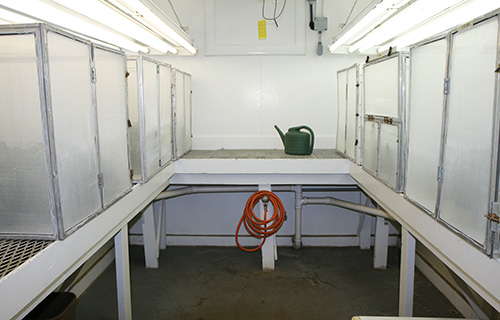
Figure 1. An example of a viruliferous whitefly colony. This growth room contains cages of plants infected with a begomovirus and infested with viruliferous whiteflies.
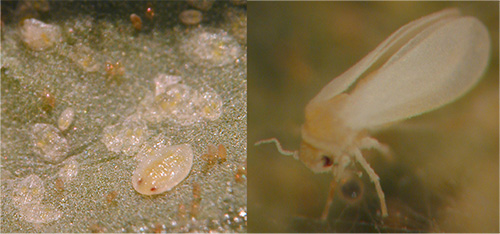
Figure 2. Left: Immatures stages of the whitefly, Bemisia tabaci MEAM clade sensu De Barro6 approximately 1 week post-emergence and Right: an adult whitefly, an effective vector of many plant viruses.
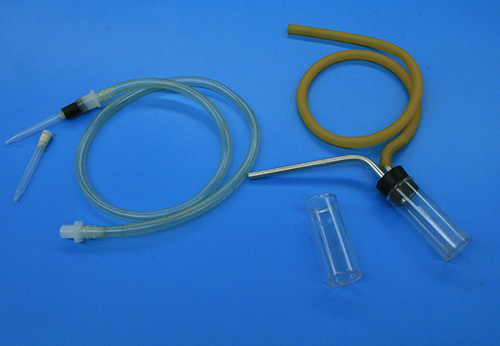
Figure 3. Types of collection devices that can be used to collect whiteflies for plant virus transmission.
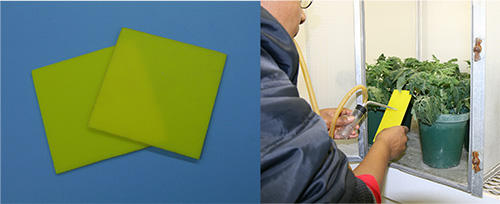
Figure 4. Left: Yellow plastic card used to collect whitefly adults showing whiteflies ready for collection. Right: Collecting whiteflies from a yellow plastic card. Whiteflies can be seen on the card as small white/gray spots.
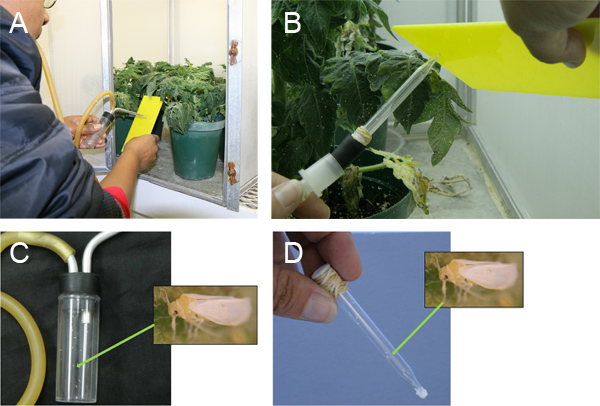
Figure 5. Whiteflies collected by aspiration (20 in a vial) from the colony ready for either acquisition or inoculation.
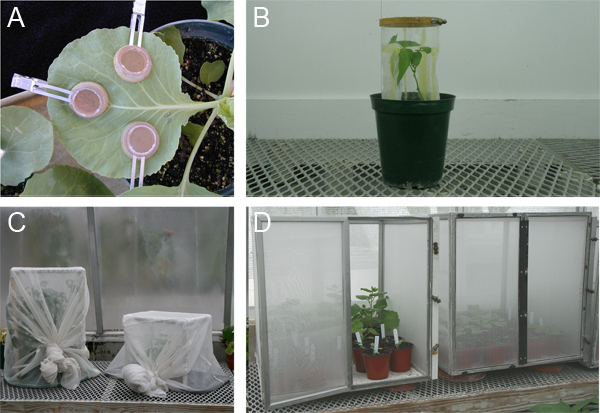
Figure 6. Upper Left: Single plant cages used for either acquisition or inoculation. Upper Right: Larger cages made of pvc pipe and organza. Lower: Aluminum/screen and organdy cages in a greenhouse containing plants intended for a whitefly colony.
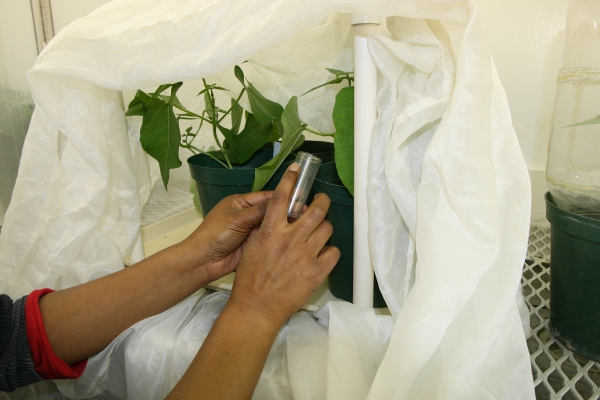
Figure 7. Whiteflies being transferred to a single plant for inoculation (or acquisition).
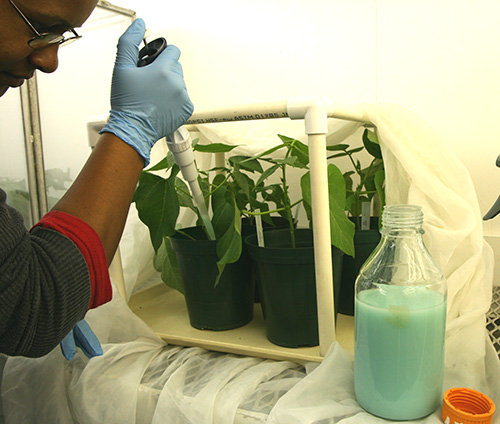
Figure 8. Addition of a systemic insecticide drench to terminate the whitefly inoculation access period.
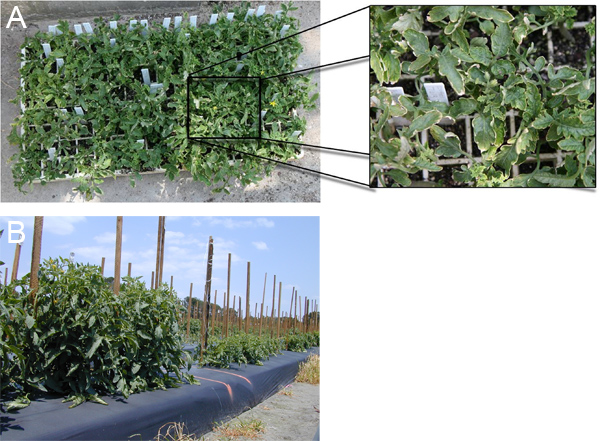
Figure 9. Field plants under evaluation for resistance to Tomato yellow leaf curl virus. All plants were inoculated as 5 week old seedlings and then transplanted to the field for evaluation. Plants in the foreground are a resistant germplasm line, plants in the background are susceptible germplasm line.
Discussion
The methods described here were developed over a period of two decades and are based on the basic information provided by many studies of whitefly transmission, behavior, and biology. Since there are many publications, this manuscript refers primarily to reviews and to a few selected specific publications to illustrate the type of data used to develop this technique. It is very important in this procedure that the whiteflies are handled gently since breaking of legs and antennas can lead to abnormal behaviors and lower rates of transmission. Collection with vacuums and other mechanical suction devices has never produced good results. Another consideration for success is that the number of whiteflies used to obtain 100% transmission to test plants, must be determined for each combination of plant host and virus. This optimal ratio only needs to be established once. Best results have been obtained using young adult whiteflies (1-3 days past emergence) since they give the highest rates of transmission. Older adults can be used but larger numbers of whiteflies will be needed to compensate for their reduced rates of transmission. Females are known to transmit at higher rates than males, since they feed more often than males. However it is usually not worth the time to separate the sexes for transmission. This procedure can be modified in many ways to suit the resources and needs of the researcher.
When working with multiple viruses it is best to keep a single colony of whiteflies reared on nonhost plants of the virus. These whiteflies can be collected placed on virus-infected plants for acquisition and then after acquisition the whiteflies can be moved again to the test plants. Plants intended for the colony should be grown in greenhouses in cages to prevent the introduction of whiteflies that might infect them with another virus. Infestation of these plants with mites, thrips, and other plant pests can compromise the health of the colony and cause it to collapse. Finally watering of the colony plants has to be done with care. These plants are subject to extreme stress by the feeding of so many whiteflies and the lower than normal light conditions. Root rotting fungi which are introduced on the peat in the soilless mixes can become a problem if the plants are overwatered even once. Pretreatment of the plants with a fungicide drench can eliminate some of the problems.
While whitefly transmission of plant viruses can be time consuming and require valuable resources (such as growth rooms) it is essential for the transmission of some viruses for which we have no other means of transmission. It is also a valuable means of screening plants for resistance to viruses, as it uses the same type of transmission that plants in the field will be expected to resist. The use of more artificial means of transmission do not always yield the best results in evaluations of germplasm for virus-resistance.
Disclosures
No conflicts of interest declared.
Materials
| Name | Company | Catalog Number | Comments |
|---|---|---|---|
| Name of the Item | Company | Catalogue No. | Comments (optional) |
| Whitefly proof screening | Klayman Meteor Ltd. Petah Tikva 49130, Israel | --- | BioNet 50 mesh screen Antivirus Insect Screen |
| Whitefly proof screening | Hummert International (www.hummert.com) | 27-4050-1 - 27-4062-1 | BioNet 50 mesh screen Antivirus Insect Screen |
| Whitefly Collection Devices | BioQuip | 1135A | Can also be made using eye droppers, flexible plastic tubing, plastic vacuum adaptors, and cheesecloth |
| Collection vials | BioQuip | 8909 | Vials used depend on which aspirator is used. |
| Yellow plastic cards | any company | --- | Any bright yellow plastic card will work, can be purchased in many places. |
| Whitefly Cages | --- | --- | These are not commercially available and must be constructed. 60 cm x 60 cm x 60 cm cages work well for us. Our preference is for those constructed of aluminum window screening, nylon organdy, vinyl plastic, with a structure created using aluminum window frames. Doors are attached using piano hinges and sealed with weather stripping; tops of the cages are vinyl plastic. Cages can also be made of 1) plexiglass glued together on the edges with ventilation provided by screened openings cut on the side pieces; 2) large bags of nylon organdy, organza, or 50 mesh whitefly screening with internal supports provided by PVC pipes and fittings cut to desired lengths and assembled inside the bags, 3) wood frames and nylon organdy, organza, or 50 mesh whitefly screening. |
References
- Antignus, Y., Mor, N., Ben Joseph, R., Lapidot, M., Cohen, S. UV absorbing plastic sheets protect crops from insect pests and from virus diseases vectored by insects. Environ. Entomol. 25, 919-924 (1996).
- Cohen, S. Epidemiology of whitefly-transmitted viruses. Whiteflies: Their Bionomics, Pest Status and Management. Gerling, D. , Intercept. 211-225 (1990).
- Cohen, S., Antignus, Y. Tomato yellow leaf curl virus, a whitefly-borne geminivirus of tomatoes. Adv. Dis. Vector Res. 10, 259-288 (1994).
- Csizinszky, A., Schuster, D. J., Polston, J. E. Effect of UV-reflective mulches on tomato yields and on the silverleaf whitefly. HortSci. 34, 911-914 (1999).
- De Barro, P. J., Liu, S. -S., Boykin, L. M., Dinsdale, A. B. Bemisia tabaci: A statement of species status. Annu. Rev. Entomol. 56, 1-19 (2011).
- Duffus, J. E. Whitefly-borne viruses. Bemisia: 1995 Taxonomy, Biology, Damage, Control and Management. Gerling, D., Mayer, R. , Intercept Limited. United Kingdom. 255-288 (1996).
- Lapidot, M. Screening for TYLCV-resistant plants using whitefly-mediated inoculation. Tomato Yellow Leaf Curl Virus Disease. Czosnek, H. , 329-342 (2007).
- Lapidot, M., Friedmann, M. Breeding for resistance to whitefly-transmitted geminviruses. Ann. Appl. Biol. 140, 109-117 (2002).
- Lapidot, M., Polston, J. E. Biology and epidemiology of Bemisia-vectored viruses. Bemisia: Bionomics and Management of a Global Pest. Stansly, P. A., Naranjo, S. E. , Springer. 227-231 (2010).
- Navas-Castillo, J., Fiallo-Olive, E., Sanchez-Campos, S. Emerging virus diseases transmitted by whiteflies. Annu. Rev. Phytopathol. 49, 219-248 (2011).
- Ng, J. C. K., Falk, B. W. Virus-vector interactions mediating nonpersistent and semipersistent transmission of plant viruses. Ann. Rev. Phytopathol. 44, 212-21 (2006).
- Polston, J. E., Cohen, L., Sherwood, T. A., Ben-Joseph, R., Lapidot, M. Capsicum species: Symptomless hosts and reservoirs of Tomato yellow leaf curl virus (TYLCV). Phytopathology. 96, 447-452 (2006).
- Polston, J. E., Hiebert, E., McGovern, R. J., Stansly, P. A., Schuster, D. J. Host range of Tomato mottle virus, a new geminivirus infecting tomato in Florida. Plant Dis. 77, 1181-1184 (1993).
- Polston, J. E., Sherwood, T. A. Pymetrozine interferes with transmission of Tomato yellow leaf curl virus by the whitefly Bemisia tabaci (Hemiptera: Aleyrodidae. Phytoparasitica. 31, 490-498 (2003).
- Schuster, D. J., Thompson, S., Ortega, L. D., Polston, J. E. Laboratory evaluation of products to reduce settling of sweetpotato whitefly adults. J. Econ. Ento. 102, 1482-1489 (2009).
- Virus Taxonomy, Ninth Report of the International Committee on Taxonomy of Viruses. King, A. M. Q., Adams, M. J., Carstons, E. B., Lefkowitz, E. J. , Elvesvier, Academic Press. (2012).
- Wintermantel, W. M. Transmission efficiency and epidemiology of Criniviruses. Bemisia: Bionomics and Management of a Global Pest. Stansly, P. A., Naranjo, S. E. , Springer. 319-332 (2010).
- Yang, Y., Sherwood, T. A., Patte, C. P., Hiebert, E., Polston, J. E. Use of Tomato yellow leaf curl virus (TYLCV) Rep gene sequences to engineer TYLCV resistance in tomato. Phytopathology. 94, 490-496 (2004).
- Zehnder, G. W., Yao, C., Murphy, J. F., Sikora, E. R., Kloepper, J. W., Schuster, D. J., Polston, J. E. Microbe-Induced Resistance Against Pathogens and Herbivores: Evidence of Effectiveness in Agriculture. Induced Plant Defenses Against Pathogens. , APS Press. St. Paul, MN. 335-355 (1999).
Reprints and Permissions
