Here we present a protocol to measure Shigellacidal activity of antibodies in serum. Serum is mixed with bacteria and exogenous complement, incubated, and the reaction mixture is plated on agar plates. Viable bacteria form colonies which are counted, using an automated colony enumerator, and used to determine the bactericidal titer.
Method Article
A High-throughput Shigella-specific Bactericidal Assay
In This Article
Summary
Abstract
Serum bactericidal assays (SBAs) measure the functional activity of antibodies and have been used for many decades. SBAs directly measure antibody killing activity by assessing the ability of antibodies in serum to bind to bacteria and activate complement. This complement activation results in the lysis and killing of the target bacteria. These assays are valuable because they go beyond quantifying antibody production to elucidate the biological functions that these antibodies have, allowing researchers to study the role that antibodies may play in preventing infection. SBAs have been used to study immune responses for many human pathogens, but there is no widely accepted methodology for Shigella at present. Historically, SBAs have been very labor-intensive, requiring many time-consuming steps to accurately quantify surviving bacteria. This protocol describes a simple, robust, and high-throughput assay that measures functional antibodies specific for Shigella in serum in vitro. The method described here offers many advantages over traditional SBAs, including the use of frozen bacterial stocks, 96 well assay plates, a micro-culture system, and automated colony-counting. All of these modifications make this assay less labor-intensive and more high-throughput. This protocol is simpler and faster to perform than traditional SBAs while still using simple technologies and readily available reagents. The protocol has been successfully applied in multiple independent laboratories and the assay is robust and reproducible. The assay can be used to assess immune responses in pre-clinical as well as clinical studies. Quantifying shigellacidal antibody titers both before and after antigen exposure (either by immunization or infection) allows for a broader understanding of how functional antibody responses are generated and their contribution to protective immunity. The development of this standardized, well-characterized assay may greatly facilitate Shigella vaccine design.
Introduction
Shigella serotypes, Shigella flexneri 2a, S. flexneri 3a, and S. sonnei, demonstrate epidemiological prevalence globally. The diarrheal disease caused by these Shigella species impacts military, travelers1, and is a leading cause of diarrheal death among children under the age of 5 in developing countries2. There are currently no licensed vaccines to protect against Shigella, however, there are multiple candidate vaccines at various stages of the development. Many of these vaccines, and other prophylactic measures currently in development, focus on antibodies produced against Shigella lipopolysaccharide (LPS). LPS is an attractive vaccine candidate because it is a major surface antigen and natural infection with Shigella induces LPS-specific antibodies that can be protective against re-infection in a serotype-specific manner. Therefore, a successful Shigella vaccine will likely need to be multi-valent and target 3-4 Shigella serotypes to induce immunity against 70-80% of globally circulating strains3,4,5,6. This requires that assays to evaluate Shigella vaccine candidates be specific for multiple different serotypes.
Current immunological assays for evaluating vaccine candidates focus on quantifying levels of antibody titers, but there are few well-characterized assays to evaluate functional antibodies. The examination of antibody functional ability is important because pathogen specific antibodies are responsible for combating infection through a number of functional mechanisms including binding bacteria surface antigens, and preventing adhesion to and infection of epithelial cells, targeting bacterial cells or opsonization and phagocytosis, and directly killing pathogens by binding and initiating the complement cascade. The direct killing of bacteria by antibodies occurs when antibodies bind to surface components of the target bacteria and initiate the complement cascade leading to the activation of many zymogens that ultimately result in pore formation in the bacterial cell that causes lysis and bacterial death. This direct killing of bacteria by circulating antibodies and complement may be a crucial early line of defense during infection.
Individuals who are naturally infected have antibodies with shigellacidal activity in their sera. These Shigella-specific antibodies were detected using traditional complement-mediated killing assays 7,8. This indicates that there may be a role for bactericidal antibodies in protection against Shigella. Traditional bactericidal assays are simple in their execution: serum is heat-inactivated (to destroy endogenous complement activity) and mixed with the bacteria of interest. Exogenous complement is added to this mixture at a specific concentration. The reaction mixture is incubated to allow for bacterial killing and then plated to confirm colony-forming units (CFUs). Once CFUs are counted, a 50% killing index (KI) can be calculated and an SBA titer determined. While this procedure is relatively simple, these assays can be labor-intensive and time-consuming to perform and the results can be highly variable. In addition to these limitations, no well characterized functional assays currently exist for Shigella. Therefore, we have successfully developed and qualified a simple, high-throughput assay to measure Shigella bactericidal activity for three of the most clinically relevant strains9. This protocol describes an SBA with modifications that improve assay efficiency and reproducibility. The first of these modifications is the use of frozen bacterial stocks. The production of single use stocks eliminates the need to culture fresh bacteria for each assay while also reducing assay-to-assay variability. Another time and labor saving advantage of this protocol is the use of a 96-well plate assay format. This allows for serial dilution of samples so that a range of concentrations can be tested. It also allows for the use of multichannel pipettes for plating samples on square Petri dishes. When these square Petri dishes are used in conjunction with a culture system that produces micro-colonies, the number of agar plates required for the assay is reduced. This, in combination with freely available colony-counting software, originally developed for the pneumococcal multiplexed opsonophagocytic killing assay (MOPA)10, allows for the rapid, automated, and reliable colony enumeration. All of these improvements significantly reduce hands-on assay time and creating a high-throughput system allowing for multiple plates to be run at once.
While this protocol has been optimized for three of the most clinically relevant serotypes of Shigella, the SBA described here can be easily applied to many other bacterial pathogens. In addition to this protocol’s potential use with other bacteria, this protocol has the potential to expand beyond using only serum as a starting material, which could include the analysis of antibodies in other relevant sample types such as mucosal samples, including saliva and fecal samples. The use of this assay to investigate immunological responses after vaccination may give broader insight into immune responses generated by vaccination leading to the rational design of vaccines, and aid in the understanding of how natural immunity develops.
Protocol
This protocol follows the guidelines of the WRAIR Human Subject’s Protection Board. Samples used in this study are human serum samples collected as part of WRAIR protocol number 1328, in compliance with all institutional and federal regulations governing the protection of human subjects. Samples were de-identified, and the use of these anonymous samples was classified as non-human subject research by the UAB IRB (protocol number N150115001).
1. Prepare Assay Reagents
- Prepare 1% Gelatin by adding 1 g of gelatin to 100 mL of water. Autoclave and store at room temperature.
- Prepare 100 mg/mL TTC (2,3,5-Triphenyltetrazolium chloride) stock solution (1,000x) by adding 5 g of TTC to 40 mL water. When the TTC is fully dissolved, adjust the volume to 50 mL with water and sterile filter using 0.2 µm filter. Store the solution at 4 °C and protect from light.
NOTE: TTC colorizes the bacterial colonies and makes them much easier to count. TTC solution has a slight yellow color. If TTC solution develops a red color, discard and prepare fresh. - Prepare 10% sodium azide (NaN3) stock solution (100x) by adding 5 g NaN3 to 40 mL of water. After complete dissolution, add water to 50 mL. Store at room temperature.
CAUTION: Sodium azide is a poison and may be toxic if ingested or absorbed through the skin or eyes. It may react with lead and copper plumbing to form highly explosive metal azides. On disposal of reagents containing sodium azide, flush with a large volume of water to prevent azide build-up or discard in a biohazard bag. - Prepare LBA plate (LB agar plate) by adding 35 g of LB agar to 1 L of water and autoclave. Add 25 mL to each square petri dish (120 x 120 mm2). Incubate plates at RT for 10-20 min to allow agar to solidify. Place plates back into plastic bags and store at 4 °C for up to 1 month.
- Prepare Overlay Agar by adding 7.5 g of agar to 1,000 mL of water and autoclave. Incubate in 56 °C water bath until needed. Right before use, add 1 mL of 100 mg/mL TTC and 10 mL of 10% NaN3 and mix well.
NOTE: Each LBA plate needs 25 mL of Overlay Agar. Overlay Agar can be prepared up to one month in advance and melted in a microwave or on a hot plate as needed for the assay. Ensure that agar temperature is ~55 °C before application to LBA plates. - Prepare Assay Buffer by adding 5 mL of 10x Hanks’s Balanced Salt Solution (HBSS) with Ca2+/Mg2+ and 5 mL of 1% gelatin to 40 mL of water. Store at room temperature.
2. Prepare Complement and Target Bacteria
- Prepare baby rabbit complement (BRC)
NOTE: Detailed criteria for complement lot selection can be found here: https://www.vaccine.uab.edu/uploads/mdocs/UAB-MOPA.pdf- Obtain frozen BRC and thaw with running cold water. Physically mix the BRC every ~10-20 min until completely thawed. Do not subject BRC to repeated freeze thaw cycles.
- While BRC is thawing, label 1.5 mL, 5mL, or 15 mL centrifuge tubes. Place labeled tubes on ice to pre-cool. Aliquot proper volume BRC to the pre-cooled centrifuge tubes (after filling, immediately return each tube to the ice). Store aliquots at ≤ -70 °C in the freezer.
NOTE: Approximately 1 mL of complement is needed for each assay plate. Complement aliquots are for single use and should be aliquoted in volumes appropriate to assay layouts. - To prepare Heat-inactivated BRC, thaw one aliquot of active BRC. Prepare a 56 °C water bath. After BRC is completely thawed, transfer it to the water bath and incubate for 30 min.
- After incubation, remove heat-inactivated BRC from the water bath and allow to cool at RT for 10-15 min. Mix vigorously, and aliquot ~150 µL to 1.5 mL microcentrifuge tubes. Store aliquots at ≤ -10 °C.
- Prepare target bacteria stock
NOTE: The procedure below is used to prepare 48 aliquots of target bacteria stock; if more aliquots are needed the protocol can be scaled up.- Remove the bacteria master stock vial from the freezer and scrape the frozen bacterial surface to remove a small amount of ice from the vial onto a blood agar plate. Immediately return the master stock vial to the freezer.
- Streak this small aliquot of bacterial stock onto the blood agar plate and cover with the plate lid. Incubate the plate upside down overnight in 37 °C/5% CO2 incubator.
- Transfer ~10 isolated smooth colonies to a 50 mL tube containing 30 mL of LB broth. Incubate for 3-5 h at 37 °C with gentle shaking until the culture broth has an OD600 of ~0.6-0.7.
- Harvest the top 12.5 mL of the culture and transfer to a fresh 50 mL tube. Centrifuge the culture at 15,000 x g for 2 min using a table top micro-centrifuge. Discard the supernatant and re-suspend the pellet in 25 mL of 15% sterile glycerol-LB.
- Mix well and dispense 0.5 mL aliquots into sterile 1.5 mL micro centrifuge tubes (~48 tubes). Store aliquots at ≤ -70 °C in freezer.
- Confirm the bacterial identity using the agglutination test before use.
- Determination of optimal dilution factor for target bacteria stock
NOTE: Each batch of target bacteria stock must be titrated in assay conditions to determine the dilution necessary to yield ~120 CFU/spot on LB plates.- Get a microtiter plate (Dilution Plate) and add 135 µL of Assay Buffer to well 1A. Add 120 µL of Assay butter to wells 1B-1H.
- Remove a vial of frozen target bacteria from the freezer and thaw at room temperature. Add 15ul of thawed bacterial stock to well 1A to make a 10-fold dilution of the bacterial stock.
- Transfer 30 µL of bacterial solution from well 1A to well 1B to perform a 5-fold serial dilution. Continue 5-fold serial dilutions to well 1H for a total of 8 dilutions (1:10; 1:50; 1:250; 1:1 250; 1:6 250; 1: 31 250; 1: 156 250; 1:781 250).
- Get another microtiter plate (Assay Plate) and add 20 µL of Assay Buffer to all well in columns 1 and 2 in the Assay Plate.
- Transfer 10 µL of diluted bacteria from each well in column 1 of the Dilution plate into the corresponding wells in columns 1 and 2 of the Assay Plate. 10 µL of bacteria is transferred from well 1A of the dilution plate into well 1A and 2A in the Assay Plate, etc.
- Continue with the assay as described in Serum Bactericidal Assay (SBA) below for Control A and Control B, steps 3.6-3.12.
- After the plates have been incubated on ice, use a multichannel pipette with 8 pipette tips to spot 10 µL from the wells in column 1 onto an LBA plate. Also, spot the wells from column 2 onto the LBA plate.
- Continue with the assay as described below in steps 3.14-4.6.
- Determine the bacteria dilution that yields ~120 CFU/spot in Control B, this dilution will be used in the assay.
3. Serum Bactericidal Assay (SBA)
NOTE: The procedure described below is for one assay plate, but the number of Assay Plates can be increased.
- Heat-inactivate test samples by incubating samples in a 56 °C water bath for 30 min.
NOTE: Test samples must be heat-inactivated prior to the test to abrogate any endogenous complement activity. This can be done ahead of the assay and inactivated samples can be re-frozen or stored at 4 °C until tested. - Get an Assay Plate and add 20 µL of Assay Buffer to columns 1 through 12 of rows A through G. Add 20 µL of Assay Buffer to columns 1 and 2 of row H, see Table 1.
- Load 30 µL of each test sample, in duplicate, to row H of the Assay Plate. For example, dispense 30 µL of sample 1 into wells 3H and 4H, and dispense 30 µL of sample 2 into wells 5H and 6H, etc.
- Perform 3-fold serial dilutions of test samples using a multichannel pipette.
- Remove 10 µ of the sample from wells 3H-12H and transfer to corresponding wells in row G and mix the sample well by pipetting up and down 8-10 times.
- Then remove 10 µ from wells 3G-12G and transfer to corresponding wells in row F and mix well.
- Continue these serial dilutions through row A. After mixing the wells in row A, remove and discard 10 µl from wells 3A-12A so that all wells contain 20 µl.
NOTE: Because 20 µL of serum is used in a total assay volume of 80 µL, there is a 4-fold additional dilution in the assay. This dilution must be taken into account during the calculation of an SBA titer by multiplying the dilution of serum by 4. For example, if a starting dilution of 1:2 is used, the actual dilution being tested is 1:8.
- Remove one vial of frozen Target Bacteria Stock and thaw at room temperature. Dilute the bacteria in 20 mL of Assay Buffer according to the pre-determined optimal dilution factor (this dilution factor was determined in section 2.3). Add 10 µL of diluted bacteria to each well of the assay plate using a multichannel pipette.
- Remove one vial of frozen BRC and one vial of frozen Heat-inactivated BRC, thaw at room temperature with running cold water or place on the grate of a biological safety cabinet with blowing air to thaw quickly.
- Prepare a 20% solution of heat-inactivated BRC. Mix 100 µL of heat-inactivated BRC with 400 µL of Assay Buffer. Add 50 µL of this 20% heat-inactivated BRC solution to all wells in column 1 (Control A wells).
NOTE: Heat-inactivated BRC is used as a control to monitor non-specific killing (NSK) in the assay. - Prepare a 20% solution of native BRC. Mix 1 mL of native BRC with 4 mL of Assay Buffer. Add 50 µL of this mixture to all wells in columns 2 through 12 (Control B and test sample wells).
NOTE: The final concentration of BRC in the reaction mixture is 12.5%. - Briefly mix Assay Plate by shaking gently for 10-15 s on a plate shaker or mix by pipetting up and down 8 times using a multichannel pipette.
- Put the Assay Plate in 37 °C microbiological incubator for 2 h (without shaking).
- Dry 2 LBA plates by removing lids and placing plates face up in biological safety cabinet for 40-60 min.
- When the 2 h incubation is complete, move the Assay Plate to wet ice and incubate for 10-20 min to stop the reaction.
- Using a 12-channel pipette, mix the wells in row H, and spot plate 10 µL of the reaction mixture onto the bottom of an LBA plate. Immediately tilt the plate and allow the spots to run for ~1.5-2 cm. Repeat this procedure for row G, F, and E, spotting them above the previous row on the LBA plate. Row E, F, G, and H are spotted onto one LBA plate, and row A, B, C, and D are spotted onto a second LBA plate in the same manner, see Figure 1.
- Incubate the LBA plates at room temperature until the solution is adsorbed into the LBA plates (10-15 min). Put the lids on the LBA plates and place the LBA plates in the microbiological incubator upside-down to incubate overnight (~16-18 h). Incubate S. flexneri 2a and 3a at 29 °C and incubate S. sonnei is at 26 °C.
NOTE: These temperatures yield smaller “micro-colonies” with sizes suitable for accurate counting by a colony counter9. - After overnight incubation, add 25 mL of Overlay Agar (at ~55 °C) containing 100 µg/mL TTC and 0.1% NaN3 to each LBA plate.
- Incubate the LBA plates at 37 °C for 2 h to allow the surviving bacteria to develop red color, see Figure 1 below.
- Photograph plates using a digital camera and transfer images to a computer where NIST’s Integrated Colony Enumerating Software (NICE) has been installed, see Figure 2.
NOTE: NICE colony-counting software is available at no charge. See Materials List for details and installation instructions.
4. Count Bacterial Colonies
- Open NICE Software and input Operator Name, Experiment information, and any assay Notes into the empty fields. Once this data is entered click the Done button.
- Import photographed plates by clicking the Open button and selecting the correct files from the computer.
- Adjust the assay parameters by setting the number of Rows to 4 and the number of Columns to 12. Adjust the Background setting to -3 sigma and the Resolution to Low. See Figure 2.
- Move the Regions of Interest (ROIs) by clicking and dragging so that each ROI is directly over one sample spot. Ensure that all bacterial colonies are inside the ROI with no overlap between samples. Once one plate is complete, double click the next plate in the Stored data Images list and adjust the ROIs. See Figure 2.
- When all plates have been adjusted, click the green Count button, see Figure 2 and Figure 3. When counting is finished click the Export button to export the data in .xls/.xlsx format. Name and save the .xls/.xlsx file for data analysis.
- Arrange exported data into a table format so that counts are organized in a table representing the 96-well assay plate, see Table 2.
5. Calculate SBA Titer (KI) and Non-specific Killing (NSK)
NOTE: SBA titer, or killing index (KI) is defined as the reciprocal of the serum dilution that kills 50% of the target bacteria.
- Calculate the 50% killing index (KI) cutoff value by averaging the CFU of active complement control wells (Control B) and dividing by 2. Calculate the average CFU for each dilution of each sample that was run in duplicate, see Table 3.
- Because a serum dilution will rarely yield exactly this 50% KI value, it can be interpolated from two sequential serum dilutions, one that kills less than 50% and one that kills more than 50%, see Figure 4. The formula for calculating the interpolated SBA KI is shown below:

NOTE: The bactericidal titer, or KI, can also be calculated automatically using Opsotiter software developed by UAB. To Request Opsotiter, contact Dr. Moon Nahm or Mr. Rob Burton. See https://www.vaccine.uab.edu for contact information. - Calculate the NSK value by taking 1 minus the average of Control B divided by the average of Control A.
Results
A 96-well plate layout used in a typical assay is shown in Table 1. This layout has the active complement control wells (Control B), the heat-inactivated complement control wells (Control A), and five samples in duplicate. Samples are serially diluted 3-fold up the plate from Row H to Row A allowing for 8 dilutions of each sample to be tested at once. Figure 1 shows two LBA plates after the overnight incubation and overlay addition. Color development has taken place and all surviving colonies are visible in red. Bacterial killing is clearly seen for all samples tested in the first three dilutions (rows F-H) and as samples are diluted further up the plate, a decrease in bacterial killing is seen where serum is less concentrated. NICE software interface can be seen in Figure 2. Micro-colony counts from the NICE software can be seen in Figure 3, and these counts have been organized into Table 2. The average CFU count for each dilution of each sample is calculated and a 50% KI value is calculated in Table 3. This 50% KI value can be applied to the averaged CFUs for each serum dilution to determine the values needed to calculate the SBA KI according to the formula described in Figure 4. The final result of the assay is shown in Table 4.
| 1 | 2 | 3 | 4 | 5 | 6 | 7 | 8 | 9 | 10 | 11 | 12 | |
| A | Control A | Control B | Dilution 8 | Dilution 8 | Dilution 8 | Dilution 8 | Dilution 8 | Dilution 8 | Dilution 8 | Dilution 8 | Dilution 8 | Dilution 8 |
| B | Control A | Control B | Dilution 7 | Dilution 7 | Dilution 7 | Dilution 7 | Dilution 7 | Dilution 7 | Dilution 7 | Dilution 7 | Dilution 7 | Dilution 7 |
| C | Control A | Control B | Dilution 6 | Dilution 6 | Dilution 6 | Dilution 6 | Dilution 6 | Dilution 6 | Dilution 6 | Dilution 6 | Dilution 6 | Dilution 6 |
| D | Control A | Control B | Dilution 5 | Dilution 5 | Dilution 5 | Dilution 5 | Dilution 5 | Dilution 5 | Dilution 5 | Dilution 5 | Dilution 5 | Dilution 5 |
| E | Control A | Control B | Dilution 4 | Dilution 4 | Dilution 4 | Dilution 4 | Dilution 4 | Dilution 4 | Dilution 4 | Dilution 4 | Dilution 4 | Dilution 4 |
| F | Control A | Control B | Dilution 3 | Dilution 3 | Dilution 3 | Dilution 3 | Dilution 3 | Dilution 3 | Dilution 3 | Dilution 3 | Dilution 3 | Dilution 3 |
| G | Control A | Control B | Dilution 2 | Dilution 2 | Dilution 2 | Dilution 2 | Dilution 2 | Dilution 2 | Dilution 2 | Dilution 2 | Dilution 2 | Dilution 2 |
| H | Control A | Control B | Dilution 1 | Dilution 1 | Dilution 1 | Dilution 1 | Dilution 1 | Dilution 1 | Dilution 1 | Dilution 1 | Dilution 1 | Dilution 1 |
| Sample 1 | Sample 2 | Sample 3 | Sample 4 | Sample 5 | ||||||||
Table 1: Assay plate layout. Columns 1 and 2 contain the complement control wells. Control A is located in column 1 and is the heat-inactivated complement control, containing SBA buffer, bacteria, and heat-inactivated complement. Control B is located in column 2 and is the active complement control, containing SBA buffer, bacteria, and complement. Columns 3-12 contain serum samples. Each sample is run in duplicate and serially diluted 3-fold from row H to row A
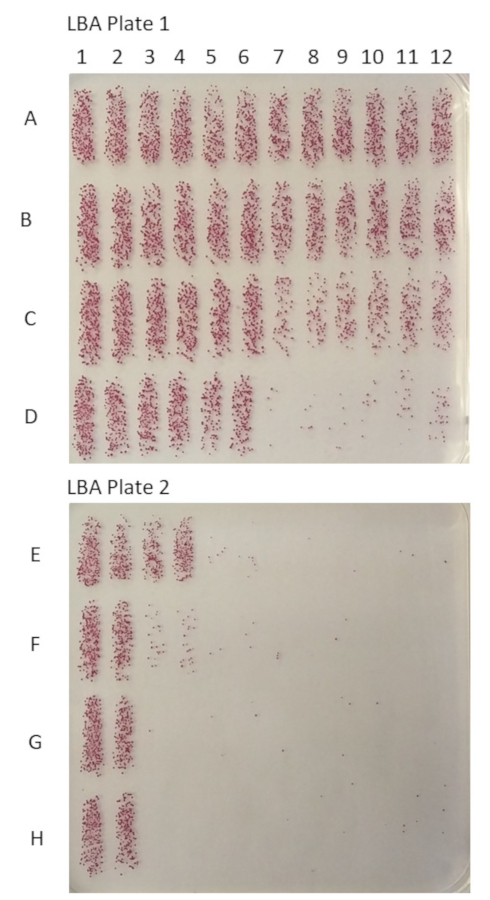
Figure 1: LBA plates after color development. Representative S. flexneri 3a bacterial micro-colonies have grown overnight to the appropriate size. Overlay agar has been added and colonies have developed a red color by reduction of the TTC compound in overlay agar. Please click here to view a larger version of this figure.
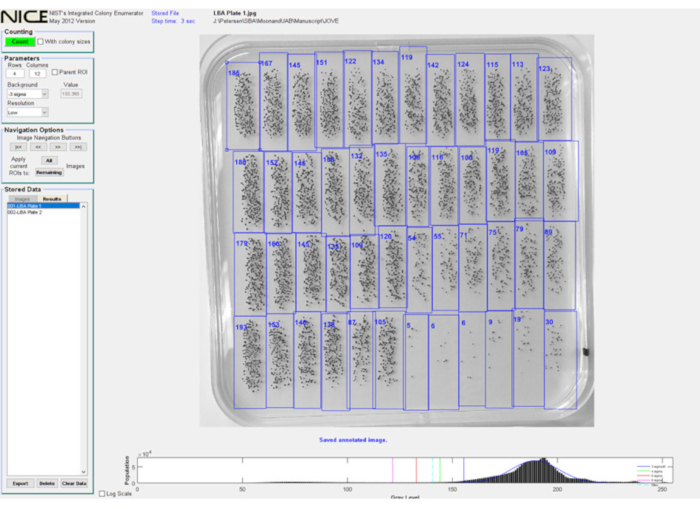
Figure 2: NIST's Integrated Colony Enumerator (NICE) software interface. Graphical representation of the NICE software interface. Regions of Interest (ROIs) are centered over colonies for each spot before counting. Data can be exported directly from the NICE window. Please click here to view a larger version of this figure.

Figure 3: LBA plates counted in NICE Software. The color photograph images are loaded into NICE software and colony forming units (CFUs) are counted automatically. This image shows two representative LBA plates with their colony count information. Please click here to view a larger version of this figure.
| 185 | 167 | 145 | 151 | 122 | 134 | 119 | 142 | 124 | 115 | 113 | 123 | 1:17496 | Dilution 8 |
| 186 | 152 | 145 | 138 | 132 | 135 | 108 | 116 | 100 | 119 | 105 | 109 | 1:5832 | Dilution 7 |
| 179 | 160 | 145 | 135 | 109 | 120 | 54 | 55 | 71 | 75 | 79 | 89 | 1:1944 | Dilution 6 |
| 193 | 153 | 146 | 138 | 87 | 105 | 5 | 6 | 6 | 9 | 19 | 30 | 1:648 | Dilution 5 |
| 184 | 129 | 121 | 143 | 6 | 7 | 0 | 1 | 1 | 1 | 1 | 1 | 1:216 | Dilution 4 |
| 180 | 145 | 22 | 24 | 2 | 3 | 3 | 1 | 1 | 0 | 0 | 0 | 1:72 | Dilution 3 |
| 207 | 129 | 1 | 0 | 2 | 2 | 1 | 0 | 4 | 1 | 0 | 1 | 1:24 | Dilution 2 |
| 201 | 140 | 0 | 0 | 0 | 0 | 1 | 1 | 1 | 0 | 4 | 4 | 1:8 | Dilution 1 |
| Control A | Control B | Sample 1 | Sample 2 | Sample 3 | Sample 4 | Sample 5 | |||||||
Table 2: Counts of bacterial colonies. CFU counts are exported from the NICE software to excel format. These counts can be arranged into a table showing the bacterial counts for all duplicate samples and control wells.
| Control A | Control B | 148 | 128 | 131 | 120 | 118 | 1:17496 | Dilution 8 |
| 189 | 147 | 142 | 134 | 112 | 110 | 107 | 1:5832 | Dilution 7 |
| NSK (1-CtrB/CtrA): 22% | 140 | 115 | 55 | 73 | 84 | 1:1944 | Dilution 6 | |
| 50% KI (CtrB/2): 73 | 142 | 96 | 6 | 8 | 25 | 1:648 | Dilution 5 | |
| 132 | 7 | 1 | 1 | 1 | 1:216 | Dilution 4 | ||
| 23 | 3 | 2 | 1 | 0 | 1:72 | Dilution 3 | ||
| 1 | 2 | 1 | 3 | 1 | 1:24 | Dilution 2 | ||
| 0 | 0 | 1 | 1 | 4 | 1:8 | Dilution 1 | ||
| Sample 1 | Sample 2 | Sample 3 | Sample 4 | Sample 5 | ||||
Table 3: Calculation of 50% KI cutoff value and duplicate sample averages. The 50% KI cutoff value was calculated by taking the average of all Control B wells and dividing by 2. Averages of duplicates were calculated for each dilution of each sample that was run in duplicate. NSK value is also calculated.
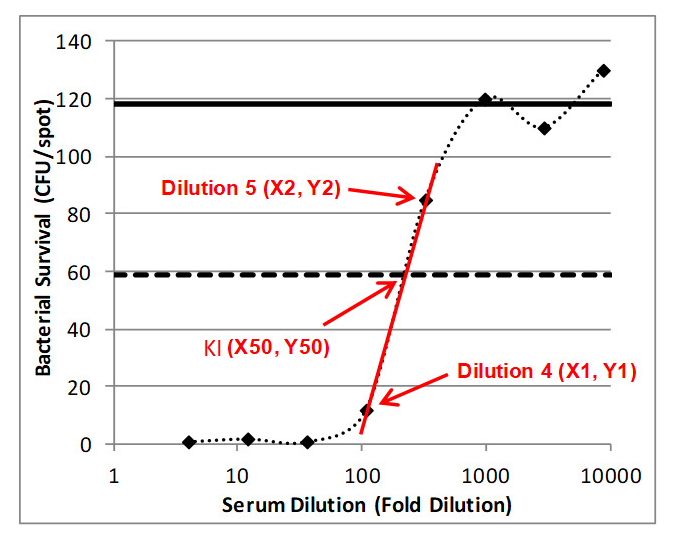
Figure 4: Schematic of linear interpolation. The number of surviving bacteria (y-axis) at each dilution of serum tested (x-axis) is plotted (black diamonds), and individual points are connected by the thin, dashed black line. The solid and dashed horizontal lines indicate 0% and 50% killing, respectively. The serum dilutions above (Dilution 5) and below (Dilution 4) the 50% killing line are connected by a red line, and bactericidal titer (KI) is indicated. Please click here to view a larger version of this figure.
| SBA KI | |
| Sample 1 | 72 |
| Sample 2 | 216 |
| Sample 3 | 1994 |
| Sample 4 | 1994 |
| Sample 5 | 648 |
Table 4: SBA results showing bactericidal titer (KI). Final SBA KI values have been determined for each sample and are shown. These values are calculated using the average CFUs, the 50% KI cutoff value, and the linear interpolation formula.
Discussion
The protocol described here demonstrates a functional immune assay to assess the shigellacidal activity of antibodies in serum. In the assay demonstrated for this protocol monoclonal antibodies specific for S. flexneri 3a were used9 along with control human sera from a previous Shigella vaccine study11. The source of serum tested in this assay may vary widely from pre-clinical animal samples to human clinical samples, and the shigellacidal activity of the serum sample will be impacted by immunizations and exposures that the individual has experienced. Some cross-reactivity may be expected between closely related serotypes, specifically S. flexneri 2a and S. flexneri 3a but little cross-reactivity has been seen in these strains in comparison to S. sonnei9. The basis of the SBA focuses on the activation of the complement cascade by antibody-antigen binding. Therefore, the handling of the BRC reagent is one of the many critical steps involved in the execution of this protocol. BRC was selected for use in this assay because of its consistent performance and low levels of NSK in other bactericidal assays12,13,14. The activity of BRC is temperature sensitive and appropriate measures must be taken to ensure that freeze thaw cycles are minimized, that the BRC is aliquoted into single use volumes, and that the BRC aliquots are thawed quickly, immediately prior to use in the assay. The consistency of complement activity will impact the reproducibility of this assay. Another critical step that impact assay reproducibility is the production and dilution of bacterial stocks. It is important that before beginning the assay the appropriate dilution of bacterial stocks is determined, as assay success is depending on the consistent production of controls A and B having CFU counts averaging ~120 CFU per spot. In order to get spots that are countable by the software, it is also imperative that the technique used to plate bacteria is executed successfully. The deposition of bacterial solution and tilting of the plate so that spots run ~2-3 cm is critical for producing colonies of the right size and correct distribution for accurate counting by the NICE software. Mastering all of these steps will ensure that accurate, consistent results are produced by this protocol
Even when all critical steps are executed well there may still be instances where it is necessary to modify or troubleshoot this protocol. Modifications of this protocol to evaluate other bacteria may require optimization of the overnight LBA plate incubation temperature, to ensure the formation of micro-colonies. Other strains of bacteria or antibody sources, other than serum, may require optimization of complement concentration. NSK values and KIs of control sera should also be monitored to ensure that the assay is working appropriately. NSK should not rise over 70%. The KI of control sera should not vary more than mean ± 2SD. To achieve successful and consistent results when using this protocol, it will be necessary to perform all steps as described here with special attention to the critical steps outlined above.
While this protocol fills an important need in the Shigella research community, it is not without its limitations. This protocol relies on biological materials and, therefore, will always be some variability that is difficult to control. Variations in complement activity from different lots and sources may contribute to variability in assays. To mitigate this, it is important to handle complement appropriately and test new lots of complement for activity before purchase. It may also be helpful to create pools of complement lots with known activity to have a homogeneous supply. This protocol is simple by design and does not require any specialized equipment and the automated colony enumerating software is freely available. While this simplicity is an advantage, allowing this protocol to be used in virtually any laboratory, it does still require an overnight incubation. Recent assays have been described that have much shorter incubation requirement, but do require specialized, preparatory reagents15. Another limitation of this assay is that in its current form it is only capable of investigating a single bacterial species at once. In the Shigella field there is a desire to create a multivalent vaccine, and having immunological assays that can assess pathogens in a multiplex manner is of great value. This assay could be modified in the future to meet this need, but in its current form, it is a single-plex assay.
While this assay has some limitations, it still has many advantages over existing or alternative methods. These advantages include many improvements that combine to make the execution of this method much less labor-intensive and more high-throughput than traditional SBAs. The use of frozen bacterial stocks, a 96-well plate assay format, the plating on larger square petri dishes, the coloration of the colonies that allows for photographing and automatic colony-counting, all help to reduce the materials and time needed to complete this assay. This assay also has advantages over other high-throughput methods because it does not require any specialized reagents or equipment. The protocol described can be performed with basic reagents and freely available software, allowing for its application in any laboratory setting.
All of the advantages this protocol provides supports its use in many future investigations. The assay is ideally suited for the examination of immune responses after vaccination or natural infection. This application allows for the SBA to be a valuable tool in Shigella vaccine research and has already been used to evaluate vaccine immunogenicity in Shigella bio-conjugate vaccines where it has demonstrated the ability of these vaccines to induce the production of functional antibodies16. This protocol has been extensively tested by multiple laboratories and has been shown to produce reliable, reproducible results9. This protocol also produces comparable results when the same samples are tested using other bactericidal assays17. The consistency in the data generated by this assay, and its compatibility with other older methods makes it a robust tool for accurately assessing bactericidal activity in serum samples. The assay can also easily be adapted to evaluate additional sample types. While serum is readily available in adult clinical trials, it can be difficult to get sufficient serum in trials focusing on infants and small children; one of the eventual target populations for Shigella vaccines. In these trials, whole blood is routinely collected on filter paper and dried. There has been some preliminary success with this type of sample format using the SBA. In addition to whole blood, mucosal samples (such as saliva, fecal extracts, and urine) are also a target that is relevant in Shigella vaccine research. Currently, this protocol has been evaluated for three of the most clinically relevant serotypes of Shigella but it can also be adapted for additional Shigella spp. as well as other bacterial pathogens. Future work will focus on the production of a multiplex assay with many of the same characteristics as the assay described by this protocol. A multiplexed assay will allow for evaluation of multiple Shigella serotypes simultaneously, further conserving sample volumes and hands on assay time. There is also work underway to transfer this assay to laboratories across the globe. These global evaluations will generate more data towards qualifying the assay on a larger research scale, while at the same time increasing number of microbiology and immunology laboratories that have access to this SBA to evaluate bacteria and serum samples collected from different endemic locations. The assay described here is simple and high-throughput and has the ability to improve immunological assessment in the Shigella field, as well as broader applications to assessment of other bacterial pathogens.
Disclosures
R.W.K is an employee of the U.S. government and as such the views expressed in this publication are those of the authors and do not necessarily reflect the official policy or positon of the Department of the Army, Department of Defense, nor the U.S. Government.
Acknowledgements
This work was funded by a grant from PATH to M.H.N. This study was conducted as a Cooperative Research and Development Agreement between the Walter Reed Army Institute of Research and the University of Alabama at Birmingham.
Materials
| Name | Company | Catalog Number | Comments |
|---|---|---|---|
| Gelatin | Sigma | G9391 | Type B, powder, BioReagent, suitable for cell culture |
| TTC (2,3,5-Triphenyltetrazolium chloride) | Sigma | T8877 | ≥98.0% (HPLC) |
| Sodium azide (NaN3) | Sigma | S2002 | ≥99.5% |
| Baby Rabbit Complement | PelFreez | 31061-3 | 3-4 week old |
| HBSS with Ca2+/Mg2+ | Invitrogen | 14065-56 | Without Phenol Red |
| LB Agar (Lennox) | Sigma | L2897 | Powder microbial growth medium |
| Bacto Agar | BD | 214010 | Powdered, (C12H18O9)n |
| Glycerol | Sigma | G5516 | For molecular biology, ≥99% |
| LB Broth (Lennox) | Sigma | L3022 | Powder microbial growth medium |
| Square Petri Dish | Sigma | Z617679-240EA | 120 mm x 120 mm |
| Assay Plate | Costar | 3799 | 96 well u-bottom plate with lid |
| NICE Software | University of Alabama at Birmingham | ftp://ftp.nist.gov/pub/physics/mlclarke/NICE/ |
References
- Riddle, M. S., Sanders, J. W., Putnam, S. D., Tribble, D. R. Incidence, etiology, and impact of diarrhea among long-term travelers (US military and similar populations): a systematic review. The American Journal of Tropical Medicine and Hygiene. 74 (5), 891-900 (2006).
- Tickell, K. D., et al. Identification and management of Shigella infection in children with diarrhoea: a systematic review and meta-analysis. The Lancet Global Health. 5 (12), e1235-e1248 (2017).
- Livio, S., et al. Shigella isolates from the global enteric multicenter study inform vaccine development. Clinical Infectious Diseases. 59 (7), 933-941 (2014).
- Barry, E. M., et al. Progress and pitfalls in Shigella vaccine research. Nature Reviews Gastroenterology & Hepatology. 10 (4), 245-255 (2013).
- Noriega, F. R., et al. Strategy for cross-protection among Shigella flexneri serotypes. Infection and Immunity. 67 (2), 782-788 (1999).
- Levine, M. M., Kotloff, K. L., Barry, E. M., Pasetti, M. F., Sztein, M. B. Clinical trials of Shigella vaccines: two steps forward and one step back on a long, hard road. Nature Reviews Microbiology. 5 (7), 540-553 (2007).
- Sayem, M. A., et al. Differential host immune responses to epidemic and endemic strains of Shigella dysenteriae type I. Journal of Health Population and Nutrition. 29 (5), 429-437 (2011).
- Rahman, M. J., et al. Effects of zinc supplementation as adjunct therapy on the systemic immune responses in shigellosis. The American Journal of Clinical Nutrition. 81 (2), 495-502 (2005).
- Nahm, M. H., et al. interlaboratory evaluations, and application of a simple, high-throughput Shigella serum bactericidal assay. mSphere. 3 (3), (2018).
- Burton, R. L., Nahm, M. H. Development and validation of a fourfold multiplexed opsonization assay (MOPA4) for pneumococcal antibodies. Clinical and Vaccine Immunology. 13 (9), 1004-1009 (2006).
- Tribble, D., et al. Safety and immunogenicity of a Shigella flexneri 2a Invaplex 50 intranasal vaccine in adult volunteers. Vaccine. 28 (37), 6076-6085 (2010).
- Kim, H. W., Kim, K. H., Kim, J., Nahm, M. H. A high throughput serum bactericidal assay for antibodies to Haemophilus influenzae type b. BMC Infectious Diseases. 16, 473(2016).
- Maslanka, S. E., et al. Standardization and a multilaboratory comparison of Neisseria meningitidis serogroup A and C serum bactericidal assays. The Multilaboratory Study Group. Clinical Diagnostic Laboratory Immunology. 4 (2), 156-167 (1997).
- Jang, M. S., Sahastrabuddhe, S., Yun, C. H., Han, S. H., Yang, J. S. Serum bactericidal assay for the evaluation of typhoid vaccine using a semi-automated colony-counting method. Microbial Pathogeneis. 97, 19-26 (2016).
- Necchi, F., Saul, A., Rondini, S. Development of a high-throughput method to evaluate serum bactericidal activity using bacterial ATP measurement as survival readout. PLoS One. 12 (2), e0172163(2017).
- Riddle, M. S., et al. Safety and immunogenicity of a candidate bioconjugate vaccine against Shigella flexneri 2a administered to healthy adults: a single blind, randomized phase I study. Clinical and Vaccine Immunology. , (2016).
- Shimanovich, A. A., et al. Functional and Antigen-Specific Serum Antibody Levels as Correlates of Protection against Shigellosis in a Controlled Human Challenge Study. Clinical and Vaccine Immunology. 24 (2), (2017).
Reprints and Permissions
