A new rehabilitation method is presented for rebalancing the vestibular system in patients with asymmetric responses, which consists of unidirectional rotations toward the weaker side. By directly modifying the vestibular pathway rather than enhancing the multisensory aspects of compensation, asymmetry can be normalized within 1-2 sessions and show lasting effects.
A subscription to JoVE is required to view this content. Sign in or start your free trial.
Method Article
Using Unidirectional Rotations to Improve Vestibular System Asymmetry in Patients with Vestibular Dysfunction
In This Article
Summary
Abstract
The vestibular system provides information about head movement and mediates reflexes that contribute to balance control and gaze stabilization during daily activities. Vestibular sensors are located in the inner ear on both sides of the head and project to the vestibular nuclei in the brainstem. Vestibular dysfunction is often due to an asymmetry between input from the two sides. This results in asymmetrical neural inputs from the two ears, which can produce an illusion of rotation, manifested as vertigo. The vestibular system has an impressive capacity for compensation, which serves to rebalance how asymmetrical information from the sensory end organs on both sides is processed at the central level. To promote compensation, various rehabilitation programs are used in the clinic; however, they primarily use exercises that improve multisensory integration. Recently, visual-vestibular training has also been used to improve the vestibulo-ocular reflex (VOR) in animals with compensated unilateral lesions. Here, a new method is introduced for rebalancing the vestibular activity on both sides in human subjects. This method consists of five unidirectional rotations in the dark (peak velocity of 320°/s) toward the weaker side. The efficacy of this method was shown in a sequential, double-blinded clinical trial in 16 patients with VOR asymmetry (measured by the directional preponderance in response to sinusoidal rotations). In most cases, VOR asymmetry decreased after a single session, reached normal values within the first two sessions in one week, and the effects lasted up to 6 weeks. The rebalancing effect is due to both an increase in VOR response from the weaker side and a decrease in response from the stronger side. The findings suggest that unidirectional rotation can be used as a supervised rehabilitation method to reduce VOR asymmetry in patients with longstanding vestibular dysfunction.
Introduction
Vestibular dysfunction is a common disorder with a prevalence of ~35% in adults above 40 years old1. Most vestibular disorders result in an asymmetry between input from both sides, resulting in an illusion of rotation called vertigo. In the absence of normal vestibular function, even simple daily activities can be challenging. Vestibular dysfunction is often quantified by the vestibulo-ocular reflex (VOR). During natural activities, such as walking or running, the VOR moves the eyes in the opposite direction and with the same velocity as head movement. This reflex has a short latency of ~5 ms, and it is mediated in the horizontal plane through a simple, three-neuron arc2. The information travels from vestibular receptors to the vestibular nuclei, then to the abducens motor neurons. These eye movements result in stabilization of horizontal gaze during daily activities. The symmetry of the VOR in response to clockwise and counterclockwise rotations is an important test of vestibular function.
Unilateral vestibular dysfunction produces central compensatory changes and centrally driven peripheral changes to overcome defective asymmetric VOR and resulting vestibular imbalance. Even after permanent vestibular lesions, such as a unilateral vestibular neurectomy, the vertigo and accompanying symptoms improve over a short period (days to weeks) of time. Due to this ability, the vestibular system has been a model for studying adaptation and compensation in neural pathways. It has been previously shown3 that changes in central vestibular pathways can be implemented by a unidirectional rotation based on a hypothesis proposed by one of the authors (N.R.) about 20 years ago. Other studies have also shown compensatory changes in different parts of the sensory pathway, including the vestibular nuclei (VN)4,5,6,7,8, commissural pathways between the VN on both sides9, cerebellar inputs10, and the vestibular periphery11. These compensatory changes result in a new balance in the activity of VN neurons on both sides.
Despite the impressive ability of the vestibular system to compensate for asymmetric inputs from the two ears, research has shown that responses to fast movements are never fully compensated12,13. It is now known that natural vestibular compensation does not use the full capacity of the system, and the compensated VOR response can be improved in animals that have participated in visual-vestibular training14,15. It has long been known that vestibular rehabilitation exercises improve the compensation in patients with chronic imbalance problems by enhancing the (non-vestibular) multisensory nature of balance control16,17,18,19,20,21. The goal of these vestibular rehabilitation exercises is to use physiological or behavioral approaches to improve symptoms as well as a patient's quality of life and independence22,23.
Described herein is a rehabilitation method that uses unidirectional rotations toward the "weaker" side (Figure 1A). The basic idea for this method comes from Hebbian plasticity, in which neural connections become stronger when they are stimulated. This method specifically modifies vestibular inputs rather than enhancing multisensory integration, which is the basis for other vestibular rehabilitation exercises. Previous research has shown that unidirectional rotations decreases VOR asymmetry in 1-2 sessions in patients with unilateral vestibular dysfunction3. This effect was mainly due to an increase in the activity of the side with a lower response (LR), as well as a slight decrease in the activity of the side with a higher response (HR). This change is most likely mediated by modifications in the central pathways (e.g., strengthening of afferent pathways, such as VN connections or changes in commissural inputs). In effect, this technique may be used as a supervised method for vestibular rehabilitation in those with longstanding vestibular asymmetry.
Access restricted. Please log in or start a trial to view this content.
Protocol
The data presented here and previously published3 were obtained by studies carried out in accordance with the recommendations of the Ethics Committee of Shahid Beheshti University of Medical Sciences, Tehran, Iran and a protocol that was approved by the Institutional Review Board of the University.
1. Participant screening and preparation
- Recruit participants who have had a history of balance problems for more than one year.
NOTE: Vestibular compensation happens most effectively over the first month after a lesion. The one year timepoint was chosen to provide enough time for natural compensation to reach its plateau and also ensure that the patient does not have a fluctuating vestibular disorder. - Use the following exclusion criteria for patients:
- History of central nervous system problems (e.g., head trauma, stroke, brain tumor, etc.) that may affect the central vestibular pathways, which are required for proper compensation.
- Diagnosed with a fluctuating vestibular disorder (e.g., benign paroxysmal positional vertigo [BPPV] or Meniere’s disease).
- Patients using other forms of vestibular rehabilitation or types of physical activity (e.g., athletes) that may improve vestibular compensation independent of the unidirectional rotation rehabilitation should be excluded.
NOTE: This criterion is suggested only for research purposes and to control for extraneous variables.
- Do not limit participants based on age or gender.
NOTE: Similar to other compensation, this rehabilitation method is expected to have less pronounced effects in older subjects. - Instruct participants to refrain from using any medications that suppress the central nervous system, including antihistamines or any anti-vertigo drugs for at least 1 day prior to each experimental session.
- Instruct participants not to use any nervous system stimulants, including amphetamines and caffeine for at least 1 day prior to each experimental session.
- Instruct participants to refrain from drinking alcoholic beverages in quantities that impair normal functioning, as this can interfere with functioning of the vestibular system and affect the results.
2. Measurement of the vestibulo-ocular reflex (VOR)
- Use either videonystagmography (VNG) or electronystagmography (ENG) to measure the VOR response during whole-body rotation.
NOTE: The data presented in the results section was recorded by ENG. The current equipment shown in the movie uses VNG. - Perform all recordings in the dark, with the head positioned 30° nose-down.
NOTE: For visualization purposes, the associated video is not performed in the dark. - Ask participants to sit in the rotary chair, secure them in the chair with the harness, put the infrared goggles on, and fix the head in the headrest at a ~30° nose-down position.
- After participants acclimate to the dark, calibrate the eye signal by asking them to look at laser targets that are projected on the wall at ±10° angles (e.g., to the right, left, above, and below midline).
- Begin running the protocol once the eye tracker is calibrated accurately, when the subjects are ready.
- Keep subjects alert and distracted during all vestibular testing by asking them questions or having them do mental arithmetic (e.g., count backwards from 100).
3. Unidirectional rotation stimulus
- With the subject seated in the rotary chair, use a unidirectional rotation that consists of an asymmetric triangular velocity profile with an acceleration of 80°/s2 over 4 s to reach a maximum velocity of 320°/s, then slowly decelerate at 10°/s2 to stop in about 30 s.
NOTE: The slow deceleration is particularly important in order to have a smooth stop in order to avoid stimulating the opposite side. - Perform five such rotations with 1 min intervals. The five rotations together are considered a rehabilitation session (Figure 1B).
- Keep the subject in the chair after the last unidirectional rotation to test the symmetry with a bidirectional sinusoidal harmonic acceleration (SHA) rotation test at 40 min and 70 min post-unidirectional rotation.
NOTE: Keeping the patient in the chair will decrease the variability. - Perform the SHA test using a wide range of sinusoidal rotations at frequencies of 0.05 Hz, 0.2 Hz, and 0.8 Hz, with a peak velocity of 60°/s.
NOTE: For data presented in the results, a sinusoidal rotation at 0.2 Hz (40°/s) was used for all evaluations.
4. Experiment design
- Evaluate subjects with a full battery of vestibular tests during the initial session (see below) in order to test VOR asymmetry and rule out any central problems.
- One week later, expose the subjects to the unidirectional rotation and an SHA test (steps 3.1–3.4).
- Repeat this process 2x per week during the first 2 weeks, then 1x per week for the next 2 weeks (for a total of six sessions).
- Administer an SHA test at the beginning (step 3.4) and end (steps 3.3 and 3.4) of each session and calculate the directional preponderance (DP) as a measure of asymmetry:
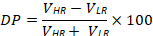
Where: VHR and VLR represent peak eye velocities during rotations toward the side with higher responses (HR) and lower responses (LR), respectively.
NOTE: The directional preponderance provides a normalized measure of the difference in peak eye velocity for rotations in the two directions. While it is mainly used for measuring asymmetry in caloric responses, it can be (and is) used for quantifying VOR asymmetry in SHA24,25,26,27,28. - As the final session, perform another SHA test (step 3.4) 1 week after the last rehabilitation session.
5. Sessions details
- Initial session
- During the first visit, take a brief history of the patient’s imbalance problems to verify the duration of vestibular asymmetry and ensure no indication of a fluctuating disorder.
- Perform a complete set of vestibular tests, including saccades, smooth pursuit, optokinetic, gaze holding, positional and positioning, caloric, and rotational tests.
- Only recruit patients with VOR asymmetry during rotation who have clear abnormal directional preponderance (DP), typically with asymmetry values of more than 10%. This will be considered the initial (baseline) DP for each subject.
NOTE: Different equipment might provide different normal ranges and it is best to use the range specified for your device or to base the normal range on lab-specific normative data. - Clearly explain to the subjects the procedure of unidirectional rotation (5x in one session) and the total number of sessions (six times total).
- Ask subjects to sign a consent form that has been approved by the local Institutional Review Board (or equivalent, for experiments performed outside of the United States), while clearly informing them that they can drop out of the study at any point and for any reason.
- Unidirectional rotation sessions (six sessions)
- Expose subjects to the unidirectional rotation (steps 3.1–3.4) during six sessions (steps 4.3 and 4.4).
- At the beginning of each rehabilitation session, perform an SHA test (step 3.4) and calculate the DP value.
NOTE: This will provide the pre-rehabilitation DP for that session and long-term post-rehabilitation DP for the previous session. - Do not perform the unidirectional rotational rehabilitation if the pre-rehabilitation DP value falls in the normal range (<10%) in any of the sessions and instruct the subject to return for the next session.
- If the pre-rehabilitation DP is in the abnormal range, wait 5 min after the SHA test and perform the unidirectional rotational rehabilitation.
- Perform a second SHA test 40 min and 70 min after the end of unidirectional rotation rehabilitation (step 3.4) and calculate the post-rehabilitation DP for this session.
- Instruct the subjects to return for the next session.
- Final session (week seven)
- Perform an SHA test only (step 3.4) and calculate the DP value.
NOTE: This will serve as the final asymmetry measurement. - Do not use unidirectional rotation in this session.
- Perform an SHA test only (step 3.4) and calculate the DP value.
Access restricted. Please log in or start a trial to view this content.
Results
Short-term effects of the unidirectional rotation were evaluated by measuring the VOR with a 0.2 Hz (40°/s) sinusoidal rotation test at 70 min after rehabilitation3. Figure 2 shows the peak eye velocities during the VOR responses to rotations in the two directions (Figure 2A) and the change in the DP (Figure 2B). Following unidirectional rotation, the response to rotations in ...
Access restricted. Please log in or start a trial to view this content.
Discussion
The rehabilitation method presented here consists of repeated unidirectional rotations in the dark toward the less responsive (LR) side in patients with vestibular imbalance and VOR asymmetry. Most rehabilitation techniques enhance multisensory integration in order to improve balance16,17,18,19,20. The method presented here targets the vestibular pathway, and ...
Access restricted. Please log in or start a trial to view this content.
Disclosures
The authors have nothing to disclose.
Acknowledgements
N. R. was supported by a research fund from Shahid Beheshti University of Medical Sciences and Health Services. S. G. S. was supported by NIDCD R03 DC015091 grant.
Access restricted. Please log in or start a trial to view this content.
Materials
| Name | Company | Catalog Number | Comments |
|---|---|---|---|
| VEST operating and analysis software | NeuroKinetics | ||
| Electronystagmograph | Nicolet | Spirit Model 1992 | Equipment used for collecting the data presented in the Results section |
| I-Portal NOTC (Neurotologic Test Center) | NeuroKinetics | Equipment shown for current studies and shown in the movie |
References
- Agrawal, Y., Ward, B. K., Minor, L. B. Vestibular dysfunction: prevalence, impact and need for targeted treatment. Journal of Vestibular Research. 23 (3), 113-117 (2013).
- Huterer, M., Cullen, K. E. Vestibuloocular reflex dynamics during high-frequency and high-acceleration rotations of the head on body in rhesus monkey. Journal of Neurophysiology. 88 (1), 13-28 (2002).
- Sadeghi, N. G., Sabetazad, B., Rassaian, N., Sadeghi, S. G. Rebalancing the Vestibular System by Unidirectional Rotations in Patients With Chronic Vestibular Dysfunction. Frontiers in Neurology. 9, 1196(2018).
- Beraneck, M., et al. Long-term plasticity of ipsilesional medial vestibular nucleus neurons after unilateral labyrinthectomy. Journal of Neurophysiology. 90 (1), 184-203 (2003).
- Beraneck, M., et al. Unilateral labyrinthectomy modifies the membrane properties of contralesional vestibular neurons. Journal of Neurophysiology. 92 (3), 1668-1684 (2004).
- Sadeghi, S. G., Minor, L. B., Cullen, K. E. Neural correlates of motor learning in the vestibulo-ocular reflex: dynamic regulation of multimodal integration in the macaque vestibular system. Journal of Neuroscience. 30 (30), 10158-10168 (2010).
- Sadeghi, S. G., Minor, L. B., Cullen, K. E. Multimodal integration after unilateral labyrinthine lesion: single vestibular nuclei neuron responses and implications for postural compensation. Journal of Neurophysiology. 105 (2), 661-673 (2011).
- Sadeghi, S. G., Minor, L. B., Cullen, K. E. Neural correlates of sensory substitution in vestibular pathways following complete vestibular loss. Journal of Neuroscience. 32 (42), 14685-14695 (2012).
- Galiana, H. L., Flohr, H., Jones, G. M. A reevaluation of intervestibular nuclear coupling: its role in vestibular compensation. Journal of Neurophysiology. 51 (2), 242-259 (1984).
- Cullen, K. E., Minor, L. B., Beraneck, M., Sadeghi, S. G. Neural substrates underlying vestibular compensation: contribution of peripheral versus central processing. Journal of Vestibular Research. 19 (5-6), 171-182 (2009).
- Sadeghi, S. G., Minor, L. B., Cullen, K. E. Response of vestibular-nerve afferents to active and passive rotations under normal conditions and after unilateral labyrinthectomy. Journal of Neurophysiology. 97 (2), 1503-1514 (2007).
- Sadeghi, S. G., Minor, L. B., Cullen, K. E. Dynamics of the horizontal vestibuloocular reflex after unilateral labyrinthectomy: response to high frequency, high acceleration, and high velocity rotations. Experimental Brain Research. 175 (3), 471-484 (2006).
- Halmagyi, G. M., Black, R. A., Thurtell, M. J., Curthoys, I. S. The human horizontal vestibulo-ocular reflex in response to active and passive head impulses after unilateral vestibular deafferentation. Annals of the New York Academy of Sciences. 1004, 325-336 (2003).
- Maioli, C., Precht, W. On the role of vestibulo-ocular reflex plasticity in recovery after unilateral peripheral vestibular lesions. Experimental Brain Research. 59 (2), 267-272 (1985).
- Ushio, M., Minor, L. B., Della Santina, C. C., Lasker, D. M. Unidirectional rotations produce asymmetric changes in horizontal VOR gain before and after unilateral labyrinthectomy in macaques. Experimental Brain Research. 210 (3-4), 651-660 (2011).
- Whitney, S. L., Rossi, M. M. Efficacy of vestibular rehabilitation. Otolaryngology Clinics of North America. 33 (3), 659-672 (2000).
- Telian, S. A., Shepard, N. T. Update on vestibular rehabilitation therapy. Otolaryngology Clinics of North America. 29 (2), 359-371 (1996).
- Hall, C. D., et al. Treatment for Vestibular Disorders: How Does Your Physical Therapist Treat Dizziness Related to Vestibular Problems. Journal of Neurological Physical Therapy. 40 (2), 156(2016).
- Hillier, S., McDonnell, M. Is vestibular rehabilitation effective in improving dizziness and function after unilateral peripheral vestibular hypofunction? An abridged version of a Cochrane Review. European Journal of Physical Rehabilitation Medicine. 52 (4), 541-556 (2016).
- Denham, T., Wolf, A. Vestibular rehabilitation. Rehabilitation Management. 10 (3), 93-94 (1997).
- Cooksey, F. S. Rehabilitation in Vestibular Injuries. Proceedings of the Royal Society of Medicine. 39 (5), 273-278 (1946).
- Enticott, J. C., Vitkovic, J. J., Reid, B., O'Neill, P., Paine, M. Vestibular rehabilitation in individuals with inner-ear dysfunction: a pilot study. Audiology and Neurootology. 13 (1), 19-28 (2008).
- Cohen, H. S., Kimball, K. T. Increased independence and decreased vertigo after vestibular rehabilitation. Otolaryngological Head and Neck Surgery. 128 (1), 60-70 (2003).
- Baloh, R. W., Halmagyi, G. M. Disorders of the vestibular system. , Oxford University Press. (1996).
- Furman, J. M., Cass, S. P., Furman, J. M. Vestibular disorders: a case-study approach. , 2nd edn, Oxford University Press. (2003).
- Brey, R. H., McPherson, J. H., Lynch, R. M. Balance Function Assessment and Management. Jacobson, G. P., Shepard, N. T. , Plural Publishing. 253-280 (2008).
- Funabiki, K., Naito, Y. Validity and limitation of detection of peripheral vestibular imbalance from analysis of manually rotated vestibulo-ocular reflex recorded in the routine vestibular clinic. Acta Otolaryngology. 122 (1), 31-36 (2002).
- Zalewski, C. K. Rotational Vestibular Assessment. , Plural Publishing. (2018).
- Furman, J. M., Cass, S. P. Ch. 17. Disorders of the vestibular system. Baloh, R. W., Halmagyi, G. M. , Oxford University Press. 191-210 (1996).
- Desmond, A. Vestibular function: evaluation and treatment. , Thieme. (2004).
- Shepard, N. T., Goulson, A. M., McPherson, J. H. Ch. 15. Balance function assessment and management. Jacobson, G. P., Shepard, N. T. , Plural Publishing Inc. 365-390 (2016).
- Clement, G., Flandrin, J. M., Courjon, J. H. Comparison between habituation of the cat vestibulo-ocular reflex by velocity steps and sinusoidal vestibular stimulation in the dark. Experimental Brain Research. 142 (2), 259-267 (2002).
- Clement, G., Tilikete, C., Courjon, J. H. Retention of habituation of vestibulo-ocular reflex and sensation of rotation in humans. Experimental Brain Research. 190 (3), 307-315 (2008).
- Clement, G., Tilikete, C., Courjon, J. H. Influence of stimulus interval on the habituation of vestibulo-ocular reflex and sensation of rotation in humans. Neuroscience Letters. 549, 40-44 (2013).
- Cohen, H., Cohen, B., Raphan, T., Waespe, W. Habituation and adaptation of the vestibuloocular reflex: a model of differential control by the vestibulocerebellum. Experimental Brain Research. 90 (3), 526-538 (1992).
- Maxwell, S. S., Burke, U. L., Reston, C. The effect of repeated rotation on the duration of after-nystagmus in the rabbit. American Journal of Physiology. 58, 432-438 (1922).
- Griffith, C. R. The Ettect Upon the White Rat of continued Bodily Rotation. American Naturalist. 54, 524-534 (1920).
- Shepard, N. T., Telian, S. A. Programmatic vestibular rehabilitation. Otolaryngologicla Head and Neck Surgery. 112 (1), 173-182 (1995).
- Itani, M., Koaik, Y., Sabri, A. The value of close monitoring in vestibular rehabilitation therapy. The Journal of Laryngology & Otology. 131 (3), 227-231 (2017).
- Pavlou, M., Bronstein, A. M., Davies, R. A. Randomized trial of supervised versus unsupervised optokinetic exercise in persons with peripheral vestibular disorders. Neurorehabilitation and Neural Repair. 27 (3), 208-218 (2013).
- Kao, C. L., et al. Rehabilitation outcome in home-based versus supervised exercise programs for chronically dizzy patients. Archives of Gerontology and Geriatrics. 51 (3), 264-267 (2010).
- Topuz, O., et al. Efficacy of vestibular rehabilitation on chronic unilateral vestibular dysfunction. Clinical Rehabilitation. 18 (1), 76-83 (2004).
- Black, F. O., Pesznecker, S. C. Vestibular adaptation and rehabilitation. Current Opinion in Otolaryngological Head and Neck Surgery. 11 (5), 355-360 (2003).
Access restricted. Please log in or start a trial to view this content.
Reprints and Permissions
