-1::1
Simple Hit Counter
Skip to content

Products

Solutions

×
×
Sign In

EN

EN - EnglishCN - 简体中文DE - DeutschES - EspañolKR - 한국어IT - ItalianoFR - FrançaisPT - Português do BrasilPL - PolskiHE - עִבְרִיתRU - РусскийJA - 日本語TR - TürkçeAR - العربية
Sign In Start Free Trial

RESEARCH

JoVE Journal

Peer reviewed scientific video journal

Behavior
Biochemistry
Bioengineering
Biology
Cancer Research
Chemistry
Developmental Biology
View All
JoVE Encyclopedia of Experiments

Video encyclopedia of advanced research methods

Biological Techniques
Biology
Cancer Research
Immunology
Neuroscience
Microbiology
JoVE Visualize

Visualizing science through experiment videos

EDUCATION

JoVE Core

Video textbooks for undergraduate courses

Analytical Chemistry
Anatomy and Physiology
Biology
Calculus
Cell Biology
Chemistry
Civil Engineering
Electrical Engineering
View All
JoVE Science Education

Visual demonstrations of key scientific experiments

Advanced Biology
Basic Biology
Chemistry
View All
JoVE Lab Manual

Videos of experiments for undergraduate lab courses

Biology
Chemistry

BUSINESS

JoVE Business

Video textbooks for business education

Accounting
Finance
Macroeconomics
Marketing
Microeconomics

OTHERS

JoVE Quiz

Interactive video based quizzes for formative assessments

Authors

Teaching Faculty

Librarians

K12 Schools

Biopharma

Products

RESEARCH

JoVE Journal

Peer reviewed scientific video journal

JoVE Encyclopedia of Experiments

Video encyclopedia of advanced research methods

JoVE Visualize

Visualizing science through experiment videos

EDUCATION

JoVE Core

Video textbooks for undergraduates

JoVE Science Education

Visual demonstrations of key scientific experiments

JoVE Lab Manual

Videos of experiments for undergraduate lab courses

BUSINESS

JoVE Business

Video textbooks for business education

OTHERS

JoVE Quiz

Interactive video based quizzes for formative assessments

Solutions

Authors
Teaching Faculty
Librarians
K12 Schools
Biopharma

Language

English

EN

English

CN

简体中文

DE

Deutsch

ES

Español

KR

한국어

IT

Italiano

FR

Français

PT

Português do Brasil

PL

Polski

HE

עִבְרִית

RU

Русский

JA

日本語

TR

Türkçe

AR

العربية

    Menu

    JoVE Journal

    Behavior

    Biochemistry

    Bioengineering

    Biology

    Cancer Research

    Chemistry

    Developmental Biology

    Engineering

    Environment

    Genetics

    Immunology and Infection

    Medicine

    Neuroscience

    Menu

    JoVE Encyclopedia of Experiments

    Biological Techniques

    Biology

    Cancer Research

    Immunology

    Neuroscience

    Microbiology

    Menu

    JoVE Core

    Analytical Chemistry

    Anatomy and Physiology

    Biology

    Calculus

    Cell Biology

    Chemistry

    Civil Engineering

    Electrical Engineering

    Introduction to Psychology

    Mechanical Engineering

    Medical-Surgical Nursing

    View All

    Menu

    JoVE Science Education

    Advanced Biology

    Basic Biology

    Chemistry

    Clinical Skills

    Engineering

    Environmental Sciences

    Physics

    Psychology

    View All

    Menu

    JoVE Lab Manual

    Biology

    Chemistry

    Menu

    JoVE Business

    Accounting

    Finance

    Macroeconomics

    Marketing

    Microeconomics

Start Free Trial
Loading...
Home
JoVE Science Education
Environmental Sciences
Filamentous Fungi
Filamentous Fungi
JoVE Science Education
Environmental Microbiology
A subscription to JoVE is required to view this content.  Sign in or start your free trial.
JoVE Science Education Environmental Microbiology
Filamentous Fungi

2.5: Filamentous Fungi

62,581 Views
08:58 min
February 23, 2015

Overview

Source: Laboratories of Dr. Ian Pepper and Dr. Charles Gerba - The University of Arizona
Demonstrating Author: Bradley Schmitz

Fungi are heterotrophic eukaryotic organisms, and with the exception of yeasts, are aerobic. They are abundant in surface soils and are important for their role in nutrient cycling and the decomposition of organic matter and organic contaminants. White rot fungi (phanerochaete chryosporium) for example, (Figure 1) are known to degrade aromatics.
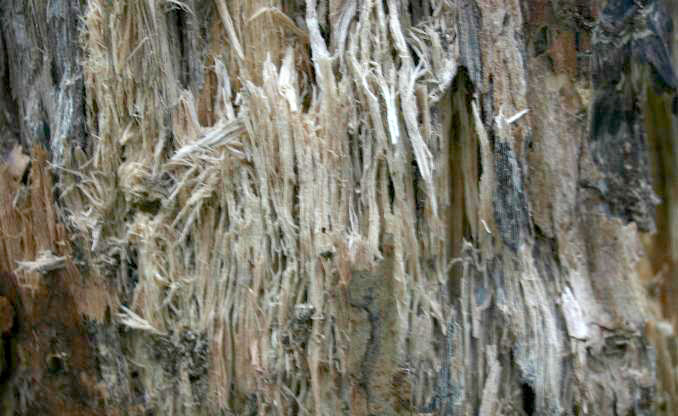
Decaying wood structure showing fiber degradation; study of decomposition process and material breakdown.
Figure 1. White rot on birch.

Procedure

1. Soil Sample Preparation

  1. First, determine the initial moisture content of the soil by overnight drying of a known amount of the moist soil, and reweighing the dried soil. The equation to determine the initial moisture content of the soil is:
    Moisture content calculation formula, %MC=(W-D)/D, equation for material analysis result.
    (Equation 1)
    where:
    MC = moisture content
    W = net weight
    D = dry weight
  2. Calculate the amount of water that must be added to 25 g of soil to increase the soil moisture content to 10% on a dry weight basis.
  3. Next, add that amount of water to 25 g of the soil.
  4. Cover the container with plastic wrap and puncture the film several times with a probe to allow aeration during incubation. Secure the film with a rubber band.
  5. Weigh the soil and wrap, then incubate the sample at room temperature for one week.

2. Fungus Inoculation and Incubation

  1. After the incubation is complete, weigh the soil sample with the wrap and rubber band. Calculate the weight loss due to moisture loss.
  2. Calculate the new soil moisture content.
  3. Next, prepare a 1/10-dilution series of the soils as shown in Figure 2. This will result in dilutions of 10-1 (bottle A), 10-2 (tube B), 10-3 (tube C), 10-4 (tube D), and 10-5 (tube E) g soil per mL suspensions.
  4. Prepare sterile Rose Bengal-streptomycin agar plates. Both the Rose Bengal and streptomycin inhibit bacterial growth. For very fertile soils where soil microbial populations are high, the chosen dilutions should be higher, i.e., 10-3, 10-4, and 10-5, g soil per plate.
  5. To each of the 10-3 plates, add 0.1 mL from dilution tube 10-2, and spread over the agar surface using an ethanol-flame sterilized glass spreader. Because a quantity of 0.1 mL is plated, this makes the effective dilution 10-3. Repeat these steps for all dilutions.
  6. Incubate plates at room temperature for one week.

3. Colony Counting and Examination by Microscopy

  1. Make colony counts at one and only one dilution of each soil. The plates that are counted should have discreet countable colonies. Overgrown plates should not be counted. Likewise, plates with less than 10 colonies should not be counted. Note and describe the cultural characteristics of three different colonies.
  2. Prepare pressure tape (transparent tape) mounts on slides for detailed microscope study using the following procedure:
    1. Deposit a drop of lactophenol mounting fluid at the center of a clean glass slide
    2. Cut a strip of clear cellophane tape about 3 cm long from the stock roll. To avoid contaminating the adhesive surface, use forceps when handling the tape. A dissecting needle will aid in freeing the tape from the forceps.
    3. The adhesive side of the tape is applied to the surface of a sporulating fungus colony. Take care to avoid excessive pressure on the tape or too dense a mass of hyphae and spores will be collected.
    4. Remove the tape from contact with the fungus colony and apply it, adhesive side down, to the drop of mounting fluid on the glass slide. Rub the tape gently with a smooth, flat instrument to express air bubbles.
    5. Examine the tape mount microscopically under the oil immersion objective with oil.
    6. Identify two different fungal genera using the supplied fungal identification key (Figure 4).

Fungal spore structure diagram; species include Rhizopus, Aspergillus, Penicillium, Fusarium.
Figure 4. Fungal identification key.

Filamentous fungi are multicellular, eukaryotic organisms often found in large numbers in soil, playing an important role in the ecosystem. Fungi can be isolated, quantified, and examined in the laboratory.

Fungi are abundant in surface soils and perform important roles in nutrient cycling and decomposition of organic matter and contaminants. Being unable to synthesize their own food they are classified as heterotrophic and are aerobic and therefore require oxygen.

To culture fungi, soil samples are diluted at known concentrations into sterile water, then plated onto agar plates and incubated. The resulting fungal colonies may then be counted and identified.

This video will illustrate the principles behind the isolation, quantification, and identification of filamentous fungi.

Soils generally contain millions of fungi per gram; therefore, serial dilutions are commonly used to prepare soil samples for analysis. A given amount of soil is added to a dispersing solution. Aliquots of the suspension are transferred to a buffer solution in series until the suspension is diluted enough to allow discrete fungal colonies to grow.

These dilutions are then plated onto agar media and incubated. Once they have formed visible fungal colonies, they can be counted. As it is assumed that each fungal colony is derived from a single organism, the term Colony Forming Units, or CFU's, is used to express the number of organisms calculated per gram of dry soil.

Most fungi grow as hyphae, which are long, branching structures that are the main mode of vegetative growth. Aggregations of hyphae are referred to as mycelium. Fungi may also exist as single celled organisms, with yeast being a well-known example.

Fungal reproduction can occur in one of several ways. Hyphae-producing fungi can reproduce asexually, by fragmenting hyphae, or from stalks with seed-like spores. Single-celled fungi may reproduce asexually by budding.

Fungi can also reproduce sexually. This is less common than asexual reproduction, and usually occurs in response to unfavorable environmental conditions. In hyphae-producing fungi, two reproductive hyphae from different fungal strains can fuse, creating a zygote. In single celled fungi, two cells of opposite strains will fuse.

Fertile soils normally contain in the range of 106 fungal "propagules" per gram of dry weight. Propagules are fungal spores, hyphae, or hyphal fragments. Using culturable plate counts is a quick, inexpensive, and reproducible technique to elucidate fungal content. However, results can be skewed by the fact that not all organisms will culture on media plates.

Rose-Bengal agar plates with antibiotics, such as streptomycin, are typically used for fungal cultures. Because bacteria are much more numerous than fungi in most soils, the ideal fungal media will select against bacterial growth while allowing the fungi to survive. Rose-Bengal dye inhibits the growth of most bacteria, and reduces the size of fungal colonies. This is ideal, and prevents overgrowth of fungal plates as well as controlling bacteria.

Now that we are familiar with the principles behind culturing filamentous fungi, let's take a look at how this is carried out in the laboratory.

Once the soil samples have been collected, bring them to the laboratory for analysis. First, calculate the moisture content of the soil. Add deionized water to bring the moisture content to 15%.

Cover the containers with plastic wrap and secure with a rubber band to limit evaporation. Puncture the film several times to allow aeration.

Weigh the soil sample and container and record. Incubate at room temperature for one week to allow growth of the naturally occurring fungi.

Re-weigh the soil samples and container and record the weight. Calculate weight loss due to moisture loss over the week. Add water to the soil, to bring the weight back to the original value.

Add 10 g of moist soil to 95 mL of distilled water and mix thoroughly. This is the 10-1 dilution since 10 g of soil has a volume of roughly 5 mL. Perform four serial dilutions of 1 mL into 9 mL blanks using water from this stock solution.

Next, collect eight sterile Rose-Bengal-streptomycin agar plates. To two of the plates, add 0.1 mL from dilution tube 10-2, and spread over the agar surface using an ethanol-flame sterilized glass spreader. Because a quantity of 0.1 mL is plated, this makes the effective dilution 10-3.

Incubate these plates in a dark cabinet at room temperature, for one week.

After one week, count the discrete colonies on each plate. Plates with 10 to 20 fungal colonies should be counted.Note and describe distinguishing features of the plates or colonies.

Take a clean glass microscope slide and deposit a drop of lactophenol mounting fluid into the center. Using forceps to avoid contamination, cut a strip of clear cellophane tape about 3 cm long. If necessary, use a dissecting needle to free the tape from the forceps.

Apply the adhesive side of the tape to the surface of a sporulating fungus colony, taking care to avoid excessive pressure. Next, apply the adhesive side of the tape with spore sample to the mounting fluid on the glass slide. Rub the tape gently with a smooth, flat instrument to remove air bubbles.

Examine the tape mount under a high-powered objective.

Fungi can be identified microscopically by examination of the fruiting bodies and spores. A fungi identification key can assist this process. Common fungi types observed include Penicillium and Aspergillus.

Using the plates, the fungi can be enumerated using the same technique as with bacterial enumeration.

Identifying and culturing fungi is useful for a variety of scientific applications.

Industries like pulp and paper producing facilities may use filamentous fungi to degrade wood in their pulping process, in a technique known as biopulping. Fungi such as white-rot may degrade wood chips efficiently, leading to decreased need for the use of chemical or mechanical pulping.

Fungi can also be used to break down other materials, including certain types of biodegradable plastics. This can be useful for agricultural or gardening applications, where biodegradable mulch films may be used to create temporary barriers to unwanted plant growth.

Fungi are also producers of antibiotics, compounds that revolutionized medicine in the 20th century and continue to be a front line defense in infection today. Penicillin, a widely used antibiotic, was isolated from the common filamentous fungi Penicillium rubens. To this day, filamentous fungi are still isolated and studied in the search for new antibiotics.

You've just watched JoVE's introduction to filamentous fungi. You should now understand how to culture filamentous fungi from soil, how to quantify them, and how to identify types of fungi commonly found in soil. Thanks for watching!

Transcript

Filamentous fungi are multicellular, eukaryotic organisms often found in large numbers in soil, playing an important role in the ecosystem. Fungi can be isolated, quantified, and examined in the laboratory.

Fungi are abundant in surface soils and perform important roles in nutrient cycling and decomposition of organic matter and contaminants. Being unable to synthesize their own food they are classified as heterotrophic and?are aerobic and therefore require oxygen.

To culture fungi, soil samples are diluted at known concentrations into sterile water, then plated onto agar plates and incubated. The resulting fungal colonies may then be counted and identified.

This video will illustrate the principles behind the isolation, quantification, and identification of filamentous fungi.

Soils generally contain millions of fungi per gram; therefore, serial dilutions are commonly used to prepare soil samples for analysis. A given amount of soil is added to a dispersing solution. Aliquots of the suspension are transferred to a buffer solution in series until the suspension is diluted enough to allow discrete fungal colonies to grow.

These dilutions are then plated onto agar media and incubated. Once they have formed visible fungal colonies, they can be counted. As it is assumed that each fungal colony is derived from a single organism, the term Colony Forming Units, or CFU's, is used to express the number of organisms calculated per gram of dry soil.

Most fungi grow as hyphae, which are long, branching structures that are the main mode of vegetative growth. Aggregations of hyphae are referred to as mycelium. Fungi may also exist as single celled organisms, with yeast being a well-known example.

Fungal reproduction can occur in one of several ways. Hyphae-producing fungi can reproduce asexually, by fragmenting hyphae, or from stalks with seed-like spores. Single-celled fungi may reproduce asexually by budding.

Fungi can also reproduce sexually. This is less common than asexual reproduction, and usually occurs in response to unfavorable environmental conditions. In hyphae-producing fungi, two reproductive hyphae from different fungal strains can fuse, creating a zygote. In single celled fungi, two cells of opposite strains will fuse.

Fertile soils normally contain in the range of 106 fungal "propagules" per gram of dry weight. Propagules are fungal spores, hyphae, or hyphal fragments. Using culturable plate counts is a quick, inexpensive, and reproducible technique to elucidate fungal content. However, results can be skewed by the fact that not all organisms will culture on media plates.

Rose-Bengal agar plates with antibiotics, such as streptomycin, are typically used for fungal cultures. Because bacteria are much more numerous than fungi in most soils, the ideal fungal media will select against bacterial growth while allowing the fungi to survive. Rose-Bengal dye inhibits the growth of most bacteria, and reduces the size of fungal colonies. This is ideal, and prevents overgrowth of fungal plates as well as controlling bacteria.

Now that we are familiar with the principles behind culturing filamentous fungi, let's take a look at how this is carried out in the laboratory.

Once the soil samples have been collected, bring them to the laboratory for analysis. First, calculate the moisture content of the soil. Add deionized water to bring the moisture content to 15%.

Cover the containers with plastic wrap and secure with a rubber band to limit evaporation. Puncture the film several times to allow aeration.

Weigh the soil sample and container and record. Incubate at room temperature for one week to allow growth of the naturally occurring fungi.

Re-weigh the soil samples and container and record the weight. Calculate weight loss due to moisture loss over the week. Add water to the soil, to bring the weight back to the original value.

Add 10 g of moist soil to 95 mL of distilled water and mix thoroughly. This is the 10-1 dilution since 10 g of soil has a volume of roughly 5 mL. Perform four serial dilutions of 1 mL into 9 mL blanks using water from this stock solution.

Next, collect eight sterile Rose-Bengal-streptomycin agar plates. To two of the plates, add 0.1 mL from dilution tube 10-2, and spread over the agar surface using an ethanol-flame sterilized glass spreader. Because a quantity of 0.1 mL is plated, this makes the effective dilution 10-3.

Incubate these plates in a dark cabinet at room temperature, for one week.

After one week, count the discrete colonies on each plate. Plates with 10 to 20 fungal colonies should be counted.Note and describe distinguishing features of the plates or colonies.

Take a clean glass microscope slide and deposit a drop of lactophenol mounting fluid into the center. Using forceps to avoid contamination, cut a strip of clear cellophane tape about 3 cm long. If necessary, use a dissecting needle to free the tape from the forceps.

Apply the adhesive side of the tape to the surface of a sporulating fungus colony, taking care to avoid excessive pressure. Next, apply the adhesive side of the tape with spore sample to the mounting fluid on the glass slide. Rub the tape gently with a smooth, flat instrument to remove air bubbles.

Examine the tape mount under a high-powered objective.

Fungi can be identified microscopically by examination of the fruiting bodies and spores. A fungi identification key can assist this process. Common fungi types observed include Penicillium and Aspergillus.

Using the plates, the fungi can be enumerated using the same technique as with bacterial enumeration.

Identifying and culturing fungi is useful for a variety of scientific applications.

Industries like pulp and paper producing facilities may use filamentous fungi to degrade wood in their pulping process, in a technique known as biopulping. Fungi such as white-rot may degrade wood chips efficiently, leading to decreased need for the use of chemical or mechanical pulping.

Fungi can also be used to break down other materials, including certain types of biodegradable plastics. This can be useful for agricultural or gardening applications, where biodegradable mulch films may be used to create temporary barriers to unwanted plant growth.

Fungi are also producers of antibiotics, compounds that revolutionized medicine in the 20th century and continue to be a front line defense in infection today. Penicillin, a widely used antibiotic, was isolated from the common filamentous fungi Penicillium rubens. To this day, filamentous fungi are still isolated and studied in the search for new antibiotics.

You've just watched JoVE's introduction to filamentous fungi. You should now understand how to culture filamentous fungi from soil, how to quantify them, and how to identify types of fungi commonly found in soil. Thanks for watching!

Explore More Videos

Filamentous FungiMulticellular OrganismsEukaryoticSoilEcosystemIsolationQuantificationLaboratory ExaminationNutrient CyclingDecompositionOrganic MatterContaminantsHeterotrophicAerobicOxygen RequirementCulture FungiSoil SamplesDilutionSterile WaterAgar PlatesIncubationFungal ColoniesCountingIdentificationVideo DemonstrationSoil AnalysisSerial DilutionsDispersing SolutionBuffer SolutionDiscrete Fungal ColoniesAgar MediaVisible Fungal ColoniesCounting CFUs (Colony Forming Units)Hyphae Growth

Related Videos

Determination of Moisture Content in Soil

06:16

Determination of Moisture Content in Soil

Environmental Microbiology

364.4K Views

Aseptic Technique in Environmental Science

10:48

Aseptic Technique in Environmental Science

Environmental Microbiology

135.3K Views

Gram Staining of Bacteria from Environmental Sources

09:31

Gram Staining of Bacteria from Environmental Sources

Environmental Microbiology

108.0K Views

Visualizing Soil Microorganisms via the Contact Slide Assay and Microscopy

10:04

Visualizing Soil Microorganisms via the Contact Slide Assay and Microscopy

Environmental Microbiology

44.3K Views

Community DNA Extraction from Bacterial Colonies

09:59

Community DNA Extraction from Bacterial Colonies

Environmental Microbiology

30.5K Views

Detecting Environmental Microorganisms with the Polymerase Chain Reaction and Gel Electrophoresis

13:34

Detecting Environmental Microorganisms with the Polymerase Chain Reaction and Gel Electrophoresis

Environmental Microbiology

47.5K Views

RNA Analysis of Environmental Samples Using RT-PCR

12:04

RNA Analysis of Environmental Samples Using RT-PCR

Environmental Microbiology

44.2K Views

Quantifying Environmental Microorganisms and Viruses Using qPCR

09:57

Quantifying Environmental Microorganisms and Viruses Using qPCR

Environmental Microbiology

53.4K Views

Water Quality Analysis via Indicator Organisms

08:17

Water Quality Analysis via Indicator Organisms

Environmental Microbiology

31.4K Views

Isolation of Fecal Bacteria from Water Samples by Filtration

10:58

Isolation of Fecal Bacteria from Water Samples by Filtration

Environmental Microbiology

44.0K Views

Detection of Bacteriophages in Environmental Samples

09:17

Detection of Bacteriophages in Environmental Samples

Environmental Microbiology

43.9K Views

Culturing and Enumerating Bacteria from Soil Samples

10:57

Culturing and Enumerating Bacteria from Soil Samples

Environmental Microbiology

189.5K Views

Bacterial Growth Curve Analysis and its Environmental Applications

12:23

Bacterial Growth Curve Analysis and its Environmental Applications

Environmental Microbiology

304.6K Views

Algae Enumeration via Culturable Methodology

09:29

Algae Enumeration via Culturable Methodology

Environmental Microbiology

14.7K Views

JoVE logo
Contact Us Recommend to Library
Research
  • JoVE Journal
  • JoVE Encyclopedia of Experiments
  • JoVE Visualize
Business
  • JoVE Business
Education
  • JoVE Core
  • JoVE Science Education
  • JoVE Lab Manual
  • JoVE Quizzes
Solutions
  • Authors
  • Teaching Faculty
  • Librarians
  • K12 Schools
  • Biopharma
About JoVE
  • Overview
  • Leadership
Others
  • JoVE Newsletters
  • JoVE Help Center
  • Blogs
  • JoVE Newsroom
  • Site Maps
Contact Us Recommend to Library
JoVE logo

Copyright © 2026 MyJoVE Corporation. All rights reserved

Privacy Terms of Use Policies
WeChat QR code