气液平衡

0 次观看·11:32 分钟
1. 启动系统
- 使用安装在装置框架上的三通排气/控制阀对VLE系统进行排气,如有必要,可通过将液体排入废液瓶的方式排出系统中的液体。
- 取下样品管并更换为洁净的样品管(如有必要)。系统中的液体无法完全排尽。
- 首次实验运行时,通过进样阀加入约(体积分数)50%甲醇、30%异丙醇和20%水的混合液。第二周实验时,更换为约25%甲醇、45%异丙醇和30%水的混合液。第三周则根据需要重复加入相应的液体。系统的总液体容量约为130 cm3。
- 加液至略低于Cottrell泵与真空夹套交汇处的位置。液体过少会导致系统需要极高的沸腾速率才能产生足够的液体“喷溅”(即液体剧烈沸腾时突然爆沸)。
- 使用烧杯将液体倒入平衡室顶部的加料口,随后关闭加料口。
- 使用墙上的汞压力计检查大气压,并在必要时调整数字压力表的“零点”以保持一致。
- 将三通排气阀切换至“控制”位置,启动真空泵和压力控制器。
- 将压力控制器上的节流阀打开数圈,观察压力迅速下降,并密切关注数字压力表上的读数。
- 设置压力控制器的控制压力设定值,使压力达到约700 mm Hg。注意听控制阀的切换声。当达到设定压力时,真空泵的声音会明显改变。
- 此时,若节流阀已打开数圈,每次控制阀开启时会有过多气体进入真空泵,导致压力在缓慢恢复前先降至700 mm Hg以下。应先完全关闭节流阀,再将其重新打开约½圈。
- 等待控制阀再次开始发出咔嗒声后,逐步小幅关闭节流阀,直至阀门开启时压力波动仅约为0.5 mmHg或更小。必要时可微调控制点或泄漏阀,以维持压力非常接近700 mmHg。
- 当混合体系压力稳定在700 mmHg ±10 mmHg范围内时,开启加热器电源、加热套电源、冷凝水和磁力搅拌器。初始加热功率建议设为25–30%,加热套功率设为1.5–2圈。装置达到平衡状态所需时间不超过20分钟。在此期间需持续调节压力。
2. 运行实验
- 当开始沸腾时,科特雷尔泵将开始喷出液体,同时可见液体滴回沸腾室。冷凝的蒸气需要更长时间才会出现。当达到平衡时,实验人员应观察到冷凝蒸气(2 - 3滴/秒)和回流液体(2 - 3滴/秒)稳定滴落。温度应稳定在±0.03 °C范围内,压力应稳定在700.0 ± 0.5 mmHg。当这些条件持续至少2分钟(或更长时间)时,即视为已达到平衡。
- 依次打开控制器上标有“1”和“2”的电磁阀各4至5次,每次持续足够长的时间,使每个样品管中收集约0.5 cm3液体,然后关闭样品管。若某阀门对按钮无响应,请尝试将控制器电源开关关闭后再重新打开。此第一份样品用于清洗样品管及输送系统,随后弃去。清洗过程可将管壁上残留的化学物质替换为待取样的相同化学物质,因此不会影响后续测试的组成。
- 短暂关闭加热器电源,等待30秒使沸腾减弱,然后使用通气/控制三通阀对系统进行放气。取下样品管,轻轻旋转数次后倒入废液容器中。
- 将样品管重新安装至系统,将通气阀转回“控制”位置,重新开启加热器电源,并等待系统重新达到平衡。若装置未明显冷却,此过程仅需数分钟。重新建立平衡后,温度可能出现轻微变化,这可能是由于取样导致体系总体组成发生微小扰动所致。
- 当平衡重新建立后,采集两份新样品。准备两个已贴标签并配有新隔垫的样品瓶。
- 再次在每个样品管中采集约0.5 cm3样品后,关闭加热器,对系统放气,取下样品管并将其内容物倒入样品瓶中。立即盖紧样品瓶,并在必要时更换为洁净的样品管。
- 在分析样品的同时,准备下一个样品。通过取样口将约15 cm3液体排入烧杯或烧瓶中,再通过取样口加入约20 cm3纯甲醇或50/50甲醇/异丙醇混合液,以获得新的总体组成。
- 确保样品管完全排空后,关闭系统,将通气阀切换至“控制”位置,并重新开启加热器电源。若操作迅速,系统将快速重新建立平衡。注意,新平衡的温度应与前一次样品存在差异。
- 重复前述平衡与取样步骤,注意每次均需先采集一份清洗样品,再采集最终测试样品。通过逐步添加组分继续实验。十二个数据点足以确定活度系数以及(粗略的)二元相互作用系数。
3. 关闭系统
- 关闭加热器。当装置开始冷却时,关闭搅拌器和冷凝器的水源。
- 将系统恢复至大气压;将控制器设为>1020 mbar,关闭节流阀,将三通阀调至排气位置,并打开储罐上的阀门。
- 当压力达到大气压后,关闭泵。将储液罐中的液体排出,直至液面降至阀门位置,但保留储液罐中剩余的液体。关闭三通阀。
4. 分析
- 采用非线性回归方法及标准的残差平方和目标函数,利用由原始数据计算得到的活度系数,对该体系的三元Wilson方程(如下所示)中的6个常数进行回归。通过图形方法评估拟合质量,并计算平均百分相对偏差(APRD),即平均拟合误差乘以100。
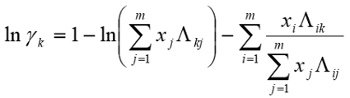
- 通过因子法设定多个不同方向的初始猜测值,在响应参数空间中逼近真实的最优值。通过对一个气相色谱(GC)样品进行足够次数的重复测定,依据t统计量确定相对精密度,并利用该精密度通过适当的假设检验判断是否接受或舍弃某一特定的GC测量结果。
- 将GC测量的相对精密度与APRD进行比较,并加以讨论。同时报告压力和温度测量仪表的绝对精密度——每日测定一次。
本视频中的章节
0:07
概述
1:36
气液平衡原理
5:15
气液平衡系统的预启动
6:00
气液平衡实验操作
7:52
结果
9:33
应用
11:09
总结