The glycosylation pattern of an antibody determines its clinical performance, thus industrial and academic efforts to control glycosylation persist. Since typical glycoengineering campaigns are time- and labor-intensive, the generation of a rapid protocol to characterize the impact of glycosylation genes using transient silencing would prove useful.
Method Article
Rapid Antibody Glycoengineering in Chinese Hamster Ovary Cells
* These authors contributed equally
In This Article
Summary
Abstract
Recombinant monoclonal antibodies bind specific molecular targets and, subsequently, induce an immune response or inhibit the binding of other ligands. However, monoclonal antibody functionality and half-life may be reduced by the type and distribution of host-specific glycosylation. Attempts to produce superior antibodies have inspired the development of genetically modified producer cells that synthesize glyco-optimized antibodies. Glycoengineering typically requires the generation of a stable knockout or knockin cell line using methods such as clustered regularly interspaced short palindromic repeats (CRISPR)-associated protein 9. Monoclonal antibodies produced by engineered cells are then characterized using mass spectrometric methods to determine if the desired glycoprofile has been obtained. This strategy is time-consuming, technically challenging, and requires specialists. Therefore, an alternative strategy that utilizes streamlined protocols for genetic glycoengineering and glycan detection may assist endeavors toward optimal antibodies. In this proof-of-concept study, an IgG-producing Chinese hamster ovary cell served as an ideal host to optimize glycoengineering. Short interfering RNA targeting the Fut8 gene was delivered to Chinese hamster ovary cells, and the resulting changes in FUT8 protein expression were quantified. The results indicate that knockdown by this method was efficient, leading to a ~60% reduction in FUT8. Complementary analysis of the antibody glycoprofile was performed using a rapid yet highly sensitive technique: capillary gel electrophoresis and laser-induced fluorescence detection. All knockdown experiments showed an increase in afucosylated glycans; however, the greatest shift achieved in this study was ~20%. This protocol simplifies glycoengineering efforts by harnessing in silico design tools, commercially synthesized gene targeting reagents, and rapid quantification assays that do not require extensive prior experience. As such, the time efficiencies offered by this protocol may assist investigations into new gene targets.
Introduction
N-linked glycosylation is an enzymatic process by which oligosaccharide moieties are covalently linked to Asn residues. Unlike de novo protein synthesis, glycan synthesis is a non-templated reaction that results in heterogeneous glycosylation of proteins. The structure, composition, and distribution of glycans can affect protein conformation and function. Indeed, N-glycosylation in the crystallizable fragment (Fc) region of immunoglobulin G (IgG) regulates the therapeutic efficacy, immunogenicity, and half-life of the antibody1. As such, the quality by design (QbD) paradigm for the development of recombinant biotherapeutic protein products naturally identifies glycosylation as a critical quality attribute (CQA)2,3. Mammalian cells are often the preferred expression systems as they inherently produce human-like glycosylation patterns more closely than bacteria, yeast, insect, or plant cells. Moreover, Chinese hamster ovary (CHO) cells are selected over other mammalian cell lines because they are resistant to human virus infection, secrete products at high titers, and can be grown in suspension culture to high viable cell densities4. With respect to glycan formation, non-CHO murine production cells generate immunogenic glycans (α(1-3)-linked galactose [α(1-3)-Gal] and N-glycolylneuraminic acid [NeuGc]) that impinge on the safe use of monoclonal antibodies (mAbs)5. These benefits make CHO cells the foremost expression system, responsible for the production of over 80% of new biotherapeutics between 2014 and 20186. However, template-independent glycosylation is a conserved mechanism that leads to CHO-derived biotherapeutics with an array of glycoforms.
Biotherapeutic development strategies aim to control heterogeneity in CHO cells by genetic engineering. Some literature examples include the knockdown of sialidases (Neu1, Neu3)7, GDP-mannose 4,6-dehydratase (GMD) knockout8, and overexpression of glycosyltransferases (GnTIII)9. Advances in glycoengineering are possible due to a combination of publicly available resources, like the CHO genome10, and the ongoing development of genetic engineering tools, such as transcription activator-like effector nucleases (TALENs), zinc finger nucleases (ZFNs), and clustered regularly interspaced short palindromic repeats (CRISPR)-associated protein 9 (CRISPR-Cas9)11,12,13,14. These tools are typically delivered to CHO cells as plasmid DNA or as purified ribonucleoprotein (RNP) complexes. Conversely, RNA interference (RNAi) is a genetic engineering technology that, in its simplest form, only requires the delivery of purified short interfering RNA (siRNA) oligonucleotides. Endogenous proteins process double-stranded siRNA into single strands, and the nuclease, RNA-induced silencing complex (RISC), forms a complex with siRNA to cleave target mRNA sequences15,16,17. Gene silencing via this method is transient due to RNA instability, but the investigation herein leverages this feature to assist rapid screening.
The model enzyme selected for the current study, α1,6-fucosyltransferase (FUT8), produces N-glycans with α-1,6 core-linked L-fucose (Fuc). This modification is a primary determinant of antibody-dependent cell cytotoxicity (ADCC) activity, as evidenced by studies of commercial antibodies. In the absence of core fucosylation, Rituximab (anti-CD20 IgG1) increases ADCC 50-fold and increases ADCC in Trastuzumab (anti-Her2 IgG1) by improving FcgRIIIa binding18,19. Core fucosylation is, thus, considered an undesirable feature of mAbs that warrants efforts to reverse this phenotype. There are examples of successful Fut8 gene targeting using siRNA with concomitant increases in ADCC20,21,22, albeit these examples deliver Fut8 siRNA encoded on plasmid DNA. Such experiments generate stable gene silencing as plasmid DNA serves as a template for siRNA synthesis. This allows cells to replenish siRNA molecules that are degraded by intracellular RNases and phosphatases. Conversely, the delivery of exogenous synthetic siRNA only permits transient gene silencing as siRNA cannot be replenished due to the lack of an intracellular template. Thus, users should consider if experimental designs are compatible with plasmid-derived or synthetic siRNA. For example, studies focused on peak mAb production, typically day six of the culture23,24, may opt for synthetic siRNA that can be delivered to cells a few days before peak expression. The benefits of a transient approach using synthetic siRNA include the ability to outsource production and the fact that multiple siRNA constructs can be generated in a fraction of the time taken to generate constructs in plasmids. Furthermore, synthetic siRNA is efficacious, as evidenced by literature examples of Fut8 gene silencing that are sufficient to reduce FUT8 protein expression25 and yield afucosylated IgGs with increased FCgRIIIa binding and ADCC26.
The success of this glycoengineering protocol was determined by the degree of Fc glycosylation. Mass spectrometry is normally the method of choice for glycomic analyses; however, capillary gel electrophoresis and laser-induced fluorescence detection (CGE-LIF) is perfectly amenable to resolving the glycoprofile of purified IgGs and has the advantage of greater rapidity and simplicity. Mass spectrometry protocols must combine the appropriate chromatographic and derivatization methods, ionization sources, and mass analyzers27,28,29. In addition to requiring a trained specialist, mass spectrometry protocols are lengthy, and the diversity of methods makes data difficult to compare between laboratories with different setups. In the context of biopharmaceuticals, CGE-LIF is a sensitive method that can provide sufficient details of an antibody glycoprofile and is easily scalable for high-throughput methods. For low abundance, highly complex mixtures with poorly characterized glycoproteins, the advantages of mass spectrometry might remain. However, the high-resolution and high-sensitivity mAb analytics afforded by CGE-LIF-based N-glycan analysis serve as a rationale to trial this method. Furthermore, sample preparation and analysis are complete in just a few hours30. Recent studies have shown that CGE-LIF can be used to monitor glycans derived from human plasma31, mouse32, and CHO IgGs33. These studies highlight the use of CGE-LIF for high-throughput sample analysis and small sample volumes.
The CGE-LIF method has limitations that should be taken into consideration. Cost is a significant barrier to the use of this and other devices for glycan analysis. However, these costs are typical within the field, and CGE-LIF is thought to be a cost-effective option34. Labs with smaller budgets may find it more practical to lease machinery or outsource samples analysis. Another consideration of any analytical method is repeatability. Evaluation of CGE-LIF was conducted using 48 replicates of the same sample that were assayed on different days. The relative standard deviation per capillary was determined for intrabatch and interbatch repeatability. The intrabatch comparison of replicates was found to have a relative standard deviation of 6.2%, indicating that capillary performance is not uniform. Further, a comparison of interbatch data showed a relative standard deviation of 15.8%31, indicating that the capillary performance changes over time. The operational shortcomings identified may not apply in the current study, which uses different machinery and proprietary reagents. If users intend to develop an in-house protocol, it would be worth considering the study by Ruhaak et al.31, which carefully evaluated the reagents for CGE-LIF. As such, the reagents for sample injection (Hi-Di Formamide and DMSO), glycan labeling (NaBH3CN or 2-picoline borane)31, and others have been optimized.
This study presents a time-efficient glycoengineering protocol that combines the rapidity of direct RNAi with downstream glycomic analysis. The methodology is illustrated using the Fut8 gene as a target for the reasons outlined above.
Protocol
1. DsiRNA design and reconstitution
- Use Safari, Firefox, or Microsoft Edge to access the IDT website (https://eu.idtdna.com). From the home page, select the Products and Services tab followed by RNA interference. To generate custom dicer-substrates (DsiRNA) constructs targeting the Fut8 gene, select Design tool followed by the Generate Custom DsiRNA tab.
- Enter the Fut8 Accession Number or manually enter the gene sequence to begin. In this study, the proposed Fut8 sequences from both "CHO-K1" and "Chinese Hamster" entries were obtained from https://chogenome.org and used to generate DsiRNA. Most genes have several transcript variants, and it is important to verify that DsiRNA would be active on all reported variants in the current assembly.
- Select the option to perform a "Manual BLAST" search as the CHO cell genome is currently not available as a "reference genome" on the IDT website. This step searches for matches between custom DsiRNA sequences and the genome of interest.
- Click Search to generate DsiRNA sequences.
- In turn, assess the specificity of each DsiRNA using the "Manual BLAST" function with the tax id:10029 (CHO cell lines and Chinese hamster). Query coverage results indicate DsiRNA constructs match Fut8 (including Fut8 transcript variants) at 100%, whilst complementarity against unintended targets is ≤76%35.
- Check that the DsiRNA specifically targets Fut8 to ensure the GC content is between 30%-50%. A low GC content is associated with weak and unspecific binding, whilst a high GC content inhibits siRNA unwinding and loading into the RISC complex36.
- Select three DsiRNA for use in transfection studies (Table 1), each targeting a different location of the Fut8 gene. Purchase a predesigned non-targeting or scrambled DsiRNA from IDT for control experiments.
- Upon arrival, centrifuge the DsiRNA at 13,300 x g for 1 min to pellet before opening the tube. Reconstitute each lyophilized DsiRNA in nuclease-free duplex buffer (provided by IDT) to a 100 μM stock solution. For example, add 20 μL of buffer to 2 nmol of DsiRNA to obtain a 100 μM stock.
- To ensure sufficient mixing, incubate the stock solutions at room temperature for 30 min whilst shaking gently on an orbital shaker (50 rpm, 16 mm orbit).
- Create a master mix by combining 20 μL of each DsiRNA construct that targets Fut8 (100 μM of each DsiRNA). Prepare aliquots and store at −20 °C.
| DsiRNA target | Sequence | GC (%) | ||
| Structure A | 5' GAGAAGAUAGAAACAGUCAAAUACC 3' | 36% | ||
| 5’ GGUAUUUGACUGUUUCUAUCUUCUCUC 3' | ||||
| Structure B | 5' AGAAUGAGAAUGGAUGUUUUUCCTT 3' | 32% | ||
| 5' AAGGAAAAACAUCCAUUCUCAUUCUGA 3' | ||||
| Structure C | 5' AGAGAAGAUAGAAACAGUCAAAUAC 3’ | 32% | ||
| 5' GUAUUUGACUGUUUCUAUCUUCUCUCG 3' | ||||
Table 1. DsiRNA sequences used for Fut8 knockdown. Sequences generated by IDT that target Fut8 in Chinese hamster and CHO K1 cell genomes. The sense and antisense sequences for each construct are shown (respectively), and the GC content of each structure is displayed. Reprinted from Kotidis et al.52.
2. DsiRNA transfection
- Revive CHO cells expressing an IgG monoclonal antibody37 using culture conditions suitable for the cell line of interest.
NOTE: The cells used in this study were generated using the glutamine synthetase (GS) system, where endogenous GS is inhibited by L-methionine sulfoximine (MSX) to enhance the selection of rare high-producing clones. Therefore, only use MSX if required by the cell line of choice.- Defrost a vial of cells for 2-3 min in a water bath set to 37 °C. Clean the vial exterior with 70% (v/v) ethanol and continue all work in a class II biosafety cabinet.
- Transfer the cell suspension to a 15 mL centrifuge tube containing 9 mL of prewarmed medium appropriate for the cell line of choice. Pellet the cells by centrifugation at 100 x g for 5 min.
- Carefully remove and discard the medium without disturbing the cell pellet. Then, resuspend the cell pellet in 10 mL of prewarmed medium and take an aliquot for counting.
- Stain the cells with Trypan blue if counting with a hemocytometer, or an appropriate stain to distinguish live/dead cells when using an automated cell counter.
- Following either method of enumeration, transfer an appropriate volume of cell suspension to a 125 mL Erlenmeyer shake flask at a viable cell density of 3 x 10⁵ cells·mL-1 in 30 mL of medium (with optional supplementation of 50 μM MSX).
- Transfer cells to an incubator set to 36.5 °C, 5% CO2 and place on a shaking platform at 150 rpm (16 mm orbit).
- Passage cells every 3-4 days at a seeding density of 2 x 10⁵ cells·mL-1 and a working volume of 50 mL in a 250 mL Erlenmeyer shake flask. If using MSX, discontinue supplementation after the first passage.
- Passage cells 2x in addition to thawing.
- Transfection
- Assess the cell density and ensure the cell viability is greater than 90%.
- Carefully clean the biosafety cabinet and all equipment with 70% (v/v) ethanol and an RNase inhibitor solution to avoid contamination.
- Pellet cells at 100 x g for 5 min and resuspend in prewarmed medium to a viable cell density of 5 x 10⁶ cells·mL-1.
- Transfer 8 μL (equivalent to 1 μM) of the DsiRNA master mix or control to a sterile (0.4 cm) electroporation cuvette. Then, transfer 800 μL of the cell suspension (equivalent to 4 x 10⁶ cells) to the same cuvette and ensure both components are mixed.
- Deliver the following pulse conditions: 1200 V, 0.1 ms, square waveform.
- Transfer the cell suspension from the cuvette to one well of a 6-well plate, taking care to avoid foam-like material. Recover the cells in the incubator (36.5 °C, 5% CO2) without shaking for 10 min.
- Add 800 μL of prewarmed media to make a final volume of 1.6 mL per well and return the transfected cells to the incubator for growth (36.5 °C, 5% CO2) while shaking at 150 rpm (16 mm orbit).
- Harvest the supernatants and cells at 48 h post-transfection.
Stopping point: The cell culture supernatant can be kept at -20 °C; however, it is advisable that cell lysis should be performed immediately after cell pellet collection to avoid protein degradation. Supernatants are used in Step 3, Step 4, and Step 5, while cell pellets are used in Step 6.
3. IgG quantification and purification
- Measure IgG concentration using biolayer interferometry or another method of choice.
- Hydrate protein A biosensor tips in sample diluent for 10-30 min. In the meantime, transfer cell suspensions into 15 mL centrifuge tubes and pellet cells at 100 x g for 5 min or remove cells by filtration through a 0.45 µm nitrocellulose filter.
- Without disturbing the pellet, carefully transfer the isolated supernatant containing IgG into a clean centrifuge tube.
- Use the following settings for biolayer interferometry: shaker speed, 2200 rpm; run time, 60 s. These parameters will be used to measure all samples and controls.
- Once the biosensor tips are hydrated, create a standard curve using an IgG standard (4 μL of each concentration).
- Quantitate sample concentrations by loading 4 μL of the cell supernatant. Clean the apparatus with lint-free wipes between each sample.
- Link the standard curve to the unknown samples to interpolate the binding rate of the unknown samples. Save the data and export as a csv or PDF file.
- IgG purification
- Prepare elution buffer containing 0.2 M glycine (pH 2.5) and sterilize by passing through a 0.22 μm filter.
- Filter 1 mL of the isolated supernatant at room temperature using 0.22 μm microcentrifuge filter tubes until the entire supernatant flows through.
- Pellet 150-200 μL of protein A agarose beads in 1.5 mL centrifuge tubes at 100 x g for 3 min and discard the supernatant. Then, wash the protein A beads with 150-200 μL of cell culture medium and repeat centrifugation. Discard the supernatant.
- Resuspend the equilibrated protein A beads with 1 mL of the prepared supernatants from Step 3.2.3. and load into a 1 mL polypropylene tube. Affix the polypropylene tube to a rotary mixer (15 mm orbit) and spin at 30 rpm for 60-90 min at room temperature or overnight at 4 °C.
- After incubation is complete, collect the flow-through and wash the beads with 1 mL of 1x PBS to remove any unbound proteins. Collect the wash fraction as well.
- Elute IgG from the protein A beads by adding 3 mL of elution buffer to the polypropylene column. Collect sequential fractions that drain from the column (500 μL each) into labeled tubes.
- Optional: If the purified antibody is to be stored, neutralize the elution buffer by adding 25 μL of 1 M Tris pH 9.5. Skip this step if the antibody will be processed immediately via buffer exchange, etc.
NOTE: All parts of the purification (flow-through, washes, and all elution fractions) should be kept ensuring that the target protein is not lost. These samples can also help during troubleshooting if the purification is not successful. - Use the first elution (elution A) for downstream processing but keep all other fractions should they be required in the future.
4. Buffer exchange and sample concentration
- Exchange IgG elution buffer with 1x PBS.
- Load elution A onto a 3 kDa molecular weight cutoff centrifugal concentrator. Refer to the manufacturer's guide when selecting an appropriate MWCO column. In this experiment, a smaller pore size ensures maximal retention of secreted protein but also increases the centrifugation time.
- Centrifuge at 13,300 x g for 40-50 min at 4 °C. Centrifugation is complete once the residual volume is equal to or less than 50 μL.
- Discard the flow-through and add 500 μL of prechilled (4 °C) 1x PBS to dilute the residual supernatant. Centrifuge the sample again using the same conditions (13,300 x g for 40-50 min at 4 °C) until 50 μL of residual supernatant remains.
- Add 500 μL of prechilled (4 °C) 1x PBS to dilute the residual supernatant and repeat the centrifugation process again to obtain a 100x dilution of the supernatant.
- Concentrate the supernatant to a final concentration of ~2.5 g·L-1 in 40 μL or less to ensure compatibility with the glycan analysis method.
NOTE: 100 µg needs to be loaded for glycan analysis.
Stopping point: The concentrated IgG (in 1x PBS) can be stored at −20 °C and thawed prior to glycan analysis.
5. Glycan analysis
- Perform glycan analysis using capillary gel electrophoresis according to the manufacturer's instructions.
- Transfer 200 μL of the magnetic bead solution to a 0.2 mL PCR tube and place onto the magnetic stand to separate the beads from the supernatant.
- Carefully remove the supernatant and remove the tubes from the magnetic stand. Add the purified protein sample and vortex to ensure complete mixing.
- Add denaturation buffer (supplied) to the sample tube and incubate for 8 min at 60 °C. Keep the sample tubes open for optimal reaction performance.
- Add PNGase F (500 units per sample) and incubate for 20 min at 60 °C to cleave glycans from the purified antibodies.
- Following the release of N-glycans, close the sample tube and vortex. Add acetonitrile, vortex, and incubate at room temperature for 1 min.
- Place the sample tubes in the magnetic stand to separate the beads from solution. Use a pipette to carefully remove the supernatant without touching the beads.
- In a fume hood, add the glycan labeling solution containing a fluorophore to the sample. Vortex to ensure sufficient mixing and incubate at 60 °C for 20 min (open lids).
- Wash the sample 3x in acetonitrile to remove excess dye. Then, elute the labeled glycans in DDI water (supplied).
- Place the sample tube in the magnetic stand to separate the beads from the supernatant containing purified and labeled glycans.
- Prepare and load the glucose ladder standard, bracketing standards, and samples into the designated tray positions. Run the glycan analysis protocol.
- Use appropriate software to analyze and identify the glycans present in the sample.
NOTE: Ensure the temperature in the heat block is accurate for efficient incubation.
6. Western blot
- Quantify knockdown efficiency using western blot analysis with an anti-α-1,6-fucosyltransferase antibody. Polyacrylamide gels and buffer recipes are available from commercial suppliers38,39.
- At 48 h post transfection, count the cells using a hemocytometer or an automated cell counter and determine the volume of cell suspension equivalent to 5 x 10⁶ cells.
- Transfer the appropriate volume of cell suspension from each experimental condition to a sterile 1.5 mL centrifuge tube and pellet at 13,200 x g for 10 min at 4 °C. Discard the supernatant.
- Lyse the cells with 200 μL of lysis buffer (suitable for the extraction of proteins from mammalian cells) containing 1% v/v protease inhibitor cocktail at room temperature for 10 min. Shake the mixture gently during incubation (50 rpm, 16 mm orbit).
- To remove the cellular debris, centrifuge the lysate at 13,200 x g for 10 min and then transfer the cleared lysate to a sterile 1.5 mL tube.
- Measure the protein concentration of each lysate using a spectrophotometer at 280 nm. Subsequently, prepare aliquots of each sample adjusted to have the same protein concentration.
- Denature the protein samples by incubation at 100 °C for 10-15 min in DTT-SDS sample loading dye; the final dye concentration is 1x.
- Load 15 μL of the denatured samples and 5 μL of prestained protein ladder into an SDS-PAGE gel with 12.5% resolving gel for efficient separation. Run the samples at 25 mA per gel for 90 min or until the dye front reaches the end of the gel.
- Carefully remove the gel from the cassette and incubate in 1x transfer buffer containing methanol.
- Prepare the wet transfer system and activate a PVDF membrane with methanol. Assemble the gel and PVDF membrane for wet transfer, place an ice block in the transfer tank, and submerge the entire tank in ice to ensure the transfer conditions remain cold. Run at 350 mA/100 V for 60 min.
- Block the membrane by incubating in a blocking solution for 30 min at room temperature while shaking gently on an orbital shaker at 50 rpm (16 mm orbit).
- Rinse the membrane with sterile water for 5 min and repeat. Then, use a clean scalpel to carefully cut the membrane horizontally at ~50 kDa, using the visible protein ladder as a guide.
- Incubate the membrane harboring proteins greater than 50 kDa with anti-α-1,6-fucosyltransferase antibody at 1:1000 in an antibody diluent buffer. Incubate the membrane with immobilized proteins less than 50 kDa with anti-GAPDH at 1:10,000 in diluent buffer. Membranes may be incubated for 1 h at room temperature or overnight at 4 °C.
- Wash the membranes for 5 min (x3) and then incubate with an appropriate secondary antibody for at least 30 min at room temperature.
- Perform 3x washes with a wash buffer for 5 min, followed by 3x washes with water. Then, develop the membrane with a chromogenic substrate (or appropriate detection reagent) until bands appear (1-60 min).
- Rinse the membrane 2x with water, and then allow it to dry. Capture an image of the membrane and perform densitometric analysis40.
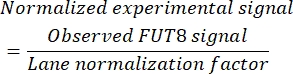
- To calculate the relative protein expression in each sample, first calculate the ratio of the GAPDH signal in samples. This is the normalization factor for each sample that corrects for discrepancies in sample loading.

- Divide the FUT8 signal intensity (for each lane) by the normalization factor of the corresponding lane to obtain the relative FUT8 protein expression.
Results
Western blot analysis showed reduced FUT8 protein expression in cells transfected with a mixture of three Fut8 DsiRNA constructs. In control samples transfected with non-targeting DsiRNA, FUT8 appeared as a double band at ~65 and 70 kDa. Since the predicted molecular weight of FUT8 is 66 kDa, a reduction in the signal intensity of the lower molecular weight band is indicative of gene silencing. To confirm and quantify gene silencing, the level of FUT8 protein was normalized to the relative GAPDH protein level. Western blot analysis detected two bands for GAPDH at ~37 and 35 kDa. The higher molecular weight band corresponds to the predicted protein size and is, therefore, used in normalization calculations. When normalized against GAPDH protein levels, FUT8 protein expression was reduced by up to 60% (Figure 1).
In line with the observation of gene knockdown at 48 h post transfection, corresponding mAb samples were processed for analysis by CGE- LIF. Glycan structures from knockdown cells showed a decrease in fucosylation. This trend was most pronounced in agalactosylated structures (G0F) and observed to a lesser extent in galactosylated structures (G1F, G1F' and G2F). From this dataset, the total IgG core fucosylation decreased to ~75%, down from ~95% core fucosylation observed for the negative control condition (Figure 2). A greater reduction in core fucosylation was anticipated given the ~60% decrease in FUT8 protein levels. Upon reflection, it is noteworthy that the glycoprofile represents glycosylated mAbs that accumulated over a period of 48 h since transfection, while gene silencing represents protein levels present at the time of harvesting only.
Further scrutiny of this knockdown method involved varying the DsiRNA concentration, harvest time, and electroporation conditions. Each factor was individually probed to determine its relevance. The impact of electroporation pulse conditions on core fucosylation and cell viability is captured in Experiments B, C, D, and E. These results demonstrate a two-fold reduction in core fucosylation from electroporation using two square wave pulses (Experiment C) compared to a single square wave pulse (Experiment B), without significant differences in cell viability (Table 2). Electroporation condition e3 (Experiment D) led to the lowest cell viability (~90%) and IgG yield at this timepoint. However, cells that survived the electroporation event were moderately transfected, as evidenced by the ~10% decrease in core fucosylation (Table 2). Interestingly, Experiment D used electroporation conditions that provided the greatest reduction in core fucosylation (14.7%) but were evidently detrimental to cell viability (91%-93% viability). This limited set of experiments illustrates the need to determine electroporation settings that enable sufficient permeabilization of the cell membrane without causing irrevocable damage. It is also interesting to note the role of siRNA concentration and harvest time on core fucosylation. Overall, increasing siRNA concentration has a greater influence on core fucosylation than increasing the harvest time (Experiments B, F, G versus Experiments A, B, H). In future experiments, it would be interesting to titrate the siRNA concentrations delivered by the electroporation method e2.
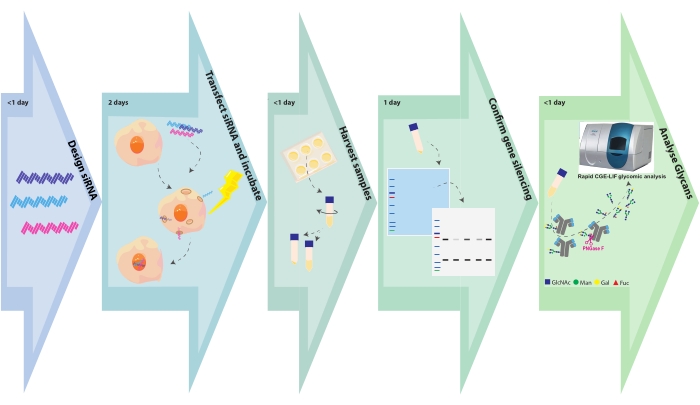
Figure 1. Experimental flow chart. Glycoengineering and sample analysis steps are depicted with the associated time required for each step. SiRNA design takes a few hours, depending on the number of gene targets or constructs per gene target. CHO cell transfection with siRNA is complete in a few hours, and transformed cells are left to grow for 48 h. Cell pellets and supernatants are harvested within a few hours. Cell pellets are lysed, and the intracellular proteins are separated on an SDS PAGE and subsequently blotted and probed with antibodies against the target gene. Glycans are cleaved from purified antibodies and analyzed by CGE-LIF. These assays may require 1 day each. Please click here to view a larger version of this figure.
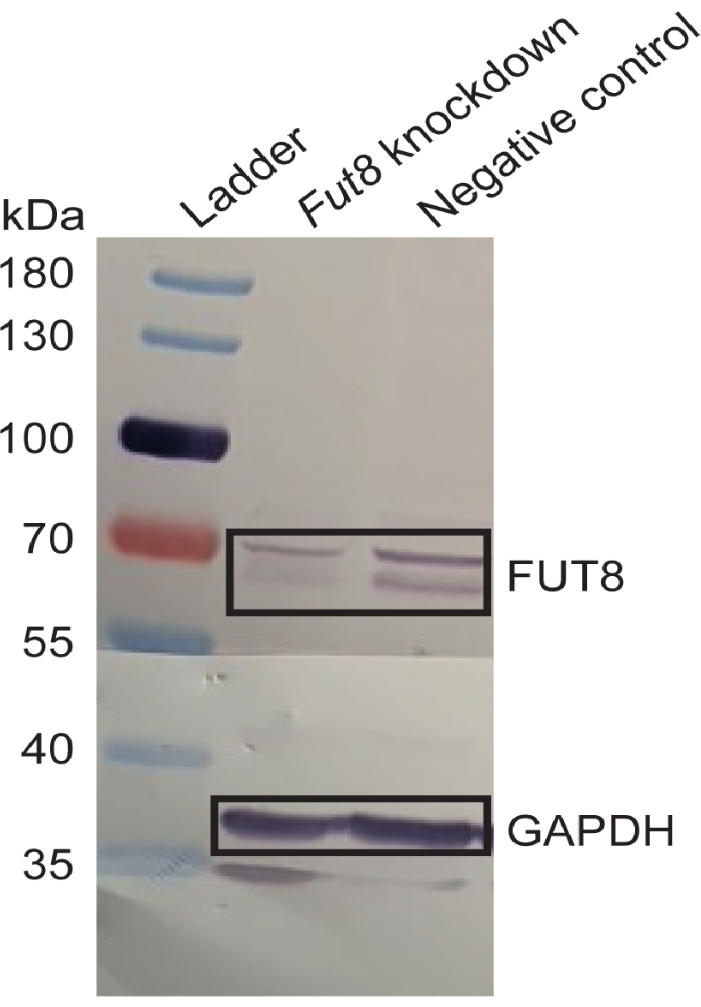
Figure 2. Confirmation of RNA interference. Western blot detection of α-1,6-fucosyltransferase (FUT8) protein levels in samples treated with Fut8 or non-targeting control DsiRNA. Bands corresponding to FUT8 are more intense in control than Fut8 knockdown samples. The GAPDH protein level was also assessed in order to normalize target gene expression. All samples were taken from Experiment G (see Table 2). Reprinted from Kotidis et al.52. Please click here to view a larger version of this figure.
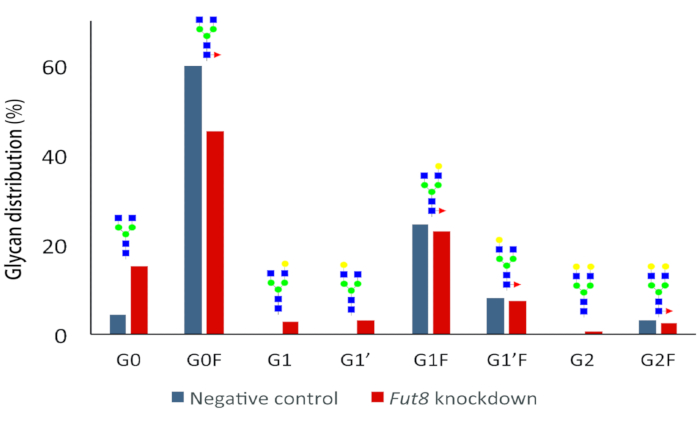
Figure 3. Effect of Fut8 knockdown on cumulative IgG glycosylation at 48 h. A shift in glycan distribution is detected in knockdown samples. In particular, the relative abundance of the main core-fucosylated structures (G0F) is reduced while the afucosylated species are increased in the knockdown experiment. Measurements were performed from Experiment G samples (see Table 2). Biological triplicates performed for each experiment were mixed after harvesting to reduce the burden of downstream analysis. Reprinted from Kotidis et al.52. Please click here to view a larger version of this figure.
| Experiment name | Electroporation method | DsiRNA concentration (nΜ) | Harvest time (h) | Viability (%) | Xv (106 cells·mL-1) | IgG titer (mg·L-1) | Difference in core-fucosylation (%) | ||||||
| ExpA_Negative | e1 | 500 | 24 | 98.3 | 4.71 | 122.5 | - | ||||||
| ExpA_Knockdown | e1 | 500 | 24 | 98.3 | 4.9 | 110.3 | 4.08 | ||||||
| ExpB_Negative | e1 | 500 | 48 | 95.6 | 9.55 | 453.3 | - | ||||||
| ExpB_Knockdown | e1 | 500 | 48 | 96.7 | 9.61 | 469 | 5.38 | ||||||
| ExpC_Negative | e2 | 500 | 48 | 96.3 | 9.91 | 449.3 | - | ||||||
| ExpC_Knockdown | e2 | 500 | 48 | 96.7 | 11 | 454.6 | 11.42 | ||||||
| ExpD_Negative | e3 | 500 | 48 | 90.6 | 6.25 | 318.5 | - | ||||||
| ExpD_Knockdown | e3 | 500 | 48 | 89.1 | 6.09 | 311.85 | 9.71 | ||||||
| ExpE_Negative | e4 | 500 | 48 | 91.1 | 7.2 | 380.3 | - | ||||||
| ExpE_Knockdown | e4 | 500 | 48 | 93.3 | 7.79 | 422.8 | 14.7 | ||||||
| ExpF_Negative | e1 | 750 | 48 | 96.2 | 9.7 | 501 | - | ||||||
| ExpF_Knockdown | e1 | 750 | 48 | 95.7 | 9.76 | 504.6 | 9.9 | ||||||
| ExpG_Negative | e1 | 1000 | 48 | 96.1 | 11.1 | 422.6 | - | ||||||
| ExpG_Knockdown | e1 | 1000 | 48 | 95.9 | 9.73 | 499.3 | 17.26 | ||||||
| ExpH_Negative | e1 | 500 | 72 | 94.4 | 14.3 | 925.8 | - | ||||||
| ExpH_Knockdown | e1 | 500 | 72 | 95 | 13.5 | 1018.4 | 7.37 | ||||||
Table 2. Transfection optimization. Iterative modifications of the electroporation method, DsiRNA concentration, and harvest time led to changes in cell viability, viable cell density, IgG titer at the harvest time, and differences in core fucosylation. Each experiment compared the knockdown and the respective negative control to determine if the modification produces the desired effect (i.e., a decrease in fucosylation). Electroporation settings were as follows: e1: 1200 V, 0.1 ms, square waveform; e2: 1200 V, 2x 0.1 ms, 5 s between pulses, square waveform; e3: 150 V, 20 ms, square waveform; e4: 250 V, 500 μF, exponential decay. Reprinted from Kotidis et al.52.
Discussion
Glycosylation pathways involve a complex metabolic network of enzymes and accessory proteins. Dissecting the function of pathway constituents is daunting if reliant on conventional knockout or knockin genetic engineering strategies alone. An alternative approach is to preliminarily screen members of a pathway using a transient loss-of-function assay. To this end, two rapid protocols were combined, RNAi and CGE-LIF detection, to create a more efficient way to characterize glycosylation genes. The method described requires 5-7 days for completion compared to conventional methods that potentially take several weeks for completion. Further, research environments with automation capabilities could exploit this method to screen more gene candidates than feasible with manual handling.
The success of a transient glycoengineering campaign is largely dependent on the siRNA design. Custom DsiRNA designs must follow the rules previously outlined, or for ease, users may opt for commercially available predesigned sequences. Like other gene modification strategies, RNAi has the potential for off-target effects. Therefore, users are encouraged to assess unintentional gene targeting by computational methods41. Experimental design choices can also help limit off-target effects. Kittler et al. showed that the multiplexed delivery of siRNA led to a reduction in off-target effects42. Although this seems counterintuitive, it is suggested that a master mix reduces the concentration of each siRNA construct, thus limiting the opportunity for off-target gene silencing. A further benefit is that the simultaneous transfection of siRNA structures that target the same gene increases the likelihood of successful RNAi. The use of a master mix also ensures consistency between samples and replicates and speeds up the transfection process. Following an initial screen of mixed siRNA constructs, another experiment may be conducted using individual constructs to ascertain the RNAi efficiency of each sequence. In this and other knockdown studies, up to three siRNA have been pooled and delivered to cells43,44,45. However, it may be desirable to screen more than three siRNA simultaneously to efficiently target a single gene or to target several genes. Indeed, one study demonstrated multiplexed siRNA-mediated silencing of up to six genes at levels comparable to the silencing of individual genes46. However, further studies are needed to determine the maximum number of siRNA constructs that can be used in a pool without compromising the silencing efficiency. The multiplex strategy was proposed by Martin et al. to enhance the pace of RNAi library screening experiments46, and a similar concept may prove useful to screen glycosylation genes.
The protocol described herein serves as a proof-of-concept with the expectation that subsequent experiments will be performed to validate other glycosylation genes. New genes of interest may be uncharacterized or less popular than Fut8, and primary antibodies to detect gene silencing may be poor or unavailable. In this scenario, alternative methods such as RT-PCR may be used to quantify gene silencing47, but it should be noted that RT-PCR detects mRNA rather than protein. When antibodies for western blotting are available, a common issue is poor detection or the presence of non-specific bands. Troubleshooting guides to help users solve common issues are available, and these tend to include a range of solutions such as primary antibody titration, alternative blocking, and detection conditions48,49. In this study, FUT8 unexpectedly appeared as a double band at ~65 and ~70 kDa. It is possible that the ~70 kDa band represents glycosylated FUT8. Literature evidence from human cell lines describes O-linked glycosylation at Thr 56450,51, a site that is conserved in Chinese hamster, and CHO K1 FUT8 sequences.
As previously mentioned, glycosylation pathways often involve a complex array of enzymes. The current protocol has been developed, optimized, and demonstrated using a monogenic glycosylation reaction controlled by Fut8. Therefore, further studies are required to confirm the robustness of this method when the target gene encodes an enzyme with alternate kinetics and expression levels or a pathway regulated by isoenzymes with redundant functions.
Taken together, the ability to rapidly silence genes and detect modified IgG glycoprofiles is a useful tool in the effort toward custom glycoengineered antibodies. Insights from similar short-term studies can be applied to generate stable glycoengineered cells for use in long-term assays like fed-batch culture. Outside of the pharmaceutical context, this method contributes toward the study of glycan biology and highlights the important function of glycans in development, health, and disease.
Disclosures
The authors have nothing to disclose.
Acknowledgements
PK thanks the Department of Chemical Engineering, Imperial College London, for his scholarship. RD thanks the U.K. Biotechnology and Biological Sciences Research Council for his studentship. MM is funded by the U.K. Biotechnology and Biological Sciences Research Council (Grant reference: BB/S006206/1). IAG thanks the Irish Research Council (Scholarship No. GOIPG/2017/1049) and CONACyT (Scholarship No. 438330).
Materials
| Name | Company | Catalog Number | Comments |
|---|---|---|---|
| 32 Karat software | SCIEX | contact manufacturer | Software for glycan data acquisition and analysis using the Fast Glycan analysis protocol and separation method. |
| Acetonitrile, HPLC grade | Sigma Aldrich | 34851 | Solvent. |
| Anti-FUT8 antibody | AbCam | ab198741 | Rabbit polycloncal to Fut8. Use this antibody to quantify Fut8 protein expression; replace this antibody if using siRNA targeting a different gene. |
| Anti-GAPDH antibody | AbCam | ab181602 | Rabbit monoclonal to GAPDH. Alternative housekeeping genes exist and might be preferred by the user. |
| BioDrop Spectrophotometer | Biochrom | 80 3006 55 | Instrument used to quantify protein concentration. |
| BLItz | ForteBio | 45 5000 | Instrument. Label-Free Protein Analysis System. |
| BRAND Haemocytometer | Sigma Alrich | BR717810 | Counting chamber device |
| Capillary cartridge | SCIEX | A55625 | Pre-assembled capillary cartridge with window (30 cm total length, 375 µm outer diameter (o.d), x 50 µm inner diameter (i.d). |
| C100HT Glycan analysis—capillary electrophoresis | SCIEX | contact manufacturer | Capillary gel electrophoresis instrument, the CESI 8000 Plus instrument is now used. |
| CD CHO Medium | Thermo Fisher Scientific | 10743029 | Replace this with a culture medium appropriate for the cell line of choice. |
| Centrifuge tubes, 15 mL | Greiner Bio | 188261 | Sterile polypropylene tube. |
| Centrifuge tubes, 50 mL | Greiner Bio | 227270 | Sterile polypropylene tube. |
| CHO IgG | MedImmune | Gift | Chinese Hamster Ovary cells expressing an IgG monoclonal antibody (CHO T127). Created using the GS system. |
| Dulbecco's phosphate-buffered saline (DPBS) | Gibco | 14190144 | 1x PBS, without calcium or magnesium. |
| Erlenmeyer Flasks with Vent Cap, 125 mL | Corning | 431143 | Replace this with a culture vessel suitable for growing the cell line of choice. |
| Erlenmeyer Flasks with Vent Cap, 250 mL | Corning | 431144 | Replace this with a culture vessel suitable for growing the cell line of choice. |
| Fast Glycan Labelling and Analysis kit | SCIEX | B94499PTO | Labels N-glycans with APTS and then uses a magnetic-bead based clean up system to remove excess APTS. |
| Fut8 DsiRNA | IDT | Custom | Custom designed DsiRNA targetting Fut8. |
| Gene Pulser cuvettes, 0.4 cm | Bio-Rad | 1652088 | Electroporation cuvette. |
| Gene Pulser Xcell Eukaryotic System | Bio-Rad | 165 2661 | Insturment. Xcell main unit with Capacitance Extender (CE) Mocdule and ShockPod. |
| Immobilon-FL PVDF membrane | Merck-Millipore | IPFL00010 | Immunoblot transfer membrane, low background. |
| L-Methionine sulfoximine (MSX) | Sigma Aldrich | M5379 | Only necessary for CHO cell lines using the glutamine synthetase (GS) selection system. |
| Kimwipes | Thermo Fisher Scientific | 10623111 | Low-lint, high absorbency and chemically inert wipes. |
| M-PER Mammalian Protein Extraction Reagent | Thermo Fisher Scientific | 78505 | Alternative lysis buffers such as RIPA are also appropriate. |
| Methanol, HPLC grade | Fisher Scientific | 10365710 | Solvent. |
| Microcentrifuge tubes, 1.5 mL | Eppendorf | 616201 | Autoclavable tubes. |
| Mini-PROTEAN Tetra Vertical Electrophoresis Cell system | Bio-Rad | 1658035FC | Instrument. 4-gel capacity, for 1.0 mm thick handcast gels, with Mini Trans-Blot Module and PowerPac HC Power Supply. |
| NC-Slide A8 | ChemoMetec | 942 0003 | 8-chamber slide for use with NucleoCounter NC 250. |
| Negative Control DsiRNA, 5 nmol | IDT | 51 01 14 04 | Non-targeting DsiRNA. |
| Nuclease-free duplex buffer | IDT | 11-01-03-01 | Reconstitution buffer for DsiRNA. |
| NucleoCounter NC-250 | Chemometec | contact manufacturer | Instrument. Automated Cell Analyzer |
| Page-Ruler ladder, 10 to 180 kDa | Thermo Fisher Scientific | 26616 | Mixed blue, orange and green protein standards for SDS PAGE and western blotting. |
| PCR tubes | Greiner Bio | 608281 | Autoclavable tubes for DsiRNA aliqouts and glycan preparation. |
| Pipette filter tips sterilised (10, 200, 1000 µL) | Gibson | F171203, F171503, F171703 | Sterile filter tips to avoid RNA contamination. |
| PNGase F enzyme | New England Biolabs | P0704S | Enzymatic cleavage of glycans from glycoproteins. |
| Polypropylene columns, 1 mL | Qiagen | 34924 | Columns for gravity-flow chromatography. |
| Protease Inhibitor Cocktail | Sigma Aldrich | P8340 | Inhibition of serine, cysteine, aspartic proteases and aminopeptidases |
| Protein-A Agarose Beads | Merck-Millipore | 16 125 | For purification of human, mouse and rabbit immunoglobulins. |
| Protein-A biosensor | ForteBio | 18 5010 | Tips functionalised with Protein A for rapid antibody quantification. |
| RNaseZap | Invitrogen | AM9780 | Removes RNAse contamination. |
| Sample dilutent | ForteBio | 18 1104 | Activate Protein A tips. |
| Serological pipets (5, 10, 25 mL) | Corning | 4487, 4488, 4489 | Used for sterile cell culture tecniques. |
| Sodium cyanoborohydride solution 1 M in THF | Sigma Aldrich | 296813 | Reducing agent. |
| Solution 18 | ChemoMetec | 910-3018 | Staining reagent containing acridine orange (AO) and 4',6-diamidino-2-phenylindole (DAPI) |
| Spin-X Centrifuge Tube Filters | Corning | 8161 | 0.22 µm pore, Cellulose Acetate membrane. |
| Suspension plate with lid, 6-well | Greiner Bio | 657 185 | Hydrophobic culture plate for growth of suspension cultures. |
| Syringe filters, 0.22 μm | Sartorius | 514 7011 | Surfactant-free cellulose acetate (SFCA) |
| Syringes with Luer lock tip, 20 mL | Fisher Scientific | 10569215 | For secure connection with syringe filter. |
| Trypan Blue solution | Gibco | 15250061 | Stains dead and dying cells. |
| Vivaspin 500, 3,000 MWCO | Sartorius | VS0191 | Polyethersulfone |
| WesternBreeze Chromogenic Kit, anti-rabbit | Thermo Fisher Scientific | WB7105 | Western blot detection kit, alternative blocking buffers and antibody diluents can be made by the user using recipes available online. |
References
- Jefferis, R. Glycosylation as a strategy to improve antibody-based therapeutics. Nature Reviews Drug Discovery. 8 (3), 226-234 (2009).
- Rathore, A. S., Winkle, H. Quality by design for biopharmaceuticals. Nature Biotechnology. 27 (1), 26-34 (2009).
- Eon-Duval, A., Broly, H., Gleixner, R. Quality attributes of recombinant therapeutic proteins: An assessment of impact on safety and efficacy as part of a quality by design development approach. Biotechnology Progress. 28 (3), 608-622 (2012).
- Lalonde, M. -E., Durocher, Y. Therapeutic glycoprotein production in mammalian cells. Journal of Biotechnology. 251, 128-140 (2017).
- Mimura, Y., et al. Glycosylation engineering of therapeutic IgG antibodies: challenges for the safety, functionality and efficacy. Protein & Cell. 9 (1), 47-62 (2018).
- Walsh, G. Biopharmaceutical benchmarks 2018. Nature Biotechnology. 36 (12), 1136-1145 (2018).
- Zhang, M., Koskie, K., Ross, J. S., Kayser, K. J., Caple, M. V. Enhancing glycoprotein sialylation by targeted gene silencing in mammalian cells. Biotechnology and Bioengineering. , (2010).
- Kanda, Y., et al. et al. of a GDP-mannose 4,6-dehydratase (GMD) knockout host cell line: a new strategy for generating completely non-fucosylated recombinant therapeutics. Journal of Biotechnology. 130 (3), 300-310 (2007).
- Umaña, P., Jean-Mairet, J., Moudry, R., Amstutz, H., Bailey, J. E. Engineered glycoforms of an antineuroblastoma IgG1 with optimized antibody-dependent cellular cytotoxic activity. Nature Biotechnology. 17 (2), 176-180 (1999).
- Xu, X., et al. et al. genomic sequence of the Chinese hamster ovary (CHO)-K1 cell line. Nature Biotechnology. 29 (8), 735-741 (2011).
- Chan, K. F., et al. et al. of GDP-fucose transporter gene (Slc35c1) in CHO cells by ZFNs, TALENs and CRISPR-Cas9 for production of fucose-free antibodies. Biotechnology Journal. 11 (3), 399-414 (2016).
- Zhang, P., et al. Identification of functional elements of the GDP-fucose transporter SLC35C1 using a novel Chinese hamster ovary mutant. Glycobiology. 22 (7), 897-911 (2012).
- Amann, T., et al. Genetic engineering approaches to improve posttranslational modification of biopharmaceuticals in different production platforms. Biotechnology and Bioengineering. 116 (10), 2778-2796 (2019).
- Karottki, K. J., et al. Awakening dormant glycosyltransferases in CHO cells with CRISPRa. Biotechnology and Bioengineering. 117 (2), 593-598 (2020).
- Fire, A., et al. Potent and specific genetic interference by double-stranded RNA in Caenorhabditis elegans. Nature. 391 (6669), 806-811 (1998).
- Hammond, S. M., Bernstein, E., Beach, D., Hannon, G. J. An RNA-directed nuclease mediates post-transcriptional gene silencing in Drosophila cells. Nature. 404 (6775), 293-296 (2000).
- Bernstein, E., Caudy, A. A., Hammond, S. M., Hannon, G. J. Role for a bidentate ribonuclease in the initiation step of RNA interference. Nature. 409 (6818), 363-366 (2001).
- Shields, R. L., et al. et al. of fucose on human IgG1 N-linked oligosaccharide improves binding to human FcγRIII and antibody-dependent cellular toxicity. Journal of Biological Chemistry. 277 (30), 26733-26740 (2002).
- Shinkawa, T., et al. et al. Absence of fucose but not the presence of galactose or bisecting N-acetylglucosamine of human IgG1 complex-type oligosaccharides shows the critical role of enhancing antibody-dependent cellular cytotoxicity. Journal of Biological Chemistry. 278 (5), 3466-3473 (2003).
- Mori, K., et al. Engineering Chinese hamster ovary cells to maximize effector function of produced antibodies using FUT8 siRNA. Biotechnology and Bioengineering. 88 (7), 901-908 (2004).
- Imai-Nishiya, H., et al. Double knockdown of alpha1,6-fucosyltransferase (FUT8) and GDP-mannose 4,6-dehydratase (GMD) in antibody-producing cells: a new strategy for generating fully non-fucosylated therapeutic antibodies with enhanced ADCC. BMC Biotechnology. 7, 84(2007).
- Beuger, V., et al. et al. silencing of fucosyltransferase 8 in Chinese-hamster ovary cells for the production of antibodies with enhanced antibody immune effector function. Biotechnology and Applied Biochemistry. 53 (1), 31(2009).
- Templeton, N., Dean, J., Reddy, P., Young, J. D. Peak antibody production is associated with increased oxidative metabolism in an industrially relevant fed-batch CHO cell culture. Biotechnology and Bioengineering. 110 (7), 2013-2024 (2013).
- Hussain, H., et al. A comparative analysis of recombinant Fab and full-length antibody production in Chinese hamster ovary cells. Biotechnology and Bioengineering. 118 (12), 4815-4828 (2021).
- Shimoyama, H., et al. Partial silencing of fucosyltransferase 8 gene expression inhibits proliferation of Ishikawa cells, a cell line of endometrial cancer. Biochemistry and Biophysics Reports. 22, 100740(2020).
- Tummala, S., et al. Evaluation of exogenous siRNA addition as a metabolic engineering tool for modifying biopharmaceuticals. Biotechnology Progress. 29 (2), 415-424 (2013).
- Carillo, S., et al. Comparing different domains of analysis for the characterisation of N-glycans on monoclonal antibodies. Journal of Pharmaceutical Analysis. 10 (1), 23-34 (2020).
- Reusch, D., et al. Comparison of methods for the analysis of therapeutic immunoglobulin G Fc-glycosylation profiles-Part 2: Mass spectrometric methods. mAbs. 7 (4), 732-742 (2015).
- Donini, R., Haslam, S. M., Kontoravdi, C. Glycoengineering Chinese hamster ovary cells: a short history. Biochemical Society Transactions. 49 (2), 915-931 (2021).
- Szigeti, M., Chapman, J., Borza, B., Guttman, A. Quantitative assessment of mAb Fc glycosylation of CQA importance by capillary electrophoresis. ELECTROPHORESIS. 39 (18), 2340-2343 (2018).
- Ruhaak, L. R., et al. Optimized workflow for preparation of APTS-labeled N-glycans allowing high-throughput analysis of human plasma glycomes using 48-channel multiplexed CGE-LIF. Journal of Proteome Research. 9 (12), 6655-6664 (2010).
- Patenaude, A. -M., et al. N-glycosylation analysis of mouse immunoglobulin G isolated from dried blood spots. Electrophoresis. 42 (24), 2615-2618 (2021).
- Karst, D. J., et al. Modulation and modeling of monoclonal antibody N-linked glycosylation in mammalian cell perfusion reactors. Biotechnology and Bioengineering. 114 (9), 1978-1990 (2017).
- Dadouch, M., Ladner, Y., Perrin, C. Analysis of monoclonal antibodies by capillary electrophoresis: sample preparation, separation, and detection. Separations. 8 (1), 4(2021).
- Fakhr, E., Zare, F., Teimoori-Toolabi, L. Precise and efficient siRNA design: a key point in competent gene silencing. Cancer Gene Therapy. 23 (4), 73-82 (2016).
- Birmingham, A., et al. A protocol for designing siRNAs with high functionality and specificity. Nature Protocols. 2 (9), 2068-2078 (2007).
- Makrydaki, E., et al. Immobilised enzyme cascade for targeted glycosylation. , (2022).
- Bulletin_6201.pdf. , Available from: https://www.bio-rad.com/webroot/web/pdf/lsr/literature/Bulletin_6201.pdf (2022).
- Bulletin_6376.pdf. , Available from: https://www.bio-rad.com/webroot/web/pdf/lsr/literature/Bulletin_6376.pdf (2022).
- Dot Blot Analysis. , Available from: https://imagej.nih.gov/ij/docs/examples/dot-blot/index.html (2022).
- Yilmazel, B., et al. Online GESS: prediction of miRNA-like off-target effects in large-scale RNAi screen data by seed region analysis. BMC Bioinformatics. 15 (1), 192(2014).
- Kittler, R., et al. Genome-wide resources of endoribonuclease-prepared short interfering RNAs for specific loss-of-function studies. Nature Methods. 4 (4), 337-344 (2007).
- Stec, E., et al. A multiplexed siRNA screening strategy to identify genes in the PARP pathway. Journal of Biomolecular Screening. 17 (10), 1316-1328 (2012).
- Brown, J. M., et al. Ligand conjugated multimeric siRNAs enable enhanced uptake and multiplexed gene silencing. Nucleic Acid Therapeutics. 29 (5), 231-244 (2019).
- Parsons, B. D., Schindler, A., Evans, D. H., Foley, E. A direct phenotypic comparison of siRNA pools and multiple individual duplexes in a functional assay. PLoS One. 4 (12), 8471(2009).
- Martin, S. E., et al. Multiplexing siRNAs to compress RNAi-based screen size in human cells. Nucleic Acids Research. 35 (8), 57(2007).
- Popp, O., Moser, S., Zielonka, J., Rüger, P., Hansen, S., Plöttner, O. Development of a pre-glycoengineered CHO-K1 host cell line for the expression of antibodies with enhanced Fc mediated effector function. mAbs. 10 (2), 290-303 (2018).
- Yang, P. -C., Mahmood, T. Western blot: Technique, theory, and trouble shooting. North American Journal of Medical Sciences. 4 (9), 429(2012).
- Troubleshooting Western Blots with the Western Blot Doctor. Bio-Rad Laboratories. , Available from: https://www.bio-rad.com/en-uk/applications-technologies/troubleshooting-western-blots-with-western-blot-doctor?ID=MIW4HR15 (2022).
- Steentoft, C., et al. Precision mapping of the human O-GalNAc glycoproteome through SimpleCell technology. EMBO. 32 (10), 1478-1488 (2013).
- FUT8 - Alpha-(1,6)-fucosyltransferase - Proteomics. , Available from: https://www.nextprot.org/entry/NX_Q9BYC5/proteomics (2022).
- Kotidis, P., et al. Rapid antibody glycoengineering in CHO cells via RNA interference and CGE-LIF N-glycomics. Methods in Molecular Biology. 2370, 147-167 (2022).
Reprints and Permissions
