Gel-seq enables researchers to simultaneously prepare libraries for both DNA- and RNA-seq at negligible added cost starting from 100 - 1000 cells using a simple hydrogel device. This paper presents a detailed approach for the fabrication of the device as well as the biological protocol to generate paired libraries.
A subscription to JoVE is required to view this content. Sign in or start your free trial.
Method Article
Gel-seq: A Method for Simultaneous Sequencing Library Preparation of DNA and RNA Using Hydrogel Matrices
* These authors contributed equally
In This Article
Summary
Abstract
The ability to amplify and sequence either DNA or RNA from small starting samples has only been achieved in the last five years. Unfortunately, the standard protocols for generating genomic or transcriptomic libraries are incompatible and researchers must choose whether to sequence DNA or RNA for a particular sample. Gel-seq solves this problem by enabling researchers to simultaneously prepare libraries for both DNA and RNA starting with 100 - 1000 cells using a simple hydrogel device. This paper presents a detailed approach for the fabrication of the device as well as the biological protocol to generate paired libraries. We designed Gel-seq so that it could be easily implemented by other researchers; many genetics labs already have the necessary equipment to reproduce the Gel-seq device fabrication. Our protocol employs commonly-used kits for both whole-transcript amplification (WTA) and library preparation, which are also likely to be familiar to researchers already versed in generating genomic and transcriptomic libraries. Our approach allows researchers to bring to bear the power of both DNA and RNA sequencing on a single sample without splitting and with negligible added cost.
Introduction
Next generation sequencing (NGS) has had a profound impact on the way genetics research is conducted. Where researchers once focused on sequencing the genome of an entire species, it is now possible to sequence the genome of a single tumor or even a single cell in one experiment.1 NGS has also made it cost effective to sequence the RNA transcripts found within a cell, a collection of data known as the transcriptome. The ability to amplify and sequence either DNA or RNA from small starting samples has only been achieved in the last five years.2,3,4 Unfortunately, standard protocols are incompatible and researchers must choose whether to sequence DNA or RNA for a given sample. When a starting sample is large enough, it can be split in half. At smaller scales, however, loss of material due to splitting samples can affect library quality, and pooling of samples can average out interesting variations between cells.5 Furthermore, researchers are increasingly interested in examining samples that cannot be split, such as single cells or small heterogeneous tumor biopsies.6
To address this problem, three protocols have recently been developed to sequence both DNA and RNA from the same starting sample: Gel-seq7, G&T-seq8, and DR-seq9. This article presents a detailed protocol for Gel-seq, which can be used to simultaneously generate DNA and RNA libraries from as few as 100 cells at negligible added cost. The novel aspect of Gel-seq is the ability to separate DNA and RNA based exclusively on size using low cost hydrogel matrices. The core innovation of the Gel-Seq protocol is the physical separation of DNA from RNA. This separation is achieved electrophoretically using a combination of polyacrylamide membranes that take advantage of the size differences between these molecules. To put these size differences in context, consider how DNA and RNA are imaged: while DNA exists on the micron-scale and can be viewed using traditional microscopes, RNA exists on the nanometer scale and must be imaged using complex techniques such as cryo-electron microscopy.10
The approach to separating DNA and RNA in this protocol is shown in Figure 1. The left panel shows DNA and RNA free floating in solution near a membrane. When an electric field is applied, as shown in the right panel, DNA and RNA experience an electrophoretic force that induces migration through the membrane. By tuning the membrane properties, we have created a semi-permeable membrane that separates DNA from RNA. The DNA molecules are pushed against the membrane, but become entangled at the edge because of their large size. Small RNA molecules, on the other hand, can reconfigure and weave their way through the membrane. This process, known as reptation, is similar to the way a snake moves through grass. Eventually these RNA molecules are stopped by a second, high-density membrane that is too difficult for even smaller polymers (>200 base pairs) to wriggle through. Once physically separated, DNA and RNA can be recovered and processed to generate information about both the genome and transcriptome. While we can separate DNA and RNA, we have found better results are obtained if the RNA is reverse transcribed to cDNA before separation. The cDNA/RNA hybrids are more stable than RNA alone and can still pass through the low-density membrane.
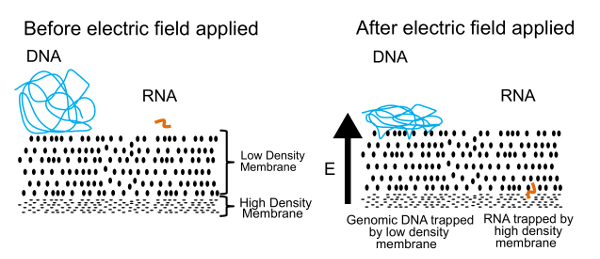
Figure 1. Gel-seq Operating Principle. The underlying principle used to physically separate DNA and RNA. In an applied electric field, small RNA molecules migrate through the low-density membrane but large DNA molecules are trapped at the surface. This figure was reproduced from Ref. 7 with permission from the Royal Society of Chemistry. Please click here to view a larger version of this figure.
This paper describes in detail both the fabrication of the Gel-seq device and the biological protocol to generate paired DNA and RNA libraries. An overview of both is shown in Figure 2. The device is fabricated by layering three different density polyacrylamide gels on top of each other in a process similar to creating standard stacking gels.11 The biological protocol starts with 100 - 1000 cells suspended in PBS. The cells are lysed and the RNA is converted into cDNA before the device is used to separate the genomic DNA from the cDNA/RNA hybrids. After separation and recovery, genomic and transcriptomic libraries are prepared using a process that closely follows the standard whole-genome library preparation kit protocol. Further detail about the development and validation of Gel-seq can be read in the Lab on a Chip publication "Gel-seq: whole-genome and transcriptome sequencing by simultaneous low-input DNA and RNA library preparation using semi-permeable hydrogel barriers."7
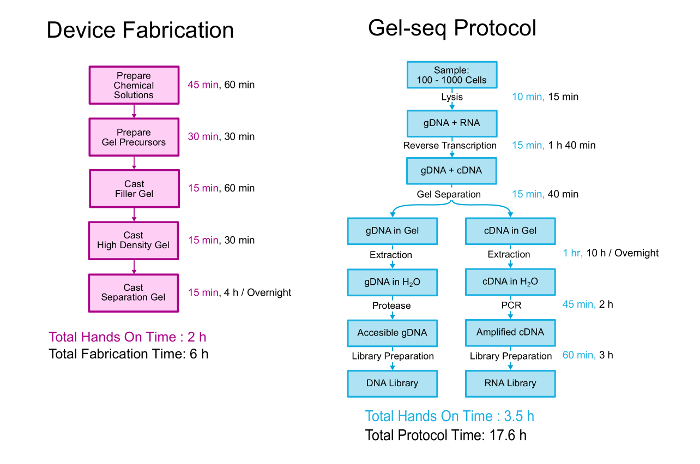
Figure 2. Gel-seq Protocol. An overview of the steps to fabricate the Gel-seq device and the protocol to generated paired DNA and RNA libraries. Portions of this figure were reproduced from Ref. 7 with permission from the Royal Society of Chemistry. Please click here to view a larger version of this figure.
To generate DNA and RNA libraries from single cells, researchers should consider using either G&T-seq or DR-seq. G&T-Seq, like Gel-seq, relies on a physical separation of RNA from genomic DNA. This approach relies on messenger RNA's (mRNA) 3′ polyadenylated tail as a pull-down target. The mRNA is captured on a magnetic bead using a biotinylated oligo-dT primer. Once the mRNA has been captured the beads are held in place with a magnet and the supernatant containing the genomic DNA can be removed and transferred to another tube. After this physical separation is complete, separate libraries can be generated from the mRNA and DNA.8 This approach works well if the RNA of interest is polyadenylated, however it cannot be used to study non-polyadenylated transcripts, such as ribosomal RNA, tRNA, or RNA from prokaryotes.
DR-seq relies on a pre-amplification step where both DNA and cDNA derived from RNA are amplified in the same tube. The sample is then split in two and processed in parallel to prepare DNA- and RNA-seq libraries. To distinguish between genomic DNA and the cDNA derived from RNA, DR-seq takes a computational approach. Sequences where only exons are present are computationally suppressed in the genomic DNA data, as those could have originated from either DNA or RNA.9 An advantage of this approach is that the DNA and cDNA/RNA need not be physically separated as is done in Gel-seq and G&T-seq. The drawback, however, is that DR-seq requires a priori knowledge of the genome and transcriptome (i.e., exons versus introns), and might not be ideal for applications such as sequencing of nuclei, in which many transcripts are not yet fully spliced and still contain introns.12
The novel aspect of Gel-seq is the ability to separate DNA and RNA in hundreds of cells based exclusively on size. This method requires no a priori knowledge of the genome or transcriptome, is robust against incomplete splicing, and is not limited to poly-adenylated transcripts. For applications where a researcher can start with at least 100 cells, Gel-seq provides a straightforward approach using cheap and widely-available materials.
Access restricted. Please log in or start a trial to view this content.
Protocol
1. Chemical Solution Preparation
NOTE: The following steps are for preparing chemical solutions required in later steps. These can be made in bulk and stored for several months.
- To begin, prepare 50 mL of purified, deionized water by sterilizing in a 254 nm UV crosslinking oven for 15 min (15 mJ/cm2 total exposure) to neutralize any contaminating DNA. Heat to 37 °C for use in following steps.
- Make 10 mL of a 40% total (T) and 3.3% crosslinker (C) (29:1) polyacrylamide precursor solution. Weigh 3.867 g of acrylamide monomer and 0.133 g of bis-acrylamide monomer. Combine and bring volume up to 10 mL with warm purified water and vortex until dissolved. Store protected from light at room temperature.
NOTE: Premixed 40% T, 3.3% C (29:1) polyacrylamide solutions can be purchased commercially. - Make 10mL of 50% T, 5% C gel solution. Weigh 4.750 g of acrylamide monomer and 0.250 g of bis-acrylamide monomer. Combine and bring volume up to 10 mL using warm purified water and vortex until dissolved. Store protected from light at room temperature.
- Make 10 mL of a 50% (w/v) sucrose solution. Add 5 g sucrose to a graduated cylinder and add warm purified water up to a total volume of 10 mL. Vortex until dissolved and store at room temperature.
- Make 10 mL of 10% APS (w/v). Add 1 g of ammonium persulfate (APS) to a graduated cylinder. Add cold (~4° C) purified water up to a total volume of 10 mL and vortex until dissolved. Immediately freeze in aliquots of 200 µL.
2. Gel-seq Cassette Fabrication
Note: Gel-seq was originally developed with upright cassettes (see Table of Materials for more information); however, this protocol can be adapted to work with any standard gel electrophoresis cassette.
- Prepare gel precursors in three separate plastic tubes by adding reagents as shown below in Table 1. Do not add either APS or Tetramethylethylenediamine (TEMED) until directed in the following steps. Vortex ingredients to mix thoroughly.
| Filler Gel Precursor | High Density Gel Precursor | Low Density Gel Precursor | |||
| 40%T, 3.3%C Acrylamide Bisacrylamide Solution | 1.6 mL | 50%T, 5%C Acrylamide Bisacrylamide Solution | 2.4 mL | 40%T, 3.3%C Acrylamide Bisacrylamide Solution | 0.6 mL |
| Deionized Water | 10.2 mL | Deionized Water | 1.0 mL | Deionized Water | 4.8 mL |
| Sucrose Solution (50% w/v) | 2.6 mL | Sucrose Solution (50% w/v) | 0.6 mL | ||
| 10X Tris-Borate-EDTA | 1.6 mL | 10X Tris-Borate-EDTA | 0.6 mL | ||
| Ammonium persulfate (10% w/v) | 104.0 µL | Ammonium persulfate (10% w/v) | 50.0 µL | Ammonium persulfate (10% w/v) | 39.0 µL |
| TEMED | 6.0 µL | TEMED | 1.0 µL | TEMED | 2.2 µL |
| Total Volume | 16.1 mL | Total Volume | 4.1 mL | Total Volume | 6.0 mL |
Table 1. Gel Synthesis Reagents. Polyacrylamide gel precursor reagents sufficient for fabrication of 2 cassettes.
- De-gas gel monomer solutions by inserting a needle through the cap of the tube and connecting this needle to a house vacuum line. Submerge this assembly in an ultrasonic bath set to high and wait until bubbles stop emerging from the liquid before moving to next step (~60 seconds / tube).
NOTE: The quality of the vacuum and power of the ultrasonic bath is not critical so long as bubbles can be seen emerging from the solution. - Add TEMED and APS to the filler gel precursor and vortex briefly. Immediately add 6 mL of the filler gel precursor to each gel cassette by pipetting the solution into the top of the cassette. Use a 1 mL micropipette to add the precursor in six increments to avoid spilling. The total time for this step should be less than 3 minutes.
- Ensure the fluid is level by positioning the cassettes upright on a level table. Fill the remainder of the cassette with deionized, degassed water. Pipette the water, again using 1 mL increments, slowly into the center of the cassette to minimize mixing. Allow the polymer to cure for at least one hour, up to overnight.
- After the polymer has cured, invert the gel cassettes over a sink to remove the water overlay. A compressed air gun can be used to gently dry the interface by blowing air through the top opening of the cassette from a distance of 6 inches.
- Add TEMED and APS to the high-density gel precursor and vortex briefly. Immediately add 320 µL of the high-density precursor to the cassette, again using a 1 mL pipette. Ensure the fluid evenly coats the filler gel layer by rocking the cassette back and forth around 3 times. This step should take less than three minutes.
- Fill the remainder of the cassette with deionized, degassed water. Pipette slowly with a 1 mL pipette into the center of the cassette to minimize mixing. Allow the polymer to cure for at least fifteen minutes, preferably an hour.
- Again, invert the gel cassettes to remove the water overlay. Compressed air can be used to gently dry the interface. Add TEMED and APS to the low-density gel precursor and vortex briefly. Immediately fill the remainder of the cassette (~1.65 mL) with the low-density gel precursor and insert the gel comb.
- Pipette an excess of reserve precursor at the top of the comb as it will be absorbed during polymerization. Allow the polymer to cure at least 4 hours, preferably overnight. Gels can be stored for a week or more in a buffer of Tris-Borate-Ethylenediaminetetraacetic acid (EDTA) (TBE buffer).
3. Sample Preparation and Reverse Transcription
- Starting with a suspension of the cells of interest, and working in a polymerase chain reaction (PCR) laminar flow hood, use a hemocytometer or an automatic cell counter to calculate the cell concentration. Dilute the cells to a concentration of 100 to 1000 cells per µL in phosphate-buffered saline (PBS).
NOTE: This protocol has been validated on a range of cells including PC3, HeLa, and mouse liver cells. - Using reagents provided in the WTA kit (see Table of Materials), mix 19 µL of lysis buffer and 1 µL of RNase inhibitor to prepare a 10X stock solution of reaction buffer. Create a lysis master mix of sufficient volume containing 0.5 µL of reaction buffer and 2.75 µL of nuclease free water for each sample.
- Pipette the cell suspension up and down 5 times to re-suspend settled cells and then pipette 1 µL of sample into a 200 µL nuclease free strip tube sterilized by UV. Repeat as necessary depending on number of samples. Be sure to include a negative control by pipetting 1 µL of nuclease free water instead of cells for one reaction. Next, add 3.25 µL of lysis master mix to each sample and mix by gently pipetting up and down 5 times.
- Preheat a thermal cycler (with heated lid) to 72 °C. Add 1 µL of RT primer and 1 µL of 20 µM random hexamer with WTA adapter (5′-AAGCAGTGGTAT-CAACGCAGAGTAC-NNNNNN-3′) to each sample. Reserve at least one tube as a positive control for gDNA library preparation and add 2 µL of water instead of primers.
NOTE: Random hexamer with WTA adapter is optional and has minimal impact on sequencing results. - Incubate samples at 72 °C in the preheated thermal cycler for 3 minutes to lyse the cells. Remove cells from thermal cycler and place on ice for 2 minutes. Store the positive control at 4 °C until step 5.
- While the cells are lysing, create a sufficient volume of reverse transcription master mix for all RNA samples containing the following reagent ratios: 2 µL of first strand buffer, 0.5 µL of template switch oligonucleotide (TSO), 0.25 µL of RNase inhibitor, and 1 µL of reverse transcriptase (100 U/µL).
- Preheat thermal cycler to 42 °C. Add 3.75 µL of reverse transcription master mix to the remaining samples, bringing the total sample volume to 10 µL. Mix by pipetting up and down 5 times.
- Perform reverse transcription by immediately placing samples in a preheated thermal cycler. Run the following program: 42 °C for 90 min, 70 °C for 10 min, 4 °C forever. This is a safe stopping point.
4. Gel Separation and Sample Recovery
- Carefully clean a gel electrophoresis chamber using a DNA removal product. Apply several mL of the liquid cleaning agent to a disposable lint free wipe and wipe across all surfaces of the chamber, and then fill the chamber with clean 0.5x TBE. For optimal results, place the entire apparatus in a 254 nm UV crosslinking oven and sterilize for 15 minutes (15 mJ/cm2).
- Insert the Gel-seq cassette into the gel electrophoresis chamber and lock it into place. Slowly remove the gel comb by pulling straight up. Move slowly to avoid tearing the gel or ripping any of the arms.
- Keeping the samples from step 3 on ice, reserve at least one sample as a positive control for cDNA library generation. Store this control at 4 °C until step 6. Add 2 µL of 6X loading dye to the remaining samples, bringing the total volume to ~12 µL. Thoroughly mix the samples by pipetting up and down 5 times.
- Combine 1 µL of a DNA ladder with 2 µL of 6x loading dye and 7 µL of water. Pipette this mixture into lane 1 of the Gel-seq cassette as an electrophoresis control. Pipette the samples from the previous step into separate lanes of the Gel-seq cassette. Be careful to prevent contamination between wells by inserting the pipette fully into each well and removing it using only a vertical motion.
- Using a standard gel electrophoresis power supply, apply an electric field of 250 V across the Gel-seq cassette for 30 minutes to separate the gDNA from the cDNA/RNA hybrids. Once separated, remove the Gel-seq cassette from the gel electrophoresis chamber and open the two halves of the cassette by prying the edges with a scraping tool.
- Using a scalpel, cut the gel in half just below the high-density layer. Discard the half that contains filler gel by picking it up with your gloved hand. Gently peel the remaining gel off of the cassette by scraping it with a paint scraper or other similar tool. Place this section of the gel into a dish containing ~30 mL of 0.5x TBE with 3 µL of gel stain.
- Cover the container to minimize photobleaching and soak the gel while gently shaking the container for 5 minutes. Place the gel on plastic wrap and take a UV image using a gel documentation system (for further detail see Ref. 13). A 30 second exposure typically produces clear images. Verify that separation has occurred.
- Move the gel to a UV transilluminator to facilitate visualization of the nucleic acids. Wearing appropriate UV glasses, confirm the results from the gel documentation system. The gDNA should be located at the start of the low-density gel and the cDNA at the interface of the low-density and high-density regions.
- Use a scalpel, cut out the regions of the gel containing the gDNA and cDNA. Samples are best recovered by cutting a 4 mm by 10 mm rectangular section of gel; however, the exact geometry will depend on the gel electrophoresis system used. Remember to also cut the lane loaded with the negative control.
- Place each excised section of gel into a strip tube by using a pair of blunt end tweezers. Be careful not to apply too much force or the gel will split into multiple pieces. Should this happen, simply pick up each piece and add it to the tube.
- Grind the gel in each tube using the tip of a pipette (200 µL pipette tips work well) by moving the pipette tip in a circular fashion against the bottom of the tube. Add nuclease free water (40 µL into the gDNA samples and 80 µL into the cDNA samples) to each tube before removing the pipette tip used to grind the gel to minimize sample loss.
- Place the strip tubes to a vortex mixer inside of a 37 °C incubator and shake for 8 - 12 hours. This allows the nucleic acids to diffuse out of the gel and is a natural stopping point for this multi day protocol.
- Pipette the samples into an 8 µm mesh filter plate and spin the plate at 2600 x g for 5 minutes to strain out the gel fragments. Lift the mesh filter plate away from the housing plate and pipette the gel-free water samples into a new 200 µL strip tube.
- Add 1 µL of protease (0.9 AU/mL) to each sample containing gDNA, mix well by pipetting up and down, and incubate at 50 °C for 15 min followed by a heat inactivation at 70 °C for 15 min. This step is critical for depleting nucleosomes and makes the gDNA accessible for subsequent reaction steps.
- Using an 18 gauge needle, poke holes in the caps of all sample tubes. Place the samples in a vacufuge to reduce liquid volume. gDNA samples should be reduced to 5 µL and cDNA samples reduced to 10 µL.
- Depending on the vacufuge and number of samples, the total evaporation time will vary between 30 and 60 minutes. If the sample volume falls below the target volume, simply add nuclease free water to increase the sample volume.
5. gDNA Library Preparation
- Using a fluorometer or similar technology, quantify the DNA concentration in each gDNA sample from step 4 as well as the positive control from step 3. For a detailed protocol see the fluorometer reference manual.14
- Dilute the samples to 0.2 ng/µL of DNA. Depending on the starting cell type and quality of results required, lower concentrations may still produce viable libraries. Some experimentation will be required; however, the authors had success with libraries as low as 0.1 ng/µL.
- Complete gDNA library preparation by following the library preparation half reaction volume protocol in Step 7.
6. cDNA Library Preparation
- Starting with the 10 µL cDNA samples and positive control from step 4, add 12.5 µL of 2X qPCR mix, 0.5 µL cDNA PCR primer, and 2 µL nuclease-free water.
- Perform PCR in a real-time thermocycler using the following protocol: hot-start at 95 °C for 3 min, followed by 20-30 cycles of 98 °C for 10 s, 65 °C for 30 s, and 72 °C for 3 min. Total sample volume is 25 µL. Monitor the reaction curves and stop the amplification before the reactions leave the exponential phase (linear signal increase versus cycle number) in order to avoid PCR artifacts due to overamplification. For more on avoiding overamplification, see the discussion section of this paper as well as Ref. 15.
- After amplification, clean the product using solid phase reversible immobilization (SPRI) beads following the protocol in step 8. Once completed, proceed to the next step.
- Using a fluorometer or similar technology, quantify the DNA concentration in each cDNA sample as well as the positive control from step 4. Dilute the samples if necessary to contain approximately 0.2 ng/µL of DNA. Slightly lower concentrations still produce viable libraries. Some experimentation will be required, however the authors had success with libraries as low as 0.1 ng/µL.
- Optional step: Perform a standard polyacrylamide gel electrophoresis separation on 1 - 2 µL of each the qPCR product to validate the library generation reaction worked. A sample image of successful result is shown in Figure 4. For a detailed protocol on how to conduct polyacrylamide gel electrophoresis, see Ref. 16.
- Complete cDNA library preparation by following the library preparation kit half volume reaction protocol in Step 7.
7. Library Preparation with Half Volume Reactions
- Library preparation follows the library preparation kit protocol using half volume reactions.17 All reagents referenced in this section of the protocol are from the library preparation kit (see Table of Materials). Begin by UV sterilizing a sufficient number of strip tubes for the number of samples to be processed.
- Perform the transposase reaction by adding 5 µL transposase buffer to each strip tube to be used in the assay. Then add 2.5 µL input DNA at 0.2 ng/µL (0.5 ng total) followed by 2.5 µL transposase. Mix by pipetting up and down 5 times.
- Incubate at 55 °C for 5 minutes, then hold at 10 °C. After the sample reaches 10 °C, remove it from the thermocycler and immediately add 2.5 µL transposase stop buffer to each sample. Keep the samples at room temperature for 5 minutes.
- Prepare the PCR reaction to amplify the transpose treated sample by adding 7.5 µL library prep PCR mix, 2.5 µL of an index 1 primer, and 2.5 µL of an index 2 primer. These primers are proprietary and are supplied by the manufacturer of the library preparation kit. Mix well by pipetting up and down 5 times.
NOTE: Ensure that unique primer combinations are used for each sample. There are 12 different index 1 primers and 8 different index 2 primers, making it possible to uniquely label up to 96 different samples. Choose a unique combination of primers for each sample. - Perform PCR using the following program on a thermocycler. The sample volume is 25 µL.
72 °C for 3 minutes
95 °C for 30 seconds
12 cycles of:
95 °C for 10 seconds
72 °C for 30 seconds
55 °C for 30 seconds
72 °C for 5 minutes
Hold at 10 °C - Clean the prepared libraries using SPRI beads following the protocol in step 8. The libraries should be validated using gel electrophoresis or a similar assay. Refer to the library preparation kit manual for details on how to validate libraries.17
8. Solid Phase Reversible Immobilization Bead Library Cleaning
- Solid phase reversible immobilization (SPRI) beads should be stored in 1.5 mL aliquots and should be brought to room temperature before each use. It is also recommended to prepare fresh 80% ethanol for each experiment. The following steps are based the SPRI bead protocol in the WTA kit manual.18
- Add 1 µl of the WTA kit lysis buffer to each PCR product. Vortex the SPRI beads until evenly mixed, then add 50 µl of SPRI beads to each sample. Mix by pipetting the sample up and down 10 times and then incubate the samples at room temperature for 8 minutes.
- Briefly spin the samples to collect the liquid from the side of the tubes. Place the samples on a magnetic separation device for ~5 minutes until the liquid appears completely clear.
- While the samples are on the magnetic separation device, slowly pipette off the supernatant and discard - be careful not to disturb the ring of beads on the tube. Next add 200 µL of 80% ethanol to each sample without disturbing the beads. Wait for 30 seconds and then carefully pipette off the supernatant. Repeat this step (ethanol wash) once.
- Allow the samples to dry for 30 s - 1 min. Do not over-dry the samples as large fragments will become permanently bound to the beads.
NOTE: A brief dry time is recommended to ensure all traces of ethanol are removed. Should trace amounts of ethanol remain behind they can slightly inhibit downstream reactions. - Remove the samples from the magnetic separation device and add 15 µL of water to each sample to elute the DNA from the beads. Pipette up and down and ensure the beads are removed from the sides of the tubes. Incubate at room temperature for 2 minutes. Briefly spin the samples and then place them on the magnetic separation device for ~1 minute until the solution appears clear.
- While the samples are on the magnetic separation device, slowly pipette up the supernatant and transfer it to clean tubes. Be careful not to disturb the ring of beads on the tube. Discard the tubes with beads.
Access restricted. Please log in or start a trial to view this content.
Results
The physical separation of gDNA and cDNA/RNA hybrids in the Gel-seq device can be visualized through fluorescent gel imaging; a representative result is shown in Figure 3. Panel A shows the fabricated Gel-seq device; false color has been added to distinguish the different gel regions. Panel B shows a close up of four different separations used for validation. The third lane, a negative control, represents background and shows that there is no autoflourescence...
Access restricted. Please log in or start a trial to view this content.
Discussion
There are several critical steps associated with the Gel-seq device fabrication as well as the protocol itself. During fabrication, we recommend starting with the prescribed layer thicknesses for the various regions of the gel. We spent significant time testing different fabrication options and the protocol described here produces the best devices for the cassettes listed in the Table of Materials and Reagents. If researchers use an alternative cassette system, they may find it necessary to tweak the vol...
Access restricted. Please log in or start a trial to view this content.
Disclosures
KZ is co-founder and Scientific Advisor of Singlera Genomics Inc.
Acknowledgements
Funding for this work was provided by the University of San Diego, the National Science Foundation Graduate Research Fellowship Program, NIH grant R01-HG007836, and by the Korean Ministry of Science, ICT and Future Planning.
Earlier versions of a several figures were first published in "Hoople, G. D. et al. Gel-seq: whole-genome and transcriptome sequencing by simultaneous low-input DNA and RNA library preparation using semi-permeable hydrogel barriers. Lab on a Chip 17, 2619-2630, doi:10.1039/c7lc00430c (2017)." Lab on a Chip has sanctioned the reuse of figures in this publication.
Access restricted. Please log in or start a trial to view this content.
Materials
| Name | Company | Catalog Number | Comments |
|---|---|---|---|
| Reagents | |||
| Acrylamide Monomer | Sigma Aldrich | A8887-100G | |
| Ammonium Persulfate | Sigma Aldrich | A3678-25G | |
| Ampure XP Beads | Beckman Coulter | A63880 | Referred to in the text as solid phase reversible immobilization (SPRI) beads |
| DNA Gel Loading Dye (6x) | ThermoFisher Scientific | R0611 | Referred to in the text as 6X loading dye |
| Ethyl alcohol | Sigma Aldrich | E7023-500ML | |
| KAPA SYBR FAST One-Step qRT-PCR Kits | Kapa BioSystems | 7959613001 | Referred to in the text as 2X qPCR mix |
| N,N′-Methylenebis(acrylamide) | Sigma Aldrich | 146072-100G | Also known as bis-acrylamide |
| NexteraXT DNA Library Preparation Kit (referred to in the text as library preparation kit) | Illumina | FC-131-1024 | Includes: TD (referred to in the text as transposase buffer), ATM (referred to in the text as transposase), NT (referred to in the text as transposase stop buffer), and NPM (Referred to in the text as library prep PCR mix) |
| Nuclease Free Water | Millipore | 3098 | |
| Protease | Qiagen | 19155 | |
| SMART-Seq v4 Kit (referred to in the text as whole-transcript amplification (WTA) kit) | Takara/Clontech | 634888 | Includes: Lysis buffer, RNase inhibitor, 3’ SMART-Seq CDS Primer II A (referred to in the text as RT primer), 5X Ultra Low First Strand Buffer (referred to in the text as first strand buffer), SMART-Seq v4 Oligonucleotide (referred to in the text as template switch oligonucleotide (TSO)), SMART-Scribe Reverse Transcriptase (referred to in the text as reverse transcriptase), and PCR Primer II A (referred to in the text as cDNA PCR primer) |
| Random hexamer with WTA adapter | IDT | n/a | 5′-AAGCAGTGGTATCAACGCAGAGTAC-NNNNNN-3′ |
| Sucrose | Sigma Aldrich | S0389-500G | |
| TEMED | Sigma Aldrich | T9281-25ML | |
| DNA AWAY Surface Decontaminant | ThermoFisher Scientific | 7010PK | Referred to in the text as DNA removal product |
| Tris-Borate-EDTA buffer (10X concentration) | Sigma Aldrich | T4415-1L | |
| SYBR Gold Nucleic Acid Gel Stain (10,000X Concentrate in DMSO) | ThermoFisher Scientific | S11494 | Referred to in the text as gel stain |
| Equipment | |||
| BD Precisionglide syringe needles, gauge 18 | Sigma Aldrich | Z192554 | Any equivalent hardware is acceptable |
| Branson CPX series ultrasonic bath | Sigma Aldrich | Z769363 | Any equivalent hardware is acceptable |
| Empty Gel Cassettes, mini, 1.0 mm | ThermoFisher Scientific | NC2010 | Any equivalent hardware is acceptable |
| Mesh Filter Plate - Corning HTS Transwell 96 well permeable supports - 8.0 µm pore size | Sigma Aldrich | CLS3374 | Referred to in the text as 8 um mesh filter plate |
| PowerPac HC Power Supply | Bio-Rad | 1645052 | Any equivalent hardware is acceptable |
| Qubit Fluorometer | ThermoFisher Scientific | Q33216 | Any equivalent hardware is acceptable |
| Vacufuge Concentrator | Eppendorf | 22822993 | Any equivalent hardware is acceptable |
| XCell SureLock Mini-Cell system | ThermoFisher Scientific | EI0001 | Any equivalent hardware is acceptable |
| Bio-Rad CFX96 Touch Real-Time PCR Detection System | Bio-Rad | 1855195 | Any equivalent hardware is acceptable |
| Amersham UVC 500 Ultraviolet Crosslinker | GE Healthcare Life Sciences | UVC500-115V | Discontinued, any equivalent hardware is acceptable |
| Gel Doc XR+ Gel Documentation System | Bio-Rad | 1708195 | Referred to in the text as gel imager |
| Dark Reader Transilluminator | Clare Chemical Research | DR89 | Referred to in the text as UV transilluminator |
| Ultrasonic Bath | Bransonic | 1207K35 | Any equivalent ultrasonic bath is acceptable. |
References
- Mawy, T. Single-cell sequencing. Nat Methods. 11 (1), 18(2014).
- Gole, J., et al. Massively parallel polymerase cloning and genome sequencing of single cells using nanoliter microwells. Nat Biotech. 31 (12), 1126-1132 (2013).
- Sasagawa, Y., et al. Quartz-Seq: a highly reproducible and sensitive single-cell RNA-Seq reveals non-genetic gene expression heterogeneity. Genome Biol. 14 (4), 31(2013).
- Ramsköld, D., et al. Full-length mRNA-Seq from single-cell levels of RNA and individual circulating tumor cells. Nat Biotechnol. 30 (8), 777-782 (2012).
- Shapiro, E., Biezuner, T., Linnarsson, S. Single-cell sequencing-based technologies will revolutionize whole-organism science. Nat Rev Genet. 14 (9), 618-630 (2013).
- Navin, N., et al. Tumour evolution inferred by single-cell sequencing. Nature. 472 (7341), 90-94 (2011).
- Hoople, G. D., et al. Gel-seq: whole-genome and transcriptome sequencing by simultaneous low-input DNA and RNA library preparation using semi-permeable hydrogel barriers. Lab Chip. 17, 2619-2630 (2017).
- Macaulay, I. C., et al. G&T-seq: parallel sequencing of single-cell genomes and transcriptomes. Nat Methods. 12 (6), 519-522 (2015).
- Dey, S. S., Kester, L., Spanjaard, B., Bienko, M., van Oudenaarden, A. Integrated genome and transcriptome sequencing of the same cell. Nat Biotechnol. 33 (3), 285-289 (2015).
- Gopal, A., Zhou, Z. H., Knobler, C. M., Gelbart, W. M. Visualizing large RNA molecules in solution. RNA. 18 (2), 284-299 (2012).
- SDS-PAGE Gel. Cold Spring Harb Protoc. 2015 (7), 087908(2015).
- Lake, B. B., et al. Neuronal subtypes and diversity revealed by single-nucleus RNA sequencing of the human brain. Science. 352 (6293), at http://science.sciencemag.org/content/352/6293/1586 (2016).
- Lee, P. Y., Costumbrado, J., Hsu, C. -Y., Kim, Y. H. Agarose Gel Electrophoresis for the Separation of DNA Fragments. J Vis Exp. (62), e3923(2012).
- Qubit 3.0 Fluorometer Manual. MAN0010866. Life Technologies. , Available from: https://tools.thermofisher.com/content/sfs/manuals/qubit_3_fluorometer_man.pd (2017).
- Vitak, S. A., et al. Sequencing thousands of single-cell genomes with combinatorial indexing. Nat Methods. 14 (3), 302-308 (2017).
- A Guide to Polyacrylamide Gel Electrophoresis and Detection. Bulletin 6040 Rev B. Bio Rad. , Available from: http://www.bio-rad.com/webroot/web/pdf/lsr/literature/Bulletin_6040.pdf (2017).
- Illumina. Nextera ® XT DNA Library Preparation Kit. , (2017).
- Takara Bio USA Inc. SMART-Seq v4 Ultra Low Input RNA Kit for Sequencing User Manual. , (2016).
- Kurimoto, K., Yabuta, Y., Ohinata, Y., Saitou, M. Global single-cell cDNA amplification to provide a template for representative high-density oligonucleotide microarray analysis. Nat Protoc. 2 (3), 739-752 (2007).
Access restricted. Please log in or start a trial to view this content.
Reprints and Permissions
