We show the formation and dimensional characterization of micro- and nanoplastics (MPs and NPs, respectively) using a stepwise process of mechanical milling, grinding, and imaging analysis.
A subscription to JoVE is required to view this content. Sign in or start your free trial.
Method Article
Forming Micro-and Nano-Plastics from Agricultural Plastic Films for Employment in Fundamental Research Studies
In This Article
Summary
Abstract
Microplastics (MPs) and nanoplastics (NPs) dispersed in agricultural ecosystems can pose a severe threat to biota in soil and nearby waterways. In addition, chemicals such as pesticides adsorbed by NPs can harm soil organisms and potentially enter the food chain. In this context, agriculturally utilized plastics such as plastic mulch films contribute significantly to plastic pollution in agricultural ecosystems. However, most fundamental studies of fate and ecotoxicity employ idealized and poorly representative MP materials, such as polystyrene microspheres.
Therefore, as described herein, we developed a lab-scale multi-step procedure to mechanically form representative MPs and NPs for such studies. The plastic material was prepared from commercially available plastic mulch films of polybutyrate adipate-co-terephthalate (PBAT) that were embrittled through either cryogenic treatment (CRYO) or environmental weathering (W), and from untreated PBAT pellets. The plastic materials were then treated by mechanical milling to form MPs with a size of 46-840 µm, mimicking the abrasion of plastic fragments by wind and mechanical machinery. The MPs were then sieved into several size fractions to enable further analysis. Finally, the 106 µm sieve fraction was subjected to wet grinding to generate NPs of 20-900 nm, a process that mimics the slow size reduction process for terrestrial MPs. The dimensions and the shape for MPs were determined through image analysis of stereomicrographs, and dynamic light scattering (DLS) was employed to assess particle size for NPs. MPs and NPs formed through this process possessed irregular shapes, which is in line with the geometric properties of MPs recovered from agricultural fields. Overall, this size reduction method proved efficient for forming MPs and NPs composed of biodegradable plastics such as polybutylene adipate-co-terephthalate (PBAT), representing mulch materials used for agricultural specialty crop production.
Introduction
In recent decades, the rapidly increasing global production of plastics and improper disposal and lack of recycling for plastic waste has led to environmental pollution that has impacted marine and terrestrial ecosystems1,2,3. Plastic materials are essential for contemporary agriculture, particularly to cultivate vegetables, small fruit, and other specialty crops. Their usage as mulch films, high and low tunnel coverings, drip tape, and other applications aim to enhance crop yield and quality, lower production costs, and promote sustainable farming methods4,5. However, the expanding employment of "plasticulture" has raised concerns about the formation, distribution, and retention of plastic pieces in agricultural environments. After a continuous fragmentation process caused by embrittlement through environmental degradation during service life, larger plastic fragments form micro- and nanoplastics (MNPs), which persist in soil or migrate to adjacent waterways via water runoff and wind6,7,8. Environmental factors such as ultraviolet (UV) radiation through sunlight, mechanical forces of water, and biological factors trigger plastic embrittlement of environmentally dispersed plastics, resulting in the breakdown of larger plastic fragments into macro- or meso-plastic particles9,10. Further defragmentation forms microplastics (MPs) and nanoplastics (NPs), reflecting particles of average size (nominal diameter; dp) of 1-5000 µm and 1-1000 nm, respectively11. However, the upper dp limit for NPs (i.e., a lower limit for MPs) is not universally agreed upon and in several papers, this is listed as 100 nm12.
MNPs from plastic waste pose an emerging global threat to soil health and ecosystem services. Adsorption of heavy metals from freshwater by MPs led to an 800-fold higher concentration of heavy metals compared to the surrounding environment13. Furthermore, MPs in aquatic ecosystems pose multiple stressors and contaminants by altering light penetration, causing oxygen depletion, and causing adhesion to various biota, including penetration and accumulation in aquatic organisms14.
Recent studies suggest that MNPs can impact soil geochemistry and biota, including microbial communities and plants15,16,17. Furthermore, NPs threaten the food web17,18,19,20. Since MNPs readily undergo vertical and horizontal transport in soil, they can carry absorbed contaminants such as pesticides, plasticizers, and microorganisms through the soil into groundwater or aquatic ecosystems such as rivers and streams21,22,23,24. Conventional agricultural plastics such as mulch films are made from polyethylene, which must be removed from the field after usage and disposed of in landfills. However, incomplete removal leads to substantial plastic debris accumulation in soils9,25,26. Alternatively, soil-biodegradable plastic mulches (BDMs) are designed to be tilled into the soil after use, where they will degrade over time. However, BDMs persist temporarily in soil and gradually degrade and fragment into MPs and NPs9,27.
Many current environmental ecotoxicological and fate studies employ idealized and non-representative MPs and NPs model materials. The most commonly used surrogate MNPs are monodisperse polystyrene micro- or nanospheres, which do not reflect the actual MNPs residing in the environment12,28. Consequently, the selection of unrepresentative MPs and NPs may result in inaccurate measurements and results. Based on the lack of appropriate model ΜNPs for terrestrial environmental studies, the authors were motivated to prepare such models from agricultural plastics. We previously reported on the formation of MNPs from BDMs and polyethylene pellets through mechanical milling and grinding of plastic pellets and film materials and the dimensional and molecular characteristics of MNPs29. The current paper provides a more detailed protocol for preparing MNPs that can be applied more broadly to all agricultural plastics, such as mulch films or their pelletized feedstocks (Figure 1). Here, to serve as an example, we chose a mulch film and spherical pellets of the biodegradable polymer polybutylene adipate terephthalate (PBAT) to represent agricultural plastics.
Access restricted. Please log in or start a trial to view this content.
Protocol
1. Processing of MPs from plastic pellets through cryogenic pretreatment and milling
NOTE: This methodology is based on a procedure described elsewhere, employing a PBAT film composed of the same material used for this presented study29.
- Weigh polymer pellet samples of ~1 g and transfer into a 50 mL glass jar.
- Place the "rectangular delivery" tube with a 20 mesh (840 µm) sieve in the slot in front of the rotary cutting mill and raise the delivery tube until it hits the stop pin.
- Position the glass plate over the milling chamber's face and secure it with the adjustable clamp. Next, place a 50 mL glass jar under the mill outlet (Figure 2).
- Position the sliding side arm support on the mill (located on the right upper side) in the middle of the front glass and tighten with the knurled bolt. Ensure that the front glass of the mill is securely positioned (Figure 2a).
- Insert the hopper funnel on top of the mill into the opening of the upper milling chamber.
- Plug a line cord into a power outlet and the press cord switch to start the mill operation.
NOTE: To prevent jamming, feed only material after the mill is powered on and rotating. Also, wear eye and ear protection during the entire milling procedure. - Feed the sample slowly into the hopper (around 10 pellets/min) to prevent slowing down or jamming. After audible noise reduces, add the next batch of pellets (~10 pieces). After processing the pellets (1 g), press the cord switch to stop the mill operation for ~20 min to cool down. Use a wooden plunger to feed the sample and prevent particles' ejection and agglomeration inside the feeding hopper.
CAUTION: The optimal feed rate varies depending on the type of processing material. Immediately turn off the mill if the processing speed decreases due to particle friction in the cutting chamber, or if formation of molten polymer is observed on the glass plate, to prevent overheating and further melting of the polymer particles. - Remove the 20 mesh (840 µm) delivery tube and replace it with the 60 mesh (250 µm) delivery tube upon completion of the first batch (Figure 2b).
- Reintroduce the collected material into the mill hopper. Follow steps 1.1 and 1.7 for the 250 µm milling fraction.
- Refeed the collected 250 µm fractions up to three times.
- Recover the remaining particles in the chamber and add them to the collected main fraction.
2. Processing of plastic films by cryogenic pretreatment and milling
- Retrieve a film specimen from the roll and cut the specimen into strips of ~120 mm (cross-direction) x 20 mm (machine direction) with a paper cutter.
- Presoak fragments (~1 g) in 800 mL of deionized (DI) water for 10 min in a 1000 mL glass beaker. This step improves embrittlement for the subsequent cryogenic cooling procedure by presoaking the polymer.
CAUTION: Handle liquid nitrogen with safety equipment by wearing cryogenic gloves and safety glasses. - Slowly add 200 mL of liquid nitrogen (N2) to a cryogenic container.
- Transfer the presoaked film particles carefully into the cryogenic container with steel tweezers. Presoak for 3 min in liquid N2.
- Transfer the frozen film fragments into a 200 W, 14-speed blender.
- Process the frozen material at speed level 3 for 10 s to break the frozen glass film structure. To promote further size reduction, add 400 mL of DI water and blend the film-water slurry for 5 min.
- Transfer the slurry into a Büchner funnel with filter (1 µm mesh) and apply vacuum for at least 1 h.
- Vacuum-dry solid particles at 30 °C for at least 48 h in an aluminum dish.
- Feed dry particles into the mill with tweezers. For milling, follow steps 1.1-1.11.
3. Processing of plastic films pretreated through environmentally weathering and milling
- Lay out plastic film fragments recovered from the field on a smooth surface (lab bench). Carefully remove absorbed soil particles and plant remnants with the soft-bristle brush.
- Cut the film with scissors into ~4 cm2 samples of ~1.0 g.
- Add film fragments into a 1000 mL beaker filled with 500 mL of DI water. Stir at a rate of 300 min-1 with 20 mm stirring bar for 1 h.
- Remove dissolved soil particles by decanting and reintroducing DI water under slight agitation of the beaker into a sink or plastic bucket. Repeat this step three times. Continuous agitation keeps soil particles dispersed in water and can be easier decanted.
- Transfer samples from the beaker into an aluminum dish. Air-dry the plastic samples for 12 h, and then transfer and dry in a vacuum oven for 24 h at 30 °C. For milling, follow steps 1.1-1.11.
4. Sieving procedure through cascaded sieves
- Stack the sieves (3 inches in diameter) starting with the pan at the bottom, followed by the finest sieve (#325; 45 µm), and then by increasingly coarser sieves (such as #140; 106 µm, and #60; 250 µm, where the #20; 840 µm sieve is the coarsest), and place the lid on top.
- Mount all four sieves on the shaker by inserting four pins in the openings of the sieve shaker.
- Transfer individual fractions collected in either step 1, 2, or 3 on top of the four cascaded sieves. Shake for 10 min at 300 min-1.
- Recover the larger (top) fraction separately, which will be subjected to further milling.
NOTE: Adjust the shaking speed on the shaker as needed. Alternatively, shaking sieves by hand is possible. Use only one sieve at a time, starting with the mesh #20 sieve: hold the bottom and the lid firmly against the sieve by hand, and shake axially and horizontally for 5 min. - Reintroduce sieved particles of dp > 106 µm to the rotary cutting mill as described in steps 1.6-1.10.
- Recover the bottom fractions from the pan and reintroduce the particles to the next smaller sieve size. Repeat the procedure until 106 µm particles represent the main fraction.
- Merge the collected 106 µm fractions and store the particles in a dry area (desiccator or air-sealed plastic bag).
NOTE: The 45 µm fraction is part of the 106 µm fraction; however, the former fraction was not isolated and separately analyzed since the yield is generally very low. Yield recoveries and particle size fractions of individual fractions can be determined by gravimetric measurements in wt% for each sieving fraction (mesh #20 - mesh #325) in relation to the initial feeding fraction using a high-precision microbalance.
5. Preparation of an aqueous NP slurry for wet grinding
- Prepare a slurry of MPs dispersed in DI water by adding 800 mL of distilled water into the 1000 mL glass beaker and inserting a stirring bar (diameter = 8 mm, length = 50.8 mm).
- Introduce 8 g of the 106 µm plastic fraction from steps 1, 2, 3, or 4 into DI water, producing a 1 wt% slurry.
- Place the glass beaker on a stirring plate and stir magnetically for 24 h at 400 min-1 to soak the particles in water to promote particle softening.
- Transfer the particles into a 1000 mL plastic container.
- Fill an additional two 1000 mL plastic containers with DI water, which will be used to rinse off adhering particles on the grinder's hopper during the grinding process.
6. Preparation of the wet grinding machine for NP production
- Place stones with a 46-grain size (grit of a grinding stone = 297-420 µm) in the wet friction grinder and fasten the center nuts hand-tight with a 17 mm wrench.
- Add the hopper on top and fasten the three nuts and bolts with the 17 mm wrench.
- Place a 1 L plastic collection jar under the outlet of the collider. Place a second empty 1 L bucket next to the outlet, which will be used for exchanging while processing.
- Adjust the gauge clearance to + 1.0, corresponding to a positive 0.10 µm shift from the zero position.
- Switch the power on and carefully turn the adjustment wheel clockwise until hearing the grinding stones touch. Then, adjust the flexible measurement ring to zero and turn the wheel counterclockwise immediately. By default, the speed is adjusted to 1500 min-1.
NOTE: Avoid "dry-grinding" of the stones as this creates excessive heat on the grinding stones. - Turn the adjustment wheel clockwise until the stones touch and gently fill the water-NP slurry into the hopper. Decrease the gap continually to a clearance gauge of -2.0, corresponding to a negative 0.20 µm shift from the zero position after the slurry was introduced. Plastic particle-water slurries between the two stone disks promote transformation from MPs into NPs and avoid direct friction between the grinding stones.
- Collect the slurry by exchanging the collection buckets once the filling level in the bucket exceeds 0.5 L.
- Collect and reintroduce the particles into the grinder between 30-60 times; higher passes (number of reintroductions) result in smaller particle sizes.
- Wash adhering particles adsorbed to the hopper with the prepared DI water bottle to allow suitable slurry mixing while processing.
NOTE: Collection of intermediate samples during the process is possible by holding 20 mL glass vials into the outlet stream. The individual steps will assess the particle fragmentation mechanisms while process severity (number of passes) increases. Recover the slurry and stir for 4 h at 400 min-1 at 25 °C for good mixing; let the slurry stand for 48 h to stabilize.
7. Recovery and drying of NPs from the slurry
- Isolate the bottom fraction (or phase with the highest NP concentration) if multiple layers in the slurry are observed by slowly pouring the slurry into an additional 1000 mL glass beaker.
- Transfer the fractions into centrifugation vials (50 mL) and centrifuge for 10 min (relative centrifugal force [RCF] = 20 x 102 g). The RCF (also termed g-force) is the generated radial force as a function of the rotor radius and rotor speed, which causes separation of the heavier particles and the water of the slurry.
- Remove the transparent top layer by decanting it into a separate aluminum pan.
- Transfer the remaining bottom layer (containing an NP slurry) into an additional aluminum dish and place it in a vacuum oven at 30 °C for 48 h.
- Recover dried material with a spatula under a fume hood or glove box while wearing a respiratory mask. Transfer the dried content into a 100 mL glass container and seal with a lid.
- Contain NPs in a vial and store them in an airtight, dry, and cool place (e.g., a desiccator).
NOTE: MNPs released into the environment during the manufacturing process (here, either during the wet-grinding process or as dried particles) may pose a severe threat to aquatic and terrestrial ecosystems. In particular, regulatory measures are designed to minimize the risk for their production and use for engineered nanomaterials30. Therefore, the formation of MNPs requires specific precautional steps such as material handling in a fume hood or glove box. Furthermore, aqueous waste solutions formed during the isolation of NPs (steps 6.7-6.9) will be subject to an end-of-life disposal procedure performed by the Environmental Health and Safety Department.
8. MP imaging via stereo microscopy
- Disperse ~20 mg of particles (collected in step 4) on a surface of area ~4 cm2. Spread white or translucent MPs on a dark surface and spread black or dark-colored MPs on a white background (paper sheet) to maximize background contrast.
- Adjust the microscope to the lowest magnification to capture the largest possible area (middle of the particle area). Next, direct the external lamp to the focus center to attain illumination on the regions of interest.
- Apply a magnification that allows the detection of >50 particles in the middle of the field of view. This amount is recommended to obtain robust statistical evaluation results.
- Focus on areas with no or minor particle overlap and good color contrast.
- Capture at least five representative images by focusing on the outer particle shapes. The local computer used for imaging saves high-resolution images as a bitmap in the software.
- Save the stereomicroscope recorded images in a file format recognized by ImageJ (bitmap, tiff, or jpeg) for the following quantitative data analysis.
NOTE: Take one reference image at the exact magnification settings for which the main image was taken using a ruler or any other reference object recorded in the image. This procedure will allow easy calibration of the images when preparing and analyzing through ImageJ software.
9. Image analysis through ImageJ
- Open ImageJ software31 and prepare file import by entering (CTRL + L) to open Command finder. Next enter Bio-Formats on the right lower corner. This function activates the menu path File > Import > Bio formats (> refers to navigation steps within the software). Search for the directory of stored image files.
NOTE: If the Bio-Formats package does not appear in the Command finder, search online under Bio-Formats ImageJ. Follow instructions for downloading and installation of ImageJ. The Bio-Formats importer allows for simple handling of importing/exporting picture files within ImageJ and searching for commands. - Open the image (alternatively Bio-Formats import as described in step 9.1) by clicking File > Open > select particle image at the file location collected in step 4.7 and the ruler-reference image described in step 1.6. Creating a duplicate image is recommended by clicking Shift + Command + D to compare with the original image while adjusting the threshold settings of the copy image.
NOTE: File > Open command opens various formats natively supported by ImageJ as described in step 8.7. Alternatively, select the image location on the computer and drag and drop the file on the main ImageJ window status bar. The image file will open automatically in a separate window. - Zoom in and out to the image using CTRL + and CTRL -, respectively.
- Set the measurements by clicking Analyze > Set Measurements, then select Area and Shape Descriptors as the default values.
- Define the scale bar by drawing a line straight over the length of the scale bar using the ruler reference image as described in step 8. Press Analyze > Set Scale, and enter the numerical value of the bar length under Known distance and the unit of the corresponding length.
- Visualize the scale bar on the image by clicking Analyze > Tools > Scale Bar, and adjust settings such as showing crisp contrast on the image. Select a position on the image where the scale bar should be placed for scale bar settings. Select Width to adjust the bar in calibrated units, Height of the bar in pixels, and Font Size of the scale bar label. Select background to adjust the filling color of the label text box.
NOTE: For micrometers, the entry of µm is sufficient; the program adapts µm automatically in the data output. - Transform the image into an 8-bit image by selecting Image > Type > 8-bit.
- Convert the copied image to 8-bit by selecting Image > Type > 8-bit.
- Adjust by selecting Image > Adjust > Threshold > Set (compare size to the original image).
- Determine which measurements to take by selecting Analyze > Set Measurements.
- Select Analyze particles > 0-infinity, click Display results, and in situ show.
- Store the ROI (.zip) results under Save Measurements and Select Folder.
- Save Results (*.csv) under File > Save as > Select Folder.
10. Particle diameter (dp) and shape factor calculation in spreadsheet software
NOTE: Knowledge of particle diameter and shape factors are essential for particle behavior (fate, transport) in the environment and the determination of surface area. Therefore, geometry is essential when MPs are used for environmental studies. For example, different interaction mechanisms with soil were observed depending on MPs' sizes and shapes, such as MP-MP and MP-soil agglomerations, which influence particle movement in soil15,32. Therefore, the following steps are suggested to determine the dp-particle size distribution and geometrical parameter.
- Import the corresponding *.csv file obtained and saved from ImageJ analysis (step 9.13) into the spreadsheet software.
NOTE: The numerical values in each column line reflect individual calculations for each particle according to equation 1 and equation 2. - Evaluate the average shape parameter values such as circularity (CIR) and aspect ratio (AR) by entering = average (x,y) at the bottom of each column, where x represents the first line and y last line of the column, then press Enter. The CIR values describe the relationship between the projected area and the perfect circle with an individual particle's CIR = 1 (equation 1). The AR represents the particle length/width ratio described by equation 2.
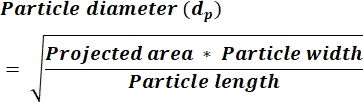
- Determine if the average AR < 2.5, then calculate dp values in a new column using equation 3. If AR ≥ 2.5, then calculate dp values reflecting equation 4. Add a new column to calculate dp based on the area column received from the ImageJ output.
NOTE: Selection of the AR threshold values ≥ 2.5 represents more rectangular-shaped particles, whereas AR < 2.5 reflects more round-shaped particles. This selection allows for minimizing the dp calculation error derived from the area measured by microscopy and determined through ImageJ.
(1)![Circularity equation: Circularity = 4π * [Projected area]/[Perimeter]^2; mathematical formula.](/files/ftp_upload/64112/64112eq01.jpg "figure-protocol-1")
(2)
(3)
(4)
11. Statistical analysis for MPs and NPs
- Open the *.csv data file with the statistical software by File > Open > Select file location of the corresponding file as created in step 9.13.
NOTE: Alternatively, the table can be directly transferred through the copy-paste feature into the statistical software. Refer to the Table of Materials for the brand and version of the statistical software Edit > Paste with column names. - Evaluate the dp data by selecting Analyze > Distribution.
- Select dp, which reflects the column's data, drag and drop into Y columns, and press the OK button. This feature creates a histogram with a statistical output including Summary Statistics, Mean, and Std Dev values in a separate window.
- Evaluate if the histogram follows a normal distribution (or the best fit for dp) with the best fit curve by selecting the triangle next to dp > Continuous Fit, and then select the curve received as the best fit (for example, Fit Normal). This step superimposes the histogram with a normally distributed fit.
- Determine and report the mean and standard deviation values from the summary statistics output of the average shape parameter values of circularity (Cir), aspect ratio (AR), roundness (Round), and solidity (Sol).
NOTE: A statistical significance level of α = 0.05 is recommended and was employed for all evaluations. The significance level is the probability of rejecting the null hypothesis when it is true when comparing numerical results.
12. Best fit of dp size distribution and particle shape factors
- Load the data set into statistical software and use the same *.csv data set for the distribution of dp as calculated in step 10.
- Select Analyze > Reliability and Survival > Life Distribution.
- Drag the dp column to the Y, Time to Event field, and select OK. This feature creates an output with a probability plot as a function of dp.
- Determine the optimum distribution under Compare Distributions by checking Nonparametric, Lognormal, Weibull, Loglogistic, and Normal.
- Evaluate the quality of the model fits by the lowest numerical values for the Akaike's and Bayesian information criteria (AIC and BIC, respectively) in the Statistics Model Comparison Table below the graph by the lowest BIC numbers. The best fit model is presented in the first row by default. Parametric or nonparametric estimate output fields for each distribution evaluation are located below the Compare Distributions graph.
- Save the output script to the data table by selecting the red pull-down triangle on the upper left corner by Save Script > To Data Table. Next, save the original Data Table in the desired file location by selecting File > Save as > *.jmp.
13. Dimensional characterization of NPs through dynamic light scattering
- Start the dynamic light scattering (DLS) software by double-clicking on the desktop icon. Select File > New > SOP. Add sample name and select material refractive index to 1.33 for distilled water and 1.59 for polymers33 in the DLS software under Sample Setup. Select Material in the Pull-Down menu then click OK.
NOTE: Clicking the pull-down menu opens the Materials Manager, which offers to add new samples or modify existing samples by changing the Refractive index and Absorption. Select as dispersant Water. - Select the proper cell under Cell > Cell Type and select Reports to determine which output will be presented after each measurement.
- Start the instrument by closing the instrument lid and switching on the system by closing the lid (if open) and pressing the ON button. Wait after the first beep and wait around 30 min to allow stabilization of the beam.
- Wait until the initialization routine is completed and wait for a second beep sound, indicating that the pre-set temperature (generally 25 °C) has been reached.
- Prepare a sample slurry of NPs (as received in step 7) and DI water in a 15 mL vial at ~0.1 wt% concentration by magnetically stirring for ~1 h to allow to mix well.
- Shake the slurry before transferring ~1.0 mL into the 4.5 mL quartz cuvette and open the lid. Then, carefully insert the sample cell into the sample holder of the DLS instrument.
NOTE: Prepare three samples from the same slurry batch at the same concentration as described in step 13.5. - Perform three measurements (selection in the DLS software) for each sample. Between measurements, remove the sample cell and gently shake the samples for 5 s to allow mixing of the sample.
- Extract and export data through the DLS software, transfer the dataset into the spreadsheet software, and create histograms for MPs and NPs as described in steps 11.1-11.5 (Figure 1). Copy from the Records View Tab either a Table or Graph by selecting Edit-copy, which can be pasted into another application such as the spreadsheet software.
14. Chemical analysis of MNPs using Fourier transformation infrared (FTIR) spectrometry-attenuated total reflectance (ATR)
NOTE: Chemical analyses of MNPs by Fourier transformation infrared (FTIR) and nuclear magnetic resonance (NMR) spectroscopies are well-suited tools to assess the impact of wet grinding on chemical bonding properties, as well as the relative amounts of major components and the polymers' monomeric constituents, respectively10. In addition, thermal properties and the stability of MNPs' polymeric constituents can be assessed through differential scanning calorimetry (DSC) and thermogravimetric analysis (TGA), respectively29.
- Clean the detection system (ATR crystal surface) with ethanol and a lint-free cloth.
- Start the software and press Background Button in the command bar to perform a Background Scan in the air by clearing the instrument beam path. The background spectrum is displayed shortly after collection.
- Enter Sample ID and Sample Description in the instrument settings toolbar.
- Adjust the spectral wavenumber between 4000 cm-1 and 600 cm-1 and select a resolution of 2.0 cm-1 in absorbance mode. Select 32 scans per spectrum and start.
- Place a plastic sample (~20 mg or ~ 1-3 mm3) of MPs (106 µm) and NPs (~300 nm) inside of a steel washer with an inner diameter of ~10 mm, or equivalent, on the crystal surface.
NOTE: The washer prevents dispersion on crystal when the sample holder compresses the sample, resulting in material inhomogeneities and data bias due to inconsistent measurements. - Place the washer in the center of the ATR crystal and add the polymer sample into the middle of the washer opening with a spatula.
- Swing the sample lever above into the center of the sample and turn the knob clockwise by monitoring the Force Gauge force between 50-90. The sample shows the preliminary spectra. Press the Scan button a second time to collect the spectrum.
- Collect between 8-10 spectra by clicking the Scan button and mix the samples carefully after each measurement with a spatula to allow the collection of representative results.
- Click on the Sample View folder in the Data Explorer to display all collected samples superimposed in the viewing area. First, remove significantly deviating spectra representing outliers. Next, select either Absorbance or Transmittance mode in the toolbar.
- Save spectra by selecting the Sample View folder containing the spectra and selecting Save As from the file menu. The dialog window enables the file name, destination directory, and the default location change for all spectra.
NOTE: Alternatively, the spectra can be saved as a *.sp file by selecting a spectrum and right-clicking to display the Binary option. Select Save Binary and browse the final Save location. - Perform baseline correction and mean normalization by selecting a single spectrum in the Data Explorer by selecting Process > Normalization in the menu either through the software or in the next step.
NOTE: Mean normalization compensates for spectral errors due to the thickness or material variation in the sample. - Clean the crystal area with ethanol and lint-free cloth upon completion of the data collection.
- Interpret differences between MPs and NPs according to assigned FTIR vibration bands, assigned and evaluated in a previous publication10.
Access restricted. Please log in or start a trial to view this content.
Results
To validate the experimental procedure method and analysis, MPs and NPs were formed from pellets and film materials and compared by size and shape using microscopic images. The method described in Figure 1 efficiently formed MPs and NPs from biodegradable plastic pellets and films; this was achieved through cryogenic cooling, milling, and wet-grinding and characterization. The former step was unnecessary for environmentally weathered films because weathering induced embrittlement (Astner et ...
Access restricted. Please log in or start a trial to view this content.
Discussion
This method describes an effective process initially described in a previous publication29, to prepare MNPs sourced from pellets and mulch films for environmental studies. The size reduction process involved cryogenic cooling (for film only), dry milling, and wet grinding stages, to manufacture model MNPs. We have applied this method to prepare MNPs from a wide range of polymeric feedstocks, including low-density polyethylene (LDPE), polybutyrate adipate-co-terephthalate (PBAT), and polylactic aci...
Access restricted. Please log in or start a trial to view this content.
Disclosures
The authors have nothing to disclose.
Acknowledgements
This research was funded by the Herbert College of Agriculture, the Biosystems Engineering and Soil Department, and the Science Alliance at the University of Tennessee, Knoxville. Furthermore, the authors gratefully acknowledge the financial support provided through the USDA Grant 2020-67019-31167 for this research. The initial feedstocks for preparing MNPs of PBAT-based biodegradable mulch film were kindly provided by BioBag Americas, Inc. (Dunevin, FL, USA), and PBAT pellets by Mobius, LLC (Lenoir City, TN).
Access restricted. Please log in or start a trial to view this content.
Materials
| Name | Company | Catalog Number | Comments |
|---|---|---|---|
| Aluminum dish, 150 mL | Fisher Scientific, Waltham, MA, USA | 08-732-103 | Drying of collected NPs |
| Aluminum dish, 500 mL | VWR International, Radnor, PA, USA | 25433-018 | Collecting NPs after wet-grinding |
| Centrifuge | Fisher Scientific, Waltham, MA, USA | Centrific 228 | Container for centrifugation |
| Delivery tube, #20, 840 µm | Thomas Scientific, Swedesboro, NJ, USA | 3383M30 | Sieving of the first fraction during milling |
| Delivery tube, #60, 250 µm | Thomas Scientific, Swedesboro, NJ, USA | 3383M45 | Sieving of the second fraction (3x) during milling |
| Thermomixer, 5350 Mixer | Eppendorf North America, Enfield, CT, USA | 05-400-200 | Analysis of sieving experiments |
| FT-IR Spectrum Two, spectrometer with attenuated total reflectance (ATR) | Perkin Elmer, Waltham, MA, USA | L1050228 | Measuring FTIR spectra |
| Glass beaker, 1000 mL | DWK Life Sciences, Milville, NJ, USA | 02-555-113 | Stirring of MPs-water slurry before grinding |
| Glass front plate | Thomas Scientific, Swedesboro, NJ, USA | 3383N55 | Front cover plaste for Wiley Mini Mill |
| Glass jar, 50 mL | Uline, Pleasant Prairie, WI, USA | S-15846P | Collective MPs after milling |
| Glove Box, neoprene | Bel-Art-SP Scienceware, Wayne, NJ, USA | BEL-H500290000 | 22-Inch, Size 10 |
| Zetasizer Nano ZS 90 size analyzer | Malvern Panalytical, Worcestershire, UK | Zetasizer Nano ZS | Measuring nanoplastics dispersed in DI-water |
| Microscope camera | Nikon, Tokyo, 108-6290, Japan | Nikon Digital Sight 10 | Combined with Olympus microscope to receive digital images |
| Microscope | Olympus, Shinjuku, Tokyo, Japan | Model SZ 61 | Imaging of MPs |
| Nitrogen jar, low form dewar flasks | Cole-Palmer, Vernon Hills, IL, USA | UX-03771-23 | Storage of liquid nitrogen during cryogenic cooling |
| Accurate Blend 200, 12-speed blender | Oster, Boca Raton, FL, USA | 6684 | Initiating the size reduction of cryogenically treated plastic film |
| PBAT film, - BioAgri™ (Mater-Bi®) | BioBag Americas, Inc, Dunedin, FL, USA | 0.7 mm thick | Feedstock to form MPs and NPs, agricultural mulch film |
| PBAT pellets | Mobius, LLC, Lenoir City, TN, USA | Diameter 3 mm | Feedstock to form microplastics (MPs) and nanoplastics (NPs) trough milling and grinding |
| Plastic centrifuge tubes, 50 mL | Fisher Scientific, Waltham, MA, USA | 06-443-18 | Centrifugation of slurry after wet-grinding |
| Plastic jar, 1000 mL, pre-cleaned, straight sided | Fisher Scientific, Waltham, MA, USA | 05-719-733 | Collection of NPs during and after wet grinding |
| Polygon stir bars, diameterø=8 mm, length=50.8 mm | Fisher Scientific, Waltham, MA, USA | 14-512-127 | Stirring of MPs slurry prior to wet-grinding |
| Scissors, titanium bonded | Westcott, Shelton, CT, USA | 13901 | Cutting of initial PBAT film feedstocks |
| Square glass cell with square aperture and cap, 12 mm O.D. | Malvern Panalytical, Worcestershire, UK | PCS1115 | Measuring of NPs particle size |
| Stainless steel bottom, 3 inch, pan | Hogentogler & Co. Inc, Columbia, MD, USA | 8401 | For sieving after Wiley-milling |
| Stainless steel sieve, 3 inch, No. 140 (106 µm) | Hogentogler & Co. Inc, Columbia, MD, USA | 1308 | For sieving after Wiley-milling |
| Stainless steel sieve, 3 inch, No. 20 (850 µm) | Hogentogler & Co. Inc, Columbia, MD, USA | 1296 | Sieving of MPs after Wiley-milling |
| Stainless steel sieve, 3 inch, No. 325 (45 µm) | Hogentogler & Co. Inc, Columbia, MD, USA | 1313 | Sieving of MPs after Wiley-milling |
| Stainless steel sieve, 3 inch, No. 60 (250 µm) | Hogentogler & Co. Inc, Columbia, MD, USA | 1303 | Sieving of MPs after Wiley-milling |
| Stainless steel top cover, 3 inch | Hogentogler & Co. Inc, Columbia, MD, USA | 8406 | Sieving of MPs after Wiley-milling |
| Stainless steel tweezers | Global Industrial, Port Washington, NY, USA | T9FB2264892 | Transferring of frozen film particles from jar into blender |
| Vacuum oven, model 281A | Fisher Scientific, Waltham, MA, USA | 13-262-50 | Vacuum oven to dry NPs after wet-grinding |
| Friction grinding machine, Supermass Colloider | Masuko Sangyo, Tokyo, Japan | MKCA6-2J | Grinding machine to form NPs from MPs |
| Wet-grinding stone, grit size: 297 μm -420 μm | Masuko Sangyo, Tokyo, Japan | MKE6-46DD | Grinding stone to form NPs from MPs |
| Wiley Mini Mill, rotary cutting mill | Thomas Scientific, Swedesboro, NJ, USA | NC1346618 | Size reduction of pellets and film into MPs and NPs |
| Software | |||
| FTIR-Spectroscopy software | Perkin Elmer, Waltham, MA, USA | Spectrum 10 | Collection of spectra from the initial plastic, MPs and NPs |
| Image J, image processing program | National Institutes of Health, Bethesda, MD, USA | Version 1.53n | Analysis of digital images received from microscopy |
| Microscope software, ds-fi1 software | Malvern Panalytical , Malvern, UK | Firmware DS-U1 Ver3.10 | Recording of digital images |
| Microsoft, Windows, Excel 365, spreadsheet software | Microsoft, Redmond, WA, USA | Office 365 | Calculating the average particle size and creating FTIR spectra images |
| JMP software, statistical software | SAS Institute Inc., Cary, NC, 1989-2021 | Version 15 | Statistical analysis of particle size and perform best fit of data set |
| Unscrambler software | Camo Analytics, Oslo, Norway | Version 9.2 | Normalizing and converting FTIR spectra into .csv fromat |
References
- Jin, Z., Dan, L. Review on the occurrence, analysis methods, toxicity and health effects of micro-and nano-plastics in the environment. Environmental Chemistry. (1), 28-40 (2021).
- Kumar, M., et al. Current research trends on micro-and nano-plastics as an emerging threat to global environment: a review. Journal of Hazardous Materials. 409, 124967(2021).
- Alimba, C. G., Faggio, C., Sivanesan, S., Ogunkanmi, A. L., Krishnamurthi, K. Micro (nano)-plastics in the environment and risk of carcinogenesis: Insight into possible mechanisms. Journal of Hazardous Materials. 416, 126143(2021).
- Serrano-Ruiz, H., Martin-Closas, L., Pelacho, A. M. Biodegradable plastic mulches: Impact on the agricultural biotic environment. Science of The Total Environment. 750, 141228(2021).
- Hayes, D. G., et al. Biodegradable plastic mulch films for sustainable specialty crop production. Polymers for Agri-Food Applications. , Springer. Cham. 183-213 (2019).
- Viaroli, S., Lancia, M., Re, V. Microplastics contamination of groundwater: Current evidence and future perspectives. A review. Science of The Total Environment. , 153851(2022).
- Rillig, M. C., Lehmann, A. Microplastic in terrestrial ecosystems. Science. 368 (6498), 1430-1431 (2020).
- Anunciado, M. B., et al. Effect of environmental weathering on biodegradation of biodegradable plastic mulch films under ambient soil and composting conditions. Journal of Polymers and the Environment. 29 (9), 2916-2931 (2021).
- Yang, Y., et al. Kinetics of microplastic generation from different types of mulch films in agricultural soil. Science of The Total Environment. 814, 152572(2022).
- Hayes, D. G., et al. Effect of diverse weathering conditions on the physicochemical properties of biodegradable plastic mulches. Polymer Testing. 62, 454-467 (2017).
- Schwaferts, C., Niessner, R., Elsner, M., Ivleva, N. P. Methods for the analysis of submicrometer-and nanoplastic particles in the environment. TrAC Trends in Analytical Chemistry. 112, 52-65 (2019).
- Gigault, J., et al. Current opinion: what is a nanoplastic. Environmental Pollution. 235, 1030-1034 (2018).
- Naqash, N., Prakash, S., Kapoor, D., Singh, R. Interaction of freshwater microplastics with biota and heavy metals: a review. Environmental Chemistry Letters. 18 (6), 1813-1824 (2020).
- Manzoor, S., Naqash, N., Rashid, G., Singh, R. Plastic material degradation and formation of microplastic in the environment: A review. Materials Today: Proceedings. , 3254-3260 (2022).
- de Souza Machado, A. A., et al. Impacts of microplastics on the soil biophysical environment. Environmental Science & Technology. 52 (17), 9656-9665 (2018).
- Jacques, O., Prosser, R. A probabilistic risk assessment of microplastics in soil ecosystems. Science of The Total Environment. 757, 143987(2021).
- Kwak, J. I., An, Y. -J. Microplastic digestion generates fragmented nanoplastics in soils and damages earthworm spermatogenesis and coelomocyte viability. Journal of Hazardous Materials. 402, 124034(2021).
- Wahl, A., et al. Nanoplastic occurrence in a soil amended with plastic debris. Chemosphere. 262, 127784(2021).
- Vighi, M., et al. Micro and nano-plastics in the environment: research priorities for the near future. Reviews of Environmental Contamination and Toxicology Volume 257. , 163-218 (2021).
- Pironti, C., et al. Microplastics in the environment: intake through the food web, human exposure and toxicological effects. Toxics. 9 (9), 224(2021).
- Zurier, H. S., Goddard, J. M. Biodegradation of microplastics in food and agriculture. Current Opinion in Food Science. 37, 37-44 (2021).
- Horton, A. A., Dixon, S. J. Microplastics: An introduction to environmental transport processes. Wiley Interdisciplinary Reviews: Water. 5 (2), 1268(2018).
- Panno, S. V., et al. Microplastic contamination in karst groundwater systems. Groundwater. 57 (2), 189-196 (2019).
- Su, Y., et al. Delivery, uptake, fate, an transport of engineered nanoparticles in plants: a critical review and data analysis. Environmental Science: Nano. 6 (8), 2311-2331 (2019).
- Yu, Y., Griffin-LaHue, D. E., Miles, C. A., Hayes, D. G., Flury, M. Are micro-and nanoplastics from soil-biodegradable plastic mulches an environmental concern. Journal of Hazardous Materials Advances. 4, 100024(2021).
- Hayes, D. G. Enhanced end-of-life performance for biodegradable plastic mulch films through improving standards and addressing research gaps. Current Opinion in Chemical Engineering. 33, 100695(2021).
- Qin, M., et al. A review of biodegradable plastics to biodegradable microplastics: Another ecological threat to soil environments. Journal of Cleaner Production. 312, 127816(2021).
- Phuong, N. N., et al. Is there any consistency between the microplastics found in the field and those used in laboratory experiments. Environmental Pollution. 211, 111-123 (2016).
- Astner, A., et al. Mechanical formation of micro-and nano-plastic materials for environmental studies in agricultural ecosystems. Science of The Total Environment. 685, 1097-1106 (2019).
- Rist, S., Hartmann, N. B. Aquatic ecotoxicity of microplastics and nanoplastics: lessons learned from engineered nanomaterials. Freshwater Microplastics. , Springer. Cham. 25-49 (2018).
- Schneider, C. A., Rasband, W. S., Eliceiri, K. W. NIH Image to ImageJ: 25 years of image analysis. Nature Methods. 9 (7), 671-675 (2012).
- Raju, S., et al. Improved methodology to determine the fate and transport of microplastics in a secondary wastewater treatment plant. Water Research. 173, 115549(2020).
- Caputo, F., et al. Measuring particle size distribution and mass concentration of nanoplastics and microplastics: addressing some analytical challenges in the sub-micron size range. Journal of Colloid and Interface Science. 588, 401-417 (2021).
- Xu, M., et al. Polystyrene microplastics alleviate the effects of sulfamethazine on soil microbial communities at different CO2 concentrations. Journal of Hazardous Materials. 413, 125286(2021).
- Ding, L., et al. Insight into interactions of polystyrene microplastics with different types and compositions of dissolved organic matter. Science of The Total Environment. 824, 153883(2022).
- Abbasimaedeh, P., Ghanbari, A., O'Kelly, B. C., Tavanafar, M., Irdmoosa, K. G. Geomechanical behaviour of uncemented expanded polystyrene (EPS) beads-clayey soil mixtures as lightweight fill. Geotechnics. 1 (1), 38-58 (2021).
- Li, Z., Li, Q., Li, R., Zhou, J., Wang, G. The distribution and impact of polystyrene nanoplastics on cucumber plants. Environmental Science and Pollution Research. 28 (13), 16042-16053 (2021).
- Sobhani, Z., Panneerselvan, L., Fang, C., Naidu, R., Megharaj, M. Chronic and transgenerational effects of polystyrene microplastics at environmentally relevant concentrations in earthworms (Eisenia fetida). Environmental Toxicology and Chemistry. 40 (8), 2240-2246 (2021).
- Lionetto, F., Esposito Corcione, C., Rizzo, A., Maffezzoli, A. Production and characterization of polyethylene terephthalate nanoparticles. Polymers. 13 (21), 3745(2021).
- Dümichen, E., et al. Analysis of polyethylene microplastics in environmental samples, using a thermal decomposition method. Water Research. 85, 451-457 (2015).
- Robotti, M., et al. Attrition and cryogenic milling production for low pressure cold gas spray and composite coatings characterization. Advanced Powder Technology. 27 (4), 1257-1264 (2016).
- Ducoli, S., et al. A different protein corona cloaks "true-to-life" nanoplastics with respect to synthetic polystyrene nanobeads. Environmental Science: Nano. 9 (4), 1414-1426 (2022).
- El Hadri, H., Gigault, J., Maxit, B., Grassl, B., Reynaud, S. Nanoplastic from mechanically degraded primary and secondary microplastics for environmental assessments. NanoImpact. 17, 100206(2020).
- Eitzen, L., et al. The challenge in preparing particle suspensions for aquatic microplastic research. Environmental research. 168, 490-495 (2019).
- Ekvall, M. T., et al. Nanoplastics formed during the mechanical breakdown of daily-use polystyrene products. Nanoscale advances. 1 (3), 1055-1061 (2019).
- Caldwell, J., et al. Fluorescent plastic nanoparticles to track their interaction and fate in physiological environments. Environmental Science: Nano. 8 (2), 502-513 (2021).
- Zeb, A., et al. Evaluating the knowledge structure of micro-and nanoplastics in terrestrial environment through scientometric assessment. Applied Soil Ecology. 177, 104507(2022).
- Ji, Z., et al. Effects of pristine microplastics and nanoplastics on soil invertebrates: A systematic review and meta-analysis of available data. Science of The Total Environment. 788, 147784(2021).
- de Alkimin, G. D., Gonçalves, J. M., Nathan, J., Bebianno, M. J. Impact of micro and nanoplastics in the marine environment. Assessing the Effects of Emerging Plastics on the Environment and Public Health. , IGI Global. 172-225 (2022).
- Pires, A., Cuccaro, A., Sole, M., Freitas, R. Micro (nano) plastics and plastic additives effects in marine annelids: A literature review. Environmental Research. , 113642(2022).
- Hurley, R. R., Nizzetto, L. Fate and occurrence of micro (nano) plastics in soils: Knowledge gaps and possible risks. Current Opinion in Environmental Science & Health. 1, 6-11 (2018).
Access restricted. Please log in or start a trial to view this content.
Reprints and Permissions
