This protocol describes the synthesis of biofunctionalized Prussian blue nanoparticles and their use as multimodal, molecular imaging agents. The nanoparticles have a core-shell design where gadolinium or manganese ions within the nanoparticle core generate MRI contrast. The biofunctional shell contains fluorophores for fluorescence imaging and targeting ligands for molecular targeting.
A subscription to JoVE is required to view this content. Sign in or start your free trial.
Method Article
Biofunctionalized Prussian Blue Nanoparticles for Multimodal Molecular Imaging Applications
In This Article
Summary
Abstract
Multimodal, molecular imaging allows the visualization of biological processes at cellular, subcellular, and molecular-level resolutions using multiple, complementary imaging techniques. These imaging agents facilitate the real-time assessment of pathways and mechanisms in vivo, which enhance both diagnostic and therapeutic efficacy. This article presents the protocol for the synthesis of biofunctionalized Prussian blue nanoparticles (PB NPs) - a novel class of agents for use in multimodal, molecular imaging applications. The imaging modalities incorporated in the nanoparticles, fluorescence imaging and magnetic resonance imaging (MRI), have complementary features. The PB NPs possess a core-shell design where gadolinium and manganese ions incorporated within the interstitial spaces of the PB lattice generate MRI contrast, both in T1 and T2-weighted sequences. The PB NPs are coated with fluorescent avidin using electrostatic self-assembly, which enables fluorescence imaging. The avidin-coated nanoparticles are modified with biotinylated ligands that confer molecular targeting capabilities to the nanoparticles. The stability and toxicity of the nanoparticles are measured, as well as their MRI relaxivities. The multimodal, molecular imaging capabilities of these biofunctionalized PB NPs are then demonstrated by using them for fluorescence imaging and molecular MRI in vitro.
Introduction
Molecular imaging is the non-invasive and targeted visualization of biological processes at the cellular, subcellular, and molecular levels1. Molecular imaging permits a specimen to remain in its native microenvironment while its endogenous pathways and mechanisms are assessed in real-time. Typically, molecular imaging involves the administration of an exogenous imaging agent in the form of a small molecule, macromolecule, or nanoparticle to visualize, target, and trace relevant physiological processes being studied2. The various imaging modalities that have been explored in molecular imaging include MRI, CT, PET, SPECT, ultrasound, photoacoustics, Raman spectroscopy, bioluminescence, fluorescence, and intravital microscopy3. Multimodal imaging is the combination of two or more imaging modalities where the combination enhances the ability to visualize and characterize various biological processes and events4. Multimodal imaging exploits the strengths of the individual imaging techniques, while compensating for their individual limitations3.
This article presents the protocol for the synthesis of biofunctionalized Prussian blue nanoparticles (PB NPs) - a novel class of multimodal, molecular imaging agents. The PB NPs are utilized for fluorescence imaging and molecular MRI. PB is a pigment consisting of alternating iron (II) and iron (III) atoms in a face-centered cubic network (Figure 1). The PB lattice is comprised of linear cyanide ligands in a FeII- CN - FeIII linkage that incorporates cations to balance charges within its three-dimensional network5. The ability of PB to incorporate cations into its lattice is exploited by separately loading gadolinium and manganese ions into the PB NPs for MRI contrast.
The rationale for pursuing a nanoparticle design for MRI contrast is because of the advantages this design offers relative to current MRI contrast agents. The vast majority of US FDA-approved MRI contrast agents are gadolinium chelates that are paramagnetic in nature and provide positive contrast by the spin-lattice relaxation mechanism6,7,8. As compared to a single gadolinium-chelate that provides low signal intensity on its own, the incorporation of multiple gadolinium ions within the PB lattice of the nanoparticles provides enhanced signal intensity (positive contrast)3,9. Further, the presence of multiple gadolinium ions within the PB lattice increases the overall spin density and the magnitude of paramagnetism of the nanoparticles, which disturbs the local magnetic field in its vicinity, thereby generating negative contrast by the spin-spin relaxation mechanism. Thus the gadolinium-containing nanoparticles function both as T1 (positive) and T2 (negative) contrast agents10,11.
In a subset of patients with impaired renal function, the administration of gadolinium-based contrast agents has been linked to the development of nephrogenic systemic fibrosis8,12, 13. This observation has prompted investigations into the use of alternative paramagnetic ions as contrast agents for MRI. Therefore, the versatile design of the nanoparticles is adapted to incorporate manganese ions within the PB lattice. Similar to gadolinium-chelates, manganese-chelates are also paramagnetic and are typically used to provide positive signal intensity in MRI7,14. As with gadolinium-containing PB NPs, the manganese-containing PB NPs also function as T1 (positive) and T2 (negative) contrast agents.
To incorporate fluorescence imaging capabilities, the nanoparticle “cores” are coated with a “biofunctional” shell consisting of the fluorescently-labeled glycoprotein avidin (Figure 1). Avidin not only enables fluorescence imaging, but also serves as a docking platform for biotinylated ligands that target specific cells and tissue. The avidin–biotin bond is one of the strongest known, non-covalent bonds characterized by extremely strong binding affinity between avidin and biotin15. The attachment of biotinylated ligands to the avidin-coated PB NPs confers molecular targeting capabilities to the PB NPs.
The motivation for pursuing fluorescence and MR imaging using PB NPs is because these imaging modalities possess complementary features. Fluorescence imaging is one of the most widely used optical molecular imaging techniques, and allows for the simultaneous visualization of multiple objects at high sensitivities1,16,17. Fluorescence imaging is a safe, non-invasive modality but is associated with low depths of penetration and spatial resolutions1,3,16. On the other hand, MRI generates high temporal and spatial resolution non-invasively and without a need for ionizing radiation1,3,16. However MRI suffers from low sensitivity. Therefore fluorescence imaging and MRI were selected as the molecular imaging techniques due to their complementary features of depth penetration, sensitivity, and spatial resolution.
This article presents the protocol for the synthesis and biofunctionalization of the PB NPs, gadolinium-containing PB NPs (GdPB), and manganese-containing PB NPs (MnPB)10,11. The following methods are described: 1) measurement of size, charge, and temporal stability of the nanoparticles, 2) evaluation of cytotoxicity of the nanoparticles, 3) measurement of MRI relaxivities, and 4) utilization of the nanoparticles for fluorescence and molecular MR imaging of a population of targeted cells in vitro. These results demonstrate the potential of the NPs for use as multimodal, molecular imaging agents in vivo.
Access restricted. Please log in or start a trial to view this content.
Protocol
1. Synthesis of PB NPs, GdPB, and MnPB
Synthesis of the nanoparticles (PB NPs, GdPB, or MnPB) is achieved using a one-pot synthesis scheme by performing the steps detailed below:
- Prepare solution 'A' containing 5 ml of 5 mM potassium hexacyanoferrate (II) in deionized (DI) water. Depending on the type of nanoparticle being synthesized — PB NPs, GdPB, or MnPB, prepare solution 'B' as follows:
- For PB NPs: prepare 10 ml of a solution containing 2.5 mM iron (III) chloride in DI water.
- For GdPB NPs: prepare 10 ml of a solution containing 2.5 mM each of gadolinium (III) nitrate and iron (III) chloride in DI water
- For MnPB NPs: prepare 10 ml of a solution containing 2.5 mM each of manganese (II) chloride and iron (III) chloride in DI water.
- Add solution ‘B’ to a round-bottom flask, and stir the flask contents at room temperature (RT) and 1,000 rpm. Add solution ‘A’ drop-wise into the round-bottom flask containing solution ‘B’. Control the flow rate for the addition of solution ‘A’ to ‘B’ by a peristaltic pump set to dispense approximately 10 ml/hr.
- Continue stirring at 1,000 rpm at RT for an additional 30 min after the addition of solution ‘A’ to ‘B’ is complete. Stop stirring and collect the mixture.
- Transfer aliquots of the mixture into microcentrifuge tubes to rinse the nanoparticles free of unreacted components. Add 5 M NaCl (0.2 ml NaCl/ml reaction mixture) to each aliquot to assist in particle collection by centrifugation.
- Centrifuge each aliquot of nanoparticles for at least 10 min at 20,000 × g. After centrifugation, carefully remove the supernatant.
- Resuspend each nanoparticle pellet in 1 ml DI water via sonication using a microtip (sonication pulse on/off = 1/1 sec, amplitude = 50%, duration = 5 sec, sonicator power rating = 125 W) to break up the pellet.
- Repeat steps 1.4-1.6 at least 3× to ensure that the nanoparticles are free of components of the initial reaction and reaction byproducts. After the final centrifugation, resuspend particles in 1 ml DI water.
2. Biofunctionalization of PB NPs, GdPB, and MnPB
Biofunctionalization of the nanoparticles involves coating of the nanoparticle “cores” with avidin and adding biotinylated ligands as described below:
- Coating of the Nanoparticles with Fluorescent Avidin
Coating of the nanoparticles with fluorescent avidin is achieved using electrostatic self-assembly where positively charged avidin (pI ~10.5) is coated on to negatively charged nanoparticles as follows18:- Prepare suspensions of the PB NPs, GdPB, or MnPB in 1 ml DI water. Filter Alexa Fluor 488-labeled avidin (A488; reconstituted in DI water) through a 0.2 µm nylon microcentrifuge filter at 14,000 × g for 10 min. Add ≤0.2 mg avidin/mg nanoparticles. Add each filtered aliquot of A488 separately to the aliquots of PB NPs, GdPB, or MnPB.
- Contact the nanoparticles with A488 for 2-4 hr with gentle shaking or rotation at 4 °C. Protect the samples from light using aluminum foil.
NOTE: This step yields A488 coated PB NPs (PB-A488), GdPB (GdPB-A488), and MnPB (MnPB-A488).
- Attachment of Biotinylated Antibodies
Attachment of biotinylated targeting antibodies onto the avidin-coated nanoparticles is achieved using avidin-biotin interactions as follows:- Prepare suspensions of the avidin coated nanoparticles — PB-A488, GdPB-A488, and MnPB-A488 in 1 ml DI water. Filter biotinylated antibody (as supplied by the manufacturer) through a 0.2 µm nylon microcentrifuge filter at 14,000 × g for 10 min.
NOTE: Here, the present study uses biotinylated anti-neuron-glial antigen 2 (ANG2) that targets NG2 overexpressed within cells and tissues of the central nervous system and biotinylated anti-human eotaxin-3 (Eot3) that targets receptors overexpressed on eosinophils or eosinophilic cell lines. - Add each filtered aliquot of biotinylated antibody separately to the aliquots of the avidin-coated nanoparticles. Add ≤0.05 mg biotinylated antibody/mg avidin-coated nanoparticles. Contact the avidin-coated nanoparticles with the biotinylated antibodies (ANG2 or Eot3) for 2-4 hr with gentle shaking or rotation at 4 °C. Protect the samples from light using aluminum foil.
NOTE: This step yields antibody coated nanoparticles (e.g. GdPB-A488-Eot3 and MnPB-A488-ANG2).
- Prepare suspensions of the avidin coated nanoparticles — PB-A488, GdPB-A488, and MnPB-A488 in 1 ml DI water. Filter biotinylated antibody (as supplied by the manufacturer) through a 0.2 µm nylon microcentrifuge filter at 14,000 × g for 10 min.
3. Sizing, Zeta Potential, and Temporal Stability of the Nanoparticles
The size distribution, charge, and stability of the nanoparticles are measured using dynamic light scattering (DLS) methods as described below:
- Sizing of the Nanoparticles
Sizing of the nanoparticles is achieved using dynamic light scattering as follows:- Add 10 µl of the nanoparticle sample (1 mg/ml) to 990 µl of DI water in a disposable plastic cuvette.
NOTE: This is representative value for a good DLS signal. - Cap the cuvette and vortex to mix well. Place the cuvette in a system used to analyze particle size in order to measure the size of the nanoparticles. Carry out particle size analysis at a measurement angle of 173°.
- Add 10 µl of the nanoparticle sample (1 mg/ml) to 990 µl of DI water in a disposable plastic cuvette.
- Zeta Potential of the Nanoparticles
Zeta potential of the nanoparticles is measured using phase analysis light scattering as follows:- Add 100 µl of the nanoparticle sample (1 mg/ml) to 900 µl of DI water in a disposable plastic capillary cell. This value is representative for a good zeta potential measurement.
- Place the capillary cell in a system used to analyze zeta potential in order to measure the zeta potential of the nanoparticles using default parameters at 25 °C.
- Temporal Stability of the Nanoparticles
Temporal stability of the nanoparticles is measured using dynamic light scattering as follows:- Assess the stability of nanoparticles by measuring the sizes of the nanoparticles in DI water as well as Dulbecco’s Modified Eagle’s Medium (DMEM) as described in section 3.1.
- Repeat the size measurements in DI water and DMEM once/day over a period of 5 days.
4. Cytotoxicity of the Nanoparticles
Cytotoxicity of the nanoparticles is measured using an XTT cell proliferation assay as follows:
- Seed 10,000-15,000 cells/well of each cell type studied (Neuro2a, BSG D10, EoL-1, and OE21) in a 96-well plate. Ensure that the total volume of seeded cells does not exceed 0.2 ml/well. Incubate seeded cells overnight at 37 °C and 5% CO2.
- Contacting nanoparticles with the cells:
- Incubate the cells with varying concentrations of nanoparticles (0.01 – 0.5 mg/ml). Refer to Table 1 as a representative table that describes the amounts of the nanoparticles (in 50 µl) added to the cells after removing 50 µl of medium/well.
- To account for any interfering absorbance of the nanoparticles within the assay, add a blank consisting of the appropriate concentration of nanoparticles (0-0.5 mg/ml; in equivalence to the amounts added to the cells) to medium without cells.
- Incubate cells with nanoparticles overnight at 37 °C and 5% CO2. Aspirate media from each well and rinse with staining buffer comprised of 5% fetal bovine serum (FBS) in phosphate-buffered solution (PBS). Add 100 µl of media without phenol red and incubate at 37 °C and 5% CO2 for 16-18 hr.
- Incubate the cells with varying concentrations of nanoparticles (0.01 – 0.5 mg/ml). Refer to Table 1 as a representative table that describes the amounts of the nanoparticles (in 50 µl) added to the cells after removing 50 µl of medium/well.
- Prepare the XTT Cell Proliferation Assay working solution by mixing the kit components (XTT Reagent and XTT Activator) as per the manufacturer’s specifications. Aspirate the media from the wells and add 100 µl of RPMI (RPMI w/o phenol red + 10% FBS + 1× Pen-Strep) or appropriate medium for the cell type studied. Add 50 µl of XTT working solution to each well and incubate at 37 °C and 5% CO2 for 2-2.5 hr.
- Measure the absorbance at 490 nm, with a reference wavelength of 630 nm to correct for fingerprints or smudges. Calculate the corrected absorbance for each well (A490-A630) and average the readings for replicates.
- Subtract the blank readings from each well value to calculate the final corrected absorbance values. Calculate the survival percentage for each sample by normalizing the final corrected absorbance to that of untreated cells without nanoparticles. Plot survival percentage as a function of nanoparticle concentration.
5. MRI Relaxivities of the PB NPs, GdPB, and MnPB
MRI relaxivity is measured using T1- and T2-weighted sequences by preparing an MRI “phantom” using a 96-well plate containing nanoparticles as described below:
- Phantom Preparation
- Prepare a 96-well plate with each well containing 100 µl nanoparticles (PB NPs, GdPB, or MnPB) at the appropriate concentration. Beginning with a concentration of 0.4 mM for each type of nanoparticle, serially dilute the nanoparticles 2× using DI water until a concentration of 2.4 × 10⁻⁵ M is reached (this requires 14 dilutions and 15 wells).
- Add 100 µl of molten 1% agarose solution in DI water into each well and mix well. Allow the gel to solidify at 4 °C for 12 hr.
NOTE: This yields a phantom containing serial dilutions of the nanoparticles in solidified agarose. - Place the phantom in a horizontal 3 T clinical magnet under a solid block of 2% agar (150 cm3). Secure the phantom and block of agar within the center of an 8-channel HD brain coil. Measure relaxation times using 0.5 mm thick coronal slices at the mid-height of the 96-well plate11.
- T1- and T2-Weighted Sequences
Use the following representative settings for acquiring the sequences in the clinical magnet.
NOTE: These values are optimized for the nanoparticles used in the present study:- Acquire T1-weighted (T1W) MR images using the following fluid attenuated inversion recovery (FLAIR) sequence: Echo train (ET) = 8, Repetition time (TR) = 2,300 msec, Echo time (TE) = 24.4 msec, Matrix size = 512 x 224, Field of view (FOV) = 16 x 16 cm2.
- Acquire T2-weighted (T2W) MR images using the following fast relaxation fast spin echo (FRFSE) sequence: ET = 21; TR = 3,500 msec; TE = 104 msec; Matrix size = 512 x 224; FOV = 16 x 16 cm2.
- Acquire T1W and T2W MR images at 127 MHz (3 T) at the following inversion times: 50, 177, 432, 942, 1,961, and 4,000 msec.
- Measuring the MRI Relaxivities
- After acquiring T1W and T2W images using the sequences described in section 5.2, measure the signal intensity for each well using ImageJ, henceforth designated as the region of interest (ROI) by selecting each ROI using the oval crop button located on the main toolbar, then selecting Analyze > Measure.
NOTE: A pop-up should display the mean signal intensity of each ROI under the column labeled “Mean”. - For each ROI, plot the measured signal intensity against its specific inversion time. If needed, invert points (readings) that generate an initial “bubble” or outliers at the beginning of the plot (lower inversion times).
NOTE: These readings are generated at low inversion times because MRI measures the magnitude or absolute value of images rather than their actual (negative) value, which needs to be accounted/corrected for19. - Prepare an exponential fit for each plot of signal intensity for the ROIs (SI) vs. inversion times (TI) as described in section 5.2. Plot TI on the x-axis, SI on the y-axis; ɑ and Δ are constants determined by regression, and T1 or T2 is the variable to be solved:
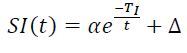
where t = T1, T2. - Solve for T1 or T2 using the above equation and plot the inverse of the calculated values (1/T1 and 1/T2) against the concentrations of the nanoparticles used in each ROI.
- Calculate the slope of the linear graph which yields the relaxivities r1 and r2.
NOTE: The following section of the protocol describes the application of the nanoparticles for fluorescent labeling and generating MRI contrast in targeted cells.
- After acquiring T1W and T2W images using the sequences described in section 5.2, measure the signal intensity for each well using ImageJ, henceforth designated as the region of interest (ROI) by selecting each ROI using the oval crop button located on the main toolbar, then selecting Analyze > Measure.
6. Fluorescent Labeling of Targeted Cells Using the Nanoparticles — Confocal Microscopy
NOTE: The nanoparticles (PB NPs, GdPB, and MnPB) can be used to fluorescently label a population of targeted cells (monitored by confocal microscopy) as follows:
- Synthesis of the Fluorescent Nanoparticles
- Synthesize GdPB-A488, GdPB-A488-Eot3, MnPB-A488, MnPB-A488-ANG2 for fluorescent labeling of a population of targeted cells by following the steps detailed in sections 1 and 2.
- Preparation of Cells for Fluorescence Targeting
- Coat no. 1.5 micro cover glasses by dipping them in a solution of 0.002% poly(L-lysine) hydrobromide for 90 min. Remove the cover glasses from the solution and allow them to dry for 24 hr.
- Seeds the cells (e.g. EoL-1, BSG D10, SUDIPG1) on the coated cover glasses placed in a 6-well plate and incubate at 37 °C and 5% CO2 for at least 16 hr. Rinse the cells with a 1× PBS solution and ( optional) fix with 10% formaldehyde in neutral buffer solution for 15 min. Stain cells with 5 µM red-orange cell-permeant dye in PBS at 37 °C for 30 min. Subsequently, rinse cells with PBS.
- >Fluorescent Labeling of Targeted Cells
- Add 1% bovine serum albumin (BSA; in DI water) to the cells to minimize non-specific binding on the cells, and incubate at 37 °C for 1 hr.
- Incubate cells with the nanoparticles in 1% BSA for 1 hr. For EoL-1: incubate with 0.2 mg/ml GdPB-A488 or GdPB-A488-Eot3; For BSG D10 and SUDIPG1: incubate with 0.2 mg/ml MnPB-A488 or MnPB-A488-ANG2. Rinse the cells with PBS 3× to remove unbound nanoparticles.
- Carefully invert the cover glass (containing cells and nanoparticles) on a microscope slide, ensuring that there are no trapped air bubbles. Seal the edge between the cover glass and microscope slide by carefully applying clear nail polish. Image the cells using a confocal laser scanning microscope.
7. Fluorescent Labeling of Targeted Cells Using the Nanoparticles — Flow Cytometry
The nanoparticles (PB NPs, GdPB, and MnPB) can be used to fluorescently label a population of targeted cells (monitored by flow cytometry) as follows:
- Prepare suspensions of the cells being targeted in PBS. For pure culture studies, the suspensions consist of a single cell type (e.g. BSG D10); resuspend a cell pellet of BSG D10 cells in PBS at 100,000 cells/ml (10 ml total). For mixed culture studies, the suspensions consist of at least two cell types (e.g. EoL-1 and OE21); similar to BSG D10, resuspend cell pellets of EoL-1 and OE21 in PBS at 100,000 cells/ml each (10 ml total).
- Prepare varying ratios of EoL-1:OE21 1:0 (2 ml EoL-1), 3:1 (1.5 ml EoL-1, 0.5 ml OE21), 1:1 (1 ml each of EoL-1 and OE21), 1:3 (0.5 ml EoL-1, 1.5 ml OE21), 0:1 (2 ml OE21).
- Block the cells (pure and mixed suspensions) being targeted by the nanoparticles with 2 ml of 5% BSA to minimize non-specific binding.
- Add 1 ml (1 mg/ml) nanoparticles to the cells and incubate for 1 hr. For BSG D10, incubate cells with MnPB-A488, MnPB-A488-AbC (control antibody), or MnPB-A488-ANG2). For mixtures of EoL-1 and OE21, incubate the mixtures with a fixed amount of GdPB-A488-Eot3.
- Rinse the cells free of unbound nanoparticles by spinning down the samples at 1,000 × g for 5 min at least 3× to remove unbound particles. Resuspend the cells in 1 ml PBS and fix with 10% formaldehyde in PBS. Stain cells by incubating with 10 µg/ml 7-Aminoactinomytcin D in PBS on ice for 30 min. Rinse with PBS, then analyze 10,000 gated cells from each sample using a flow cytometer.
8. Generating MRI Contrast on Targeted Cells Using the Nanoparticles
The nanoparticles (PB NPs, GdPB, and MnPB) can be used to generate MRI contrast (in both T1- and T2-weighted sequences) in a population of targeted cells as follows:
- Phantom Preparation
- Grow cells (e.g. BSG D10) in T75 flasks until ~80% confluence. Use appropriate growth medium and conditions. For BSG D10, grow the cells in DMEM + 10% FBS + 1× Pen-Strep at 37 °C and 5% CO2.
- Rinse cells free of medium with 5 ml PBS and block the cells with 5 ml 1% BSA in PBS for 1 hr to minimize non-specific binding. Add 5 ml (0.5 mg/ml) nanoparticles to the cells. For BSG D10, incubate the cells with MnPB-A488, MnPB-A488-AbC (control antibody), and MnPB-A488-ANG2 for 1 hr.
- Rinse cells 3× with 5 ml PBS to remove unbound nanoparticles. Trypsinize the cells by incubating the cells with 2 ml Trypsin EDTA 0.25% solution 1× for 5 min at 37 °C and 5% CO2 to detach them from the flask for phantom preparation. Add 8 ml of DMEM to quench the trypsinization of cells.
- Collect the cells by centrifuging them at 1,000 × g for 5 min; aspirate out the supernatant. Resuspend the cells in 1 ml PBS and add 1 ml 10% formaldehyde in PBS to fix the cells. Add 100 µl of each sample to a separate well of a 96-well plate.
- Add 100 µl of molten 1% agarose solution in DI water into each well and mix well by pipetting up and down. Allow the gel to solidify at 4 °C for 12 hr.
NOTE: This yields a phantom containing cells with attached nanoparticles in solidified agarose. - Place the phantom in a horizontal 3 T clinical magnet next to a solid block of 2% agar (150 cm3). Secure the phantom and block of agar within the center of an 8-channel HD brain coil. Measure relaxation times using 0.5-mm thick coronal slices at mid-height of the 96-well plate11.
- T1- and T2-Weighted Sequences
Use the following settings for acquiring the sequences in the clinical MRI magnet:- Acquire T1W MR images using the following spin echo sequence: Echo train (ET) = 1, Repetition time (TR) = 650 msec, Echo time (TE) = 11 msec, Matrix size = 320 x 256, Field of view (FOV) = 10 x 10 cm2.
- Acquire T2W MR images using the following FRFSE sequence: ET = 28; TR = 3,000 msec; TE = 101 msec; Matrix size = 384 x 288; FOV = 10 x 10 cm2.
- Post-acquisition Processing
- For easier reading, convert the original gray scale images into a color scale image using ImageJ: Select Image > Type > 8-Bit, to convert the image to gray scale.
- Calculate the normalized intensity for each sample after subtracting the signal contribution from the agarose solution.
Access restricted. Please log in or start a trial to view this content.
Results
Using the one-pot synthesis scheme, nanoparticles of PB NPs (mean diameter 78.8 nm, polydispersity index (PDI) = 0.230; calculated by the dynamic light scattering instrument), GdPB (mean diameter 164.2 nm, PDI = 0.102), or MnPB (mean diameter 122.4 nm, PDI = 0.124) that are monodisperse (as measured by DLS) can be consistently synthesized (Figure 2A). The measured zeta potentials of the synthesized nanoparticles are less than -30 mV (Figure 2B), indicating moderate stability of the parti...
Access restricted. Please log in or start a trial to view this content.
Discussion
This article has presented the methods for the synthesis of a novel class of multimodal, molecular imaging agents based on biofunctionalized Prussian blue nanoparticles. The molecular imaging modalities incorporated into the nanoparticles are fluorescence imaging and molecular MRI, due to their complementary features. The biofunctionalized Prussian blue nanoparticles have a core-shell design. The key steps in the synthesis of these nanoparticles are the: 1) one-pot synthesis which yields the cores that are comprised of P...
Access restricted. Please log in or start a trial to view this content.
Disclosures
The authors have nothing to disclose.
Acknowledgements
This work was supported by the Sheikh Zayed Institute for Pediatric Surgical Innovation (RAC Awards #30000174 and 30001489).
Access restricted. Please log in or start a trial to view this content.
Materials
| Name | Company | Catalog Number | Comments |
|---|---|---|---|
| Potassium hexacyanoferrate (II) trihydrate (K4Fe(CN)6·3H2O) | Sigma-Aldrich | P9387 | |
| Manganese (II) chloride tetrahydrate (MnCl2·4H2O) | Sigma-Aldrich | 221279 | |
| Gadolinium (III) nitrate hexahydrate (Gd(NO3)3·6H2O) | Sigma-Aldrich | 211591 | |
| Iron (III) chloride hexahydrate (FeCl3·6H2O) | Sigma-Aldrich | 236489 | |
| Sodium chloride (NaCl) | Sigma-Aldrich | S9888 | |
| Anti-NG2 Chondroitin Sulfate Proteoglycan, Biotin Conjugate Antibody | Millipore | AB5320 | |
| Biotinylated Anti-Human Eotaxin-3 | Peprotech | 500-P156GBT | |
| Neuro-2a Cell Line | ATCC | CCL-131 | |
| BSG D10 Cell Line | Lab stock | --- | |
| OE21 Cell Line | Sigma-Aldrich | 96062201 | |
| SUDIPG1 Neurospheres | Lab stock | --- | |
| Eol-1 Cell Line | Sigma-Aldrich | 94042252 | |
| Poly(L-lysine) hydrobromide | Sigma-Aldrich | P1399 | |
| Formaldehyde | Sigma-Aldrich | F8775 | |
| Bovine serum albumin | Sigma-Aldrich | A2153 | |
| Aminoactinomycin D | Sigma-Aldrich | A9400 | |
| Triton X-100 | Sigma-Aldrich | X100 | |
| CellTrace Calcein Red-Orange, AM | Life Technologies | C34851 | |
| Avidin-Alexa Fluor 488 | Life Technologies | A21370 | |
| Centrifuge | Eppendorf | 5424 | |
| Peristaltic Pump | Instech | P270 | |
| Zetasizer Nano ZS | Malvern | ZEN3600 | |
| Sonicator | QSonica | Q125 | |
| Hot Plate/Magnetic Stirrer | VWR | 97042-642 | |
| Ultra Clean Aluminum Foil | VWR | 89107-732 | |
| Vortex Mixer | VWR | 58816-121 | |
| 1.7 ml conical microcentrifuge tubes | VWR | 87003-295 | |
| 15 ml conical centrifuge tubes | VWR | 21008-918 | |
| Tube holders | VWR | 82024-342 | |
| Disposable plastic cuvettes | VWR | 7000-590 (/586) | |
| Zetasizer capillary cell | VWR | DTS1070 | |
| Centrifugal Filters, 0.2 micrometer spin column | VWR | 82031-356 | |
| 96-well cell culture tray | VWR | 29442-056 | |
| Trypsin EDTA 0.25% solution 1x | JR Scientific | 82702 | |
| Cell Culture Grade PBS (1x) | Life Technologies | 10010023 | |
| XTT Cell Proliferation Assay Kit | Trevigen | 4891-025-K | |
| T75 Flask | 89092-700 | VWR | |
| Dulbecco's Modified Eagle's Medium | Biowhitaker | 12-604Q | |
| Fetal Bovine Serum | Life Technologies | 10437-010 | |
| Pen-Strep 1x | Life Technologies | 15070063 | |
| Fluoview FV1200 Confocal Laser Scanning Microscope | Olympus | FV1200 | |
| Chambered Microscope Slides | Thermo Scientific | 154534 | |
| Micro Cover Glasses, Square, No. 1.5 | VWR | 48366-227 | |
| Microscope Slides | VWR | 16004-368 | |
| RPMI | Sigma-Aldrich | R8758 | |
| Agarose | Sigma-Aldrich | A9539 | |
| FACSCalibur Flow Cytometer | BD Biosciences | ||
| 3 T Clinical MRI Magnet | GE Healthcare | ||
| 100 ml round-bottom flask |
References
- Massoud, T. F., Gambhir, S. S. Molecular imaging in living subjects: seeing fundamental biological processes in a new light. Genes Dev. 17, 545-580 (2003).
- Mankoff, D. A. A Definition of Molecular Imaging. J Nucl Med. 48 (6), 18N-21N (2007).
- James, M. L., Gambhir, S. S. A Molecular Imaging Primer: Modalities, Imaging Agents, and Applications. Phys Rev. 92, 897-965 (2012).
- Cao, W., Chen, X. Multimodality Molecular Imaging of Tumor Angiogenesis. J Nucl Med. 49 (2), 113S-129S (2008).
- Heinrich, J. L., Berseth, P. A., Long, J. R. Molecular Prussian Blue analogues: synthesis and structure of cubic Cr4Co4(CN)12 and Co8(CN)12 clusters. Chem Commun. 11, 1231-1232 (1998).
- Molecular Imaging and Contrast Agent Database (MICAD). , National Center for Biotechnology Information. Available from: http://www.ncbi.nlm.nih.gov/books/NBK5330 (2004).
- Zhu, D., Liu, F., Ma, L., Liu, D., Wang, Z. Nanoparticle-Based Systems for T1-Weighted Magnetic Resonance Imaging Contrast Agents. Int J Mol Sci. 14 (5), 10607-1010 (2013).
- Bartolini, M. E., et al. An investigation of the toxicity of gadolinium based MRI contrast agents using neutron activation analysis. Magn. Reson. Imaging. 21 (5), 541-544 (2003).
- Adel, B., et al. Histological validation of iron-oxide and gadolinium based MRI contrast agents in experimental atherosclerosis: The do's and don't's. Atherosclerosis. 225 (2), 274-280 (2012).
- Dumont, M. F., Yadavilli, S., Sze, R. W., Nazarian, J., Fernandes, R. Manganese-containing Prussian blue nanoparticles for imaging of pediatric brain tumors. Int J Nanomedicine. 9, 2581-2595 (2014).
- Dumont, M. F., et al. Biofunctionalized gadolinium-containing prussian blue nanoparticles as multimodal molecular imaging agents. Bioconjug Chem. 25 (1), 129-137 (2014).
- Yang, L., et al. Nephrogenic Systemic Fibrosis and Class Labeling of Gadolinium-based Contrast Agents by the Food and Drug Administration. Radiology. 265 (1), 248-253 (2012).
- Information on Gadolinium-Based Contrast Agents. , U.S. Food and Drug Administration. Available from: http://www.fda.gov/Drugs/DrugSafety/PostmarketDrugSafetyInformationforPatientsandProviders/ucm142882.htm (2013).
- Mendonca-Dias, M. H., Gaggelli, E., Lauterbur, P. C. Paramagnetic contrast agents in nuclear magnetic resonance medical imaging. Sem in Nuc Med. 13 (4), 364-376 (1983).
- Izrailev, S., Stepaniants, S., Balsera, M., Oono, Y., Schulten, K. Molecular Dynamics Study of Unbinding of the Avidin-Biotin Complex. Biophys. 72 (4), 1568-1581 (1997).
- Chen, Z. Y., et al. Advance of Molecular Imaging Technology and Targeted Imaging Agent in Imaging and Therapy. Biomed Res Int. 2014, 1-12 (2014).
- Weissleder, R., Pittet, M. J. Imaging in the era of molecular oncology. Nature. 452 (7187), 580-589 (2008).
- Jaiswal, J. K., Mattoussi, H., Mauro, J. M., Simon, S. M. Long-term multiple color imaging of live cells using quantum dot bioconjugates. Nature Biotech. 21 (1), 47-51 (2002).
- Mangrum, W., Christianson, K., Duncan, S., Hoang, P., Song, A., Merkle, E. Duke Review of MRI Principles. 304, Mosby. Philadelphia, PA. 304(2012).
- Shokouhimehr, M., Soehnlen, E. S., Hao, J., Griswold, M., Flask, C., Fan, X., Basilion, J. P., Basu, S., Huang, S. D. Dual purpose prussian blue nanoparticles for cellular imaging and drug delivery: a new generation of T1-weighted MRI contrast and small molecule delivery agents. J. Mater. Chem. 20, 5251-5259 (2010).
- Hoffman, H. A., Chakrabarti, L., Dumont, M. F., Sandler, A. D., Fernandes, R. Prussian blue nanoparticles for laser-induced photothermal therapy of tumors. RSC Adv. 4 (56), 29729-29734 (2014).
Access restricted. Please log in or start a trial to view this content.
Reprints and Permissions
